

The Golden Peacock & a Mugging
An Adventure A Week

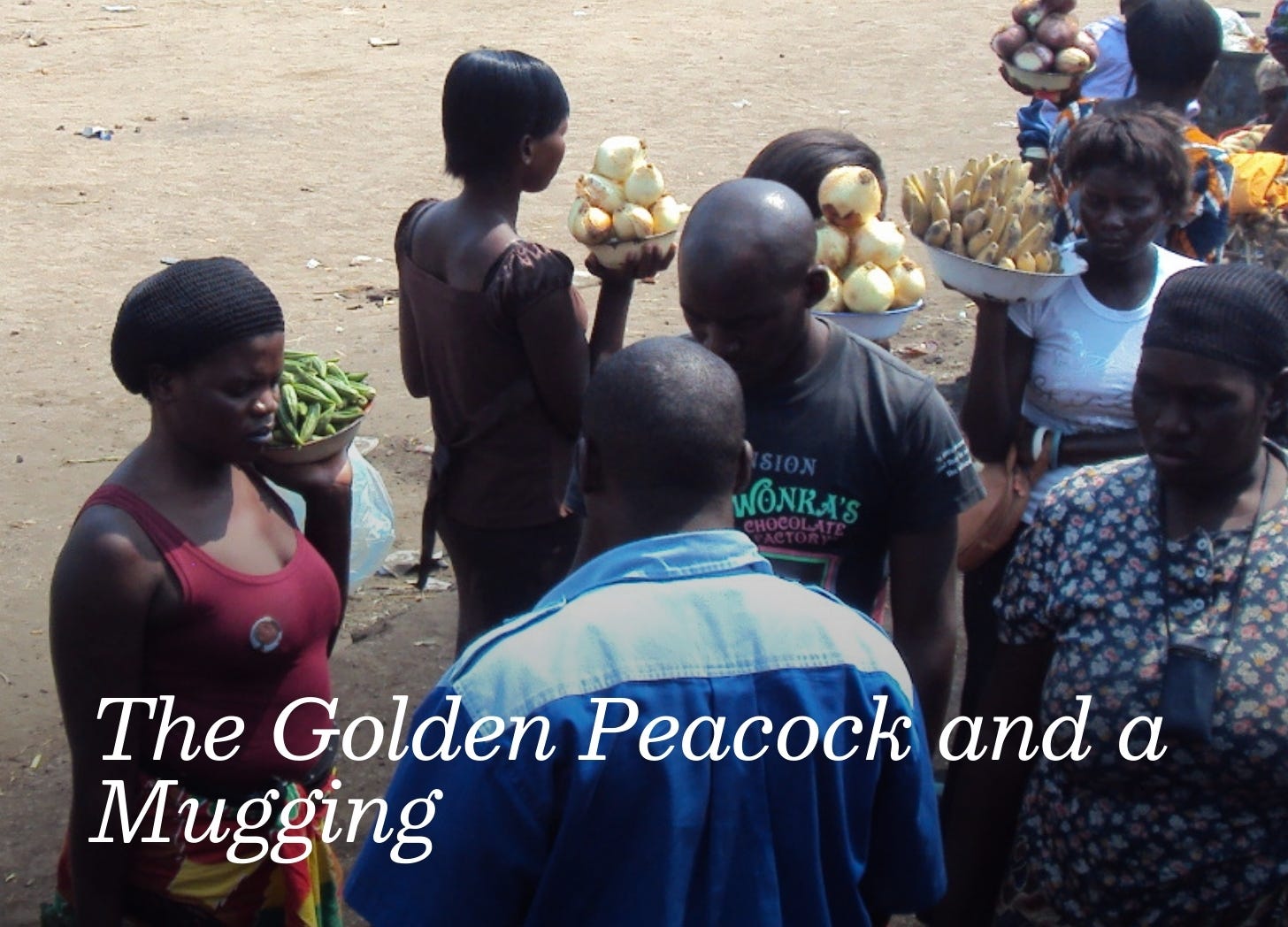
Part 4 of a 5-part “Eating My Fear” Series:
Read Part 1: Braving the Zambia-Malawi Border
Read Part 2: Riots & Robbery
Read Part 3: Bruised Fruit & Bribery
Arriving at the bus station in Lilongwe, the capital of Malawi, I attempted to put on my cloak of invincibility. I marched past the jeers from the taxi stand, lugging my bag through the mud.
Always on the lookout for safe havens, I’d spied a respectable-looking hardware store a few blocks away from the bus station. It was here that I asked the kind owners to call me a cab.
This is a trick I learned traveling alone—to go to a family-run store for assistance. Usually, they would call one of their relatives to take me where I needed to go. They got a little extra cash, and I got someone who may be able to identify me if I disappear.
Arriving in Lilongwe, I had no hotel reservations since I was supposed to be working with the NGO on the border. So I set out for the fanciest hotel in town. My plan was to negotiate a cut-price deal. It works fairly often, but not this time.
In the end, the cabbie and I drove around for about an hour inquiring at various hotels, before I found a decent one for $10 a night called the Golden Peacock. I settled into my single room (shared bathroom down the hall) and finally met up with my contact from the Malawi nonprofit organization.
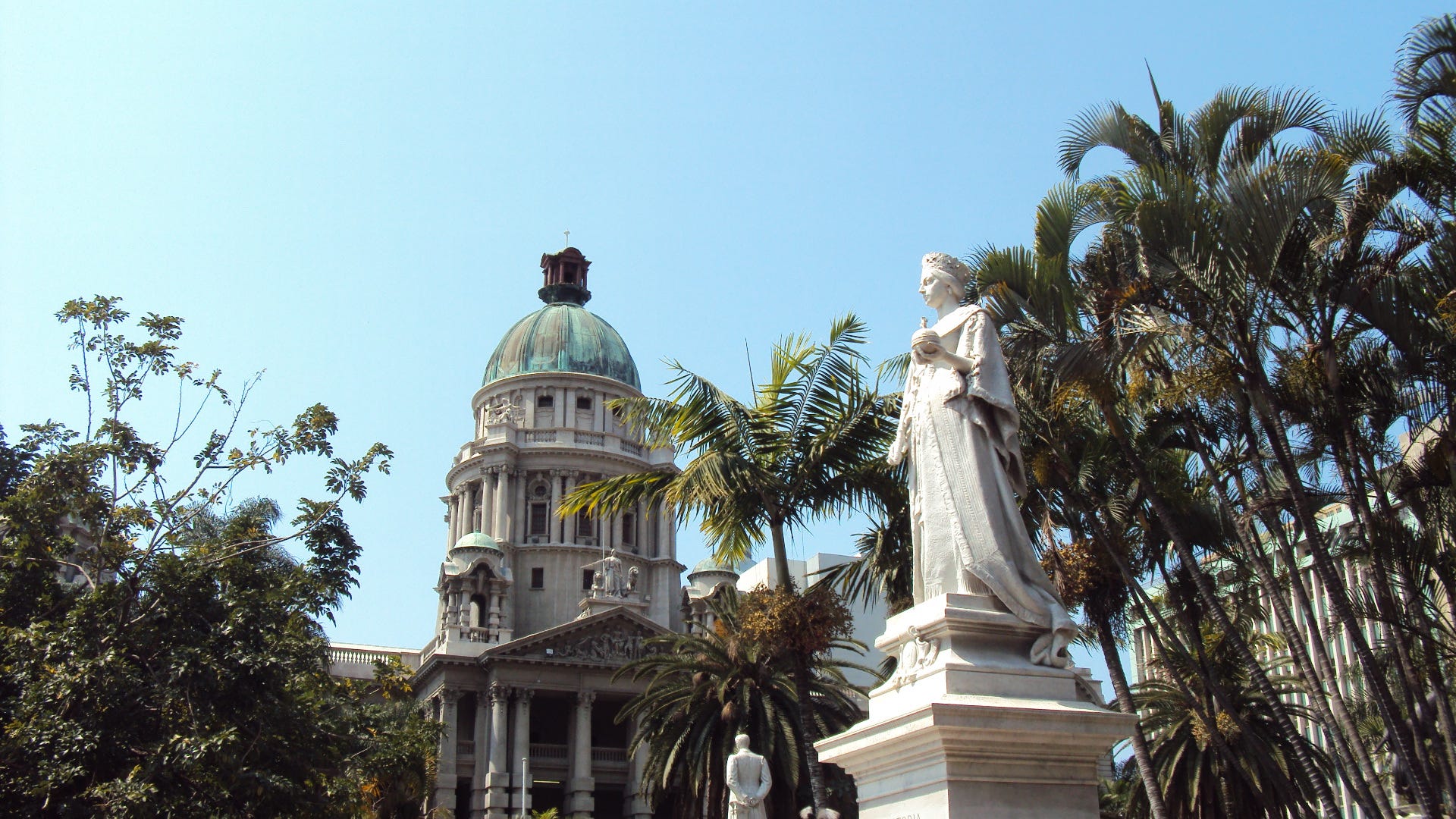
I also sized up the city and, like neighboring Zambia, Malawian politics were getting heated. These clues told me I wasn’t in the best place:
1) No Tourists: I usually find myself off the beaten track, so this doesn’t always alarm me. But in Lilongwe, I met a fellow traveler who told me that he was the only tourist coming from the Mozambique side, where I was heading.
And when I stopped at a tour agency to enquire about scuba diving tours to Lake Malawi, the agency told me there were none. No tours and no tourists? No good.
2) No Necessities: When a country starts to run out of vital necessities, alarm bells go off. Here in Malawi, there were troubling shortages of foreign exchange both at Barclays and on the black market.
There was also no fuel, and most disconcerting of all, no Coca-Cola, as the local Coke manufacturer can’t get the ingredients to make its secret, addictive Coke recipe. Seriously, this freaked me out the most.
3) Evacuated Aid Workers: I was still sticking to my plans to make my way to Lake Malawi to scuba dive until I met an aid agency worker shaving her legs in the communal bathroom. It was the first running water she had seen in a while, and she was pretty excited at the prospect of being evacuated to Johannesburg.
She advised me that if I was going to stay in Malawi, it was best not to go outside at all during the next few days, but instead to hunker down and wait for the political rioting to pass.
I discussed this dilemma with my new best friend Hector, whom I’d met in the driveway of the Golden Peacock. Hector was in his 70s and was walking with a cane. Originally from Cuba, Hector is a nurse living with his wife outside of St. Louis, Missouri.
I met him when he was looking for a new hotel because his $8 room didn’t have a fan, and he wanted to upgrade. I told him the Golden Peacock did indeed have fans and that it was very nice. (Did I mention the running water? Swank!) I kept running into Hector in the lobby and on the small patio attached to the guesthouse.
We were hanging out one day, swapping stories and road tips as travelers do. I was trying to go overland to Mozambique via Lake Malawi, where he’d just come from, and he was trying to get to Livingstone, where I’d just left.
I told him about the rioting I’d seen and advised against crossing the border. His own multi-day overland excursion from Mozambique made my recent Zambian crossing seem mild.
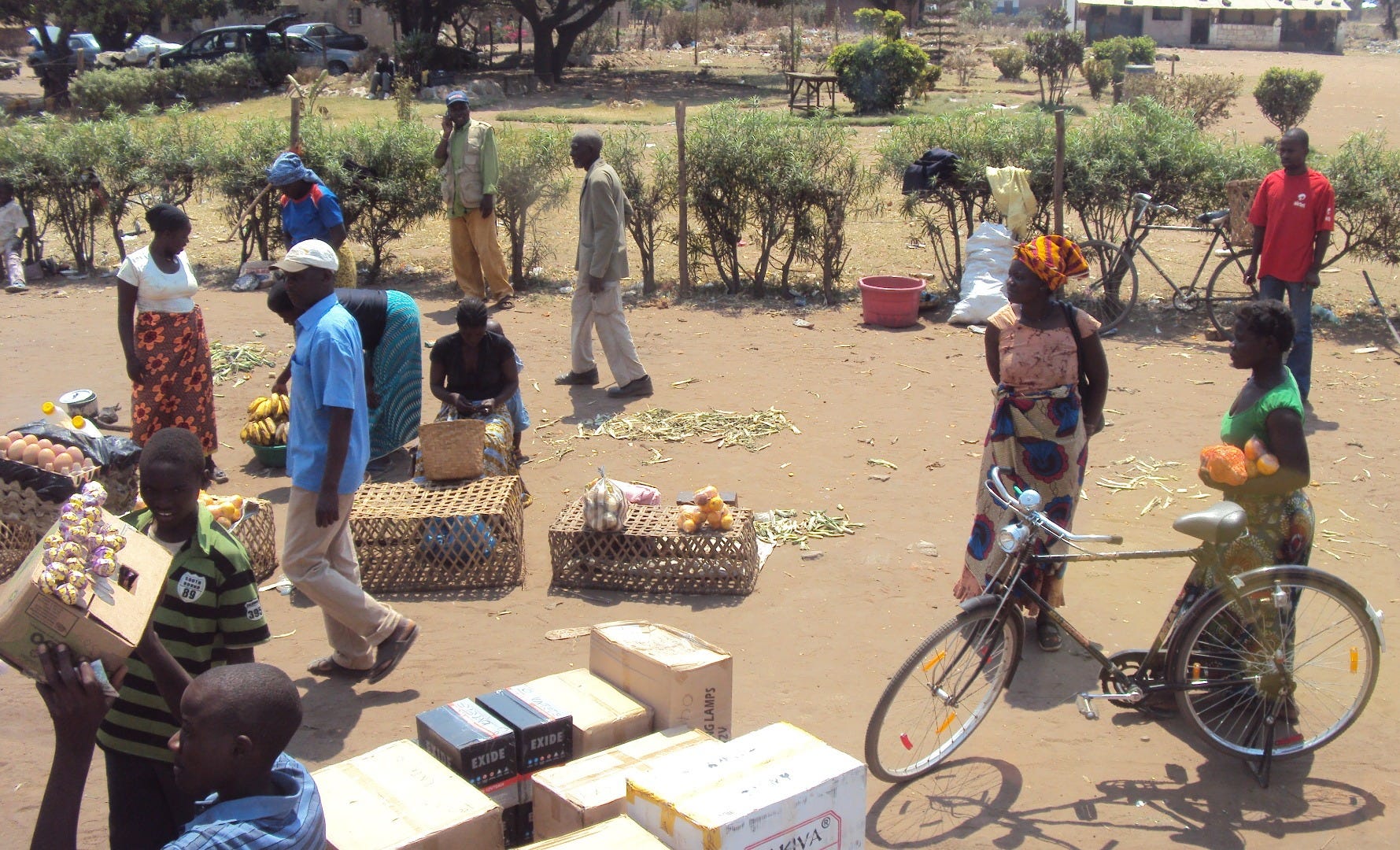
Starting his journey in South Africa, Hector had gone to the Johannesburg bus station to buy a ticket to Mozambique. Upon completing his transaction, he asked the ticket agent where he could find a taxi. The salesman pointed him to a young man and told Hector to follow him, which he did.
The young man kept walking a bit ahead, and Hector had to hurry to catch up, barely keeping the young man in his sights. Suddenly, he made a sharp turn, and Hector followed into an alleyway. Only after he’d already entered the side street did his sixth sense kick in.
Someone jumped him from behind. Hector felt hands reach around his throat to strangle him, and then he lost consciousness. When he woke up several minutes later, his money belt and wallet were gone.
Luckily, his muggers were professionals. The thieves knew how much pressure to put on Hector’s windpipe to cut off his air supply but not kill him. They also cradled his head during his fall so his skull didn’t crack open.
Did they do this out of kindness? Probably not. A murder charge probably weighs more heavily than a robbery charge, so it was likely more about self-preservation if they were caught.
When he awoke, some vegetable sellers sitting a few feet away pointed to Hector’s passport, lying in the gutter where his assailants had tossed it aside. But here’s the thing: Hector’s money belt and wallet were decoys filled with expired credit cards and very little cash.
His real money was stitched into a secret lining in his pants. Hector was very proud of his invention (which he designed and sewed himself). He drew me a diagram in my notebook while we sat on the patio one afternoon. Ingenious.
Part 4 of a 5-part Series:
Read Part 1: Braving the Zambia-Malawi Border
Read Part 2: Riots & Robbery
Read Part 3: Bruised Fruit & Bribery
If you like this post, please leave a comment or share it with others. This will help more readers find my work. ❤️
Christened “Wander Woman” by National Geographic, Erin Michelson has traveled to 130+ countries & all 7 continents. She is a professional speaker and author of the Nomad Life™ series of curated trips and travel guides, including the #1-ranked Explore the World with Nomads.
Want to read more about my adventures? Get the book “Adventures of a Nomad: 30 Inspirational Stories.”
Hector was brilliant! Did you ever go scuba diving?
It's funny when the prospect of running water is something to look forward to!
I have the same setup as Hector. 'Disposable' cash in the outer parts of my clothing, and the real stuff in a thin fabric belt that goes underneath everything. Not comfortable in the tropics, but reassuring. The only thing that doesn't work well is the passport. I would like to hide it away as well, but, in many countries, there are checkpoints all day long where they want to see it.