

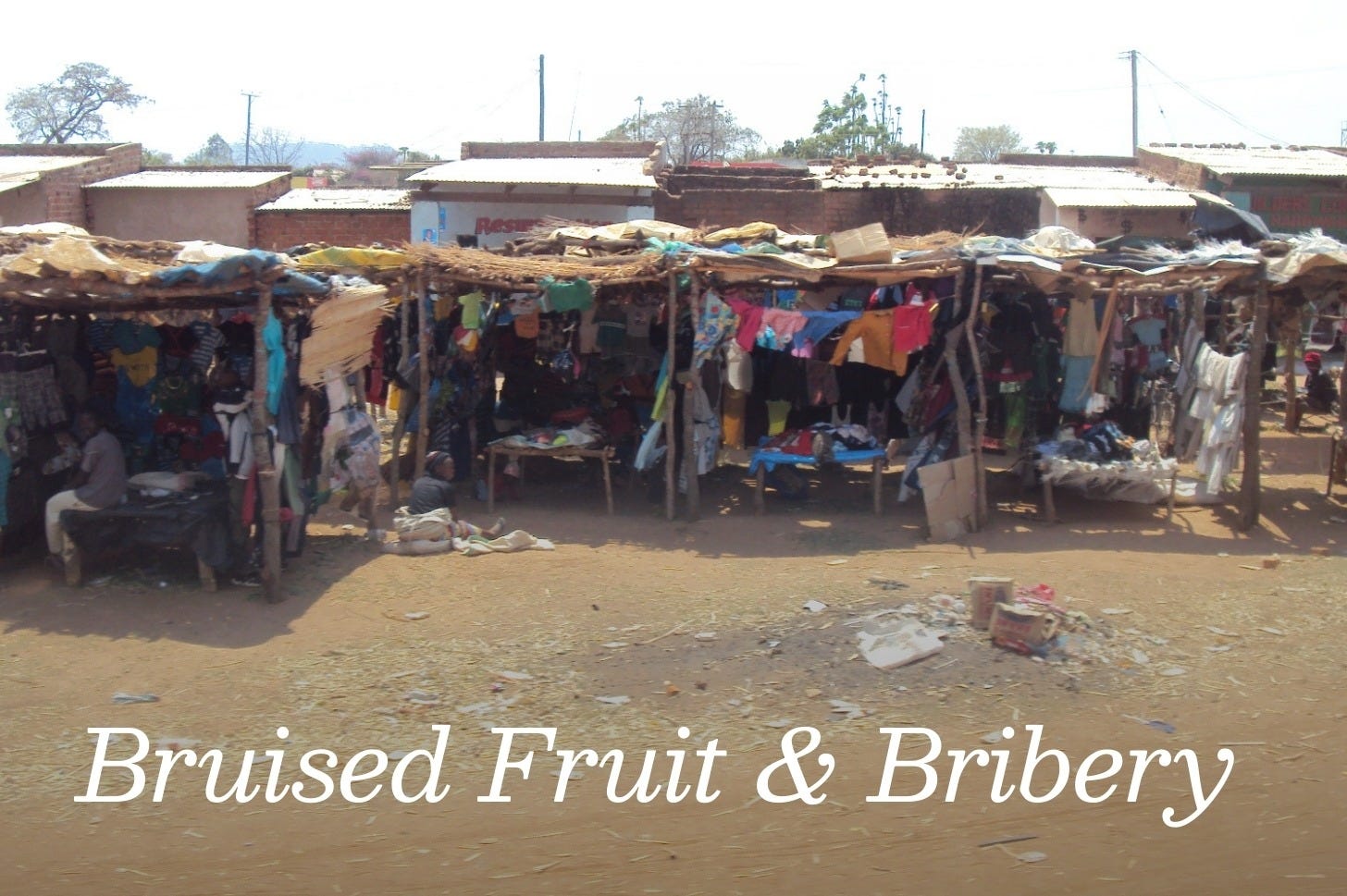
Bruised Fruit & Bribery
An Adventure A Week

Part 3 of a 5-part series:
Read Part 1: Braving the Zambia-Malawi Border
Read Part 2: Riots & Robbery
Upon arriving in the Malawi border town of Mchinji, I immediately tried to connect with my NGO contact. Unfortunately, she was not in the border town as planned, but in the capital of Lilongwe. The next day, I was back on a local bus.
The hotel was located on the outskirts of town, so all I had to do was stand along the dirt road and flag down a minivan, or matatu, as they’re called in Africa. The hotel staff had come out to assist me, but they had to run back inside, and one pulled over, so I just hopped in. This turned out to be a bit of a mistake.
You see, choosing your matatu is like selecting a piece of fruit. You want one that’s looking fresh, one that’s not too bruised on the outside. I didn’t adequately inspect my matatu that morning, and it turned out to be battered goods. But it was too late—I settled in for the one-hour ride.
Two hours in, we were stopped by a police roadblock and asked to pay a fine. They wanted around $18-one dollar for each person in the van. (Yes, there were 18 of us crammed in.)
Unfortunately, my matatu driver didn’t have the money to pay the bribe, so they waved us over to the side of the road. We waited another hour sitting in the hot, stifling van.
At this point, the police were starting to get frustrated with our inability to produce the payoff, and we were told to drive to the police station. Now, parked outside the police station, we all sat silently, sweating in the matatu. Another few hours passed. Things were looking glum.
Finally, our driver was able to borrow the needed funds from someone on the other end of his cell phone. I’d considered paying the fine hours earlier just so we could be on our way, but I didn’t want to be seen as being flush with cash. I was curious to see how long we would actually have to wait. The answer: more than three hours.
We were saved by a little girl with pigtails who produced the compulsory $18 from a pocket sewn onto the front of her gingham dress. At this point, after three days on numerous buses, I had fallen into a bit of a stupor.
My delirium was a good thing. To survive bus travel in Africa, one must enter a Zen-like state and completely let go of any expectations of on-time, safe, or comfortable travel. You must embrace total acceptance of the unknown.
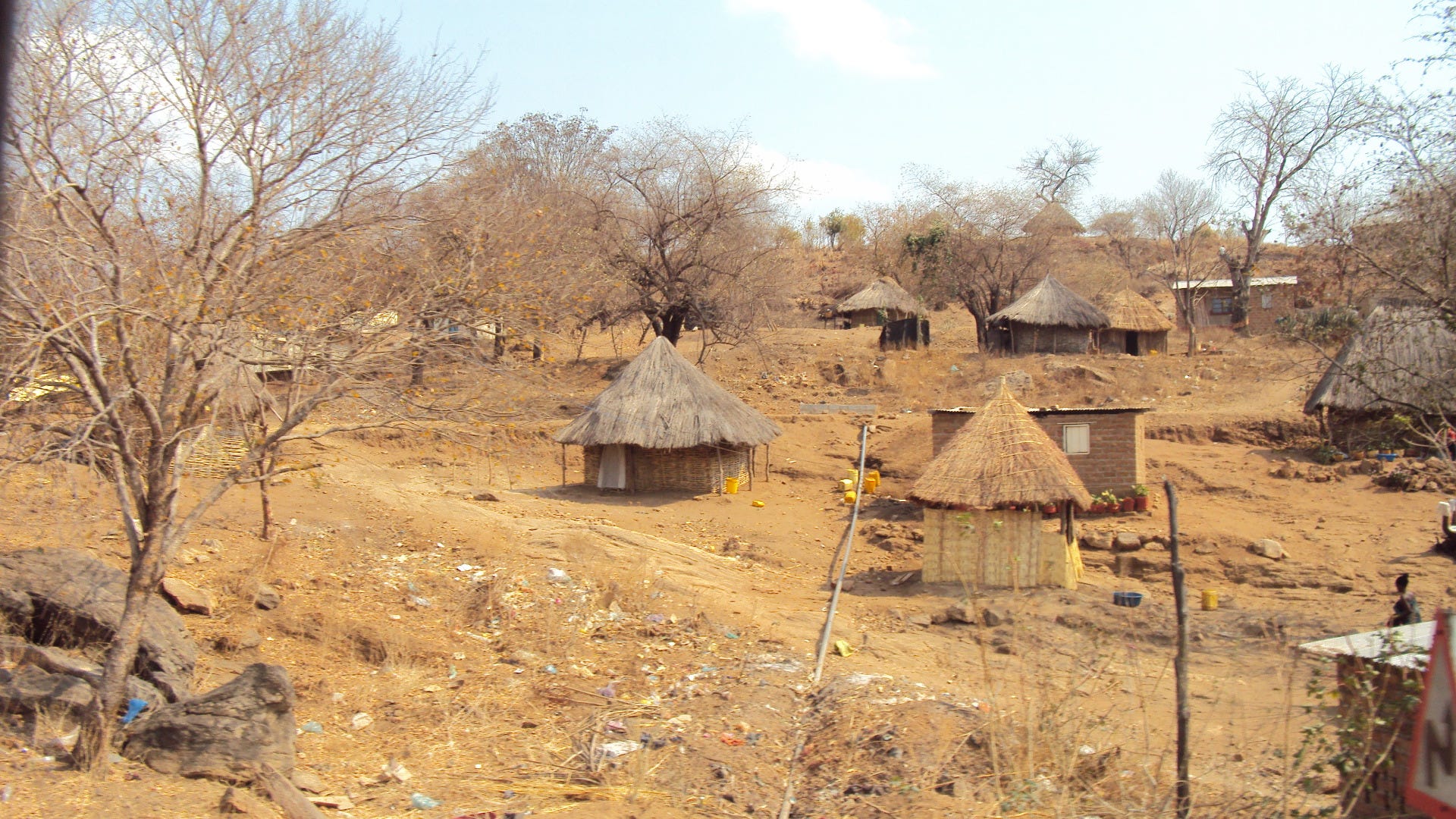
Of course, I may have entered this transport trance, not through an elevated Buddhist state, but through simple dehydration. Let me tell you, as bad as the bus rides were, getting out of the bus to go to the bathroom in the bush was going to be a whole lot worse. No telling what was out there or even if the bus would wait for you. Hydration was not happening.
But whatever, in my stupor, I didn’t fully care as we slowly made our way toward the capital. About a half-hour of traveling back on the main road, however, I was shocked out of my narcosis.
We had stopped to pick up passenger #19, a distinctly singular dude. He freaked me out because he had some seriously crazy eyes and was wearing an animal-fur hat, Daniel Boone-style. Except I think it was hyena fur.
I later learned it was the hat of a Zulu warrior. Also, he had a machete.
As we made predictably slow progress along the deeply rutted road, our new addition kept talking loudly to no one in particular. While I didn’t understand him, I don’t think his comments were particularly complimentary to me, because my fellow passengers kept giving me sympathetic sidelong glances.
Did I mention he was carrying a machete?
As I sat there, I consoled myself that he was two rows back, so if he wanted to slit my throat, he’d have to lean over an entire row of people to do it.
The matatu chugged along. And then six hours into the one-hour journey, it stopped altogether. The three guys in the front seat got out to push and managed to jumpstart it—at least the first couple of times. But then the bus truly wouldn’t budge.
The solution was to lift the front seat off and start banging with a hammer. There was some smoke, and this bit of strong-arming appeared to do the trick somehow, and we slowly crept our way into Lilongwe. Bruised fruit indeed. 🦋
Part 3 of a 5-part series:
Read Part 1: Braving the Zambia-Malawi Border
Read Part 2: Riots & Robbery
If you like this post, please leave a comment or share it with others. This will help more readers find my work. ❤️
Christened “Wander Woman” by National Geographic, Erin Michelson has traveled to 130+ countries & all 7 continents. She is a professional speaker and author of the Nomad Life™ series of curated trips and travel guides, including the #1-ranked Explore the World with Nomads.
Want to read more about my adventures? Get the book “Adventures of a Nomad: 30 Inspirational Stories.”
This had me reading with my shoulders up the entire time! The tension was so real, but your humour running through it made it even more compelling. I’m genuinely in awe of your nerve and can’t wait to read the next part.
Gaaah Erin, you’re a real one!! I so enjoy your stories, especially the ones from destinations most people don’t visit. This one was brilliant! Must I go to Malawi now? 🤔