

Riots & Robbery
An Adventure A Week

Part 2 of a 5-part Series: Riots & Robbery
Read Part 1: Braving the Zambia-Malawi Border
I was getting out of Zambia, where I’d been doing volunteer work at a school for girls run by the Catholic Church in Livingstone, because of expected violence in conjunction with the upcoming elections. One of the nuns I’d been working with said she was nervous about the impending rioting.
And when a nun gets nervous, I get nervous.
Unfortunately, she was right. Things were starting to heat up. While volunteering, I’d seen the trucks, fitted with loudspeakers blaring political slogans around town, and overflowing with angry youths chanting. And this was in sleepy Livingstone, not even the capital.
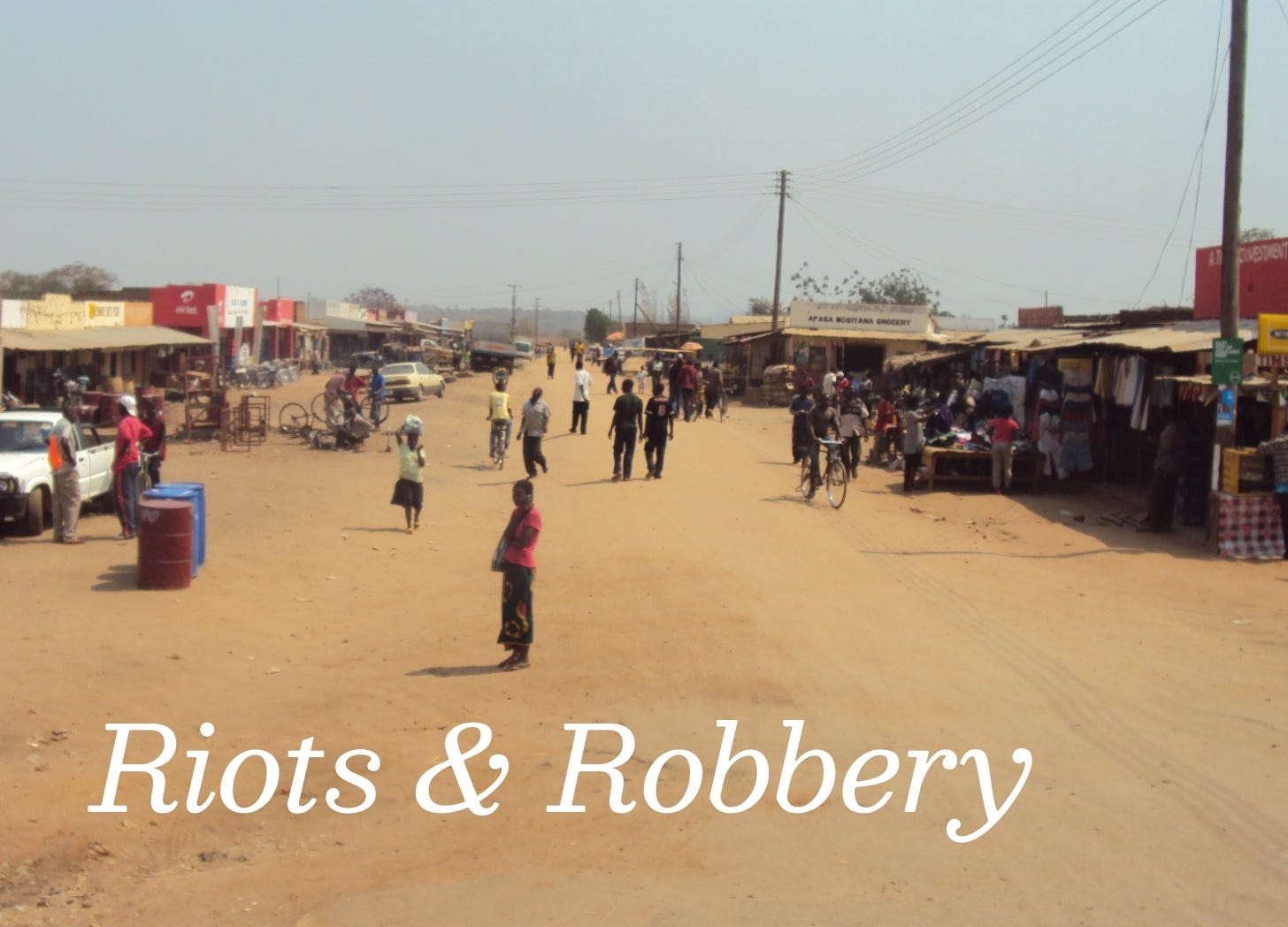
I was on my second full day of travel, and my bus ride across Zambia was getting tense. By the time we reached the eastern Zambian border town of Chipata, people were increasingly agitated. I looked out the bus window, and I could see that the scene was quickly getting out of hand. Wearing opposing political colors, protestors were now openly fighting in the streets.
Peeking through the curtains, I could see there was a mob of protesters ahead of us, perhaps as many as 100. They were clogging the street and cutting off the bus route.
With no way forward, the bus turned left down a side street and away from the milling masses, but not before the throng encircled our coach and started banging loudly on the sides. The metal shell started to reverberate with the impact, and the noise was deafening. With no way out, all of us passengers crouched low in our bus seats. Again, as the only foreigner on the bus, I was hoping to avoid detection since it sometimes seems to exacerbate the situation.
Luckily, our driver remained calm and slowly, but surely, navigated our way through the throng of people, finally arriving at a small dirt bus station several blocks from the mob.
At the station, I quickly looked for a shared taxi to the border. It should’ve cost me 20 Kwatcha (about $4) to share a taxi with four others, but there was no one else heading that way, and the taxi driver wanted to take me downtown to pick up additional fares. Instead, I insisted that he take me straight to the border without heading back toward the chaos in the center of the city.
We negotiated a private taxi fare for about $8. I climbed into the front seat, and we set off in the direction of the border. The ride should have been less than 15 minutes.
Except it wasn’t a private taxi ride as promised. As I was soon to find out.
Within the first few minutes of the ride, the driver pulled into a gas station to fill up the tank for the trip to the border. At first, I wasn’t alarmed, as it’s a fairly typical situation in under-resourced countries. Most cars don’t have full tanks of petrol, and so you often pay for the fuel as part of the fare.
But this time, as the driver finished filling the tank, three young men joined me in the cab. I was instantly alarmed. Now I was alone in the car with four unknown men.
As we pulled away from the gas station, I loudly argued with the taxi driver, insisting I had paid for a private taxi. He just kept telling me to calm down. The men were laughing in the back seat.
Instead of calming down, I reacted. I opened the car door and jumped. Luckily, we hadn’t picked up much speed yet and I was able to more or less land on my feet, steadying myself in a crouching position with my small backpack in my hands.
I stood up on wobbly legs in the middle of the road, and the driver and his buddies got out and started yelling at me. My self-defense training kicked in, and I started yelling back. I wanted to create a scene that would draw people’s attention.
The driver continued screaming at me to get back in the car. I, in turn, screamed at him to give me my large backpack out of the trunk. During this mayhem, I was keenly aware of the threatening sounds of a political mob that throbbed only a few streets away.
Our car stopped in the middle of the road and all of us yelling generated the attention I wanted. Cars were now blocked behind us, horns blaring, and people had stopped to stare on the streets.
It was getting pretty animated, and I was on the verge of walking away and ditching my bag altogether when the driver finally threw my bag out of the trunk and got back in the car. He and his buddies congratulated themselves on taking my $8.
I grabbed my bag lying in the dirt and walked down the sidewalk to a grocery store that I had picked out as a safe spot while sitting at the gas station. By now, I was pretty desperate to get out of this exploding town.
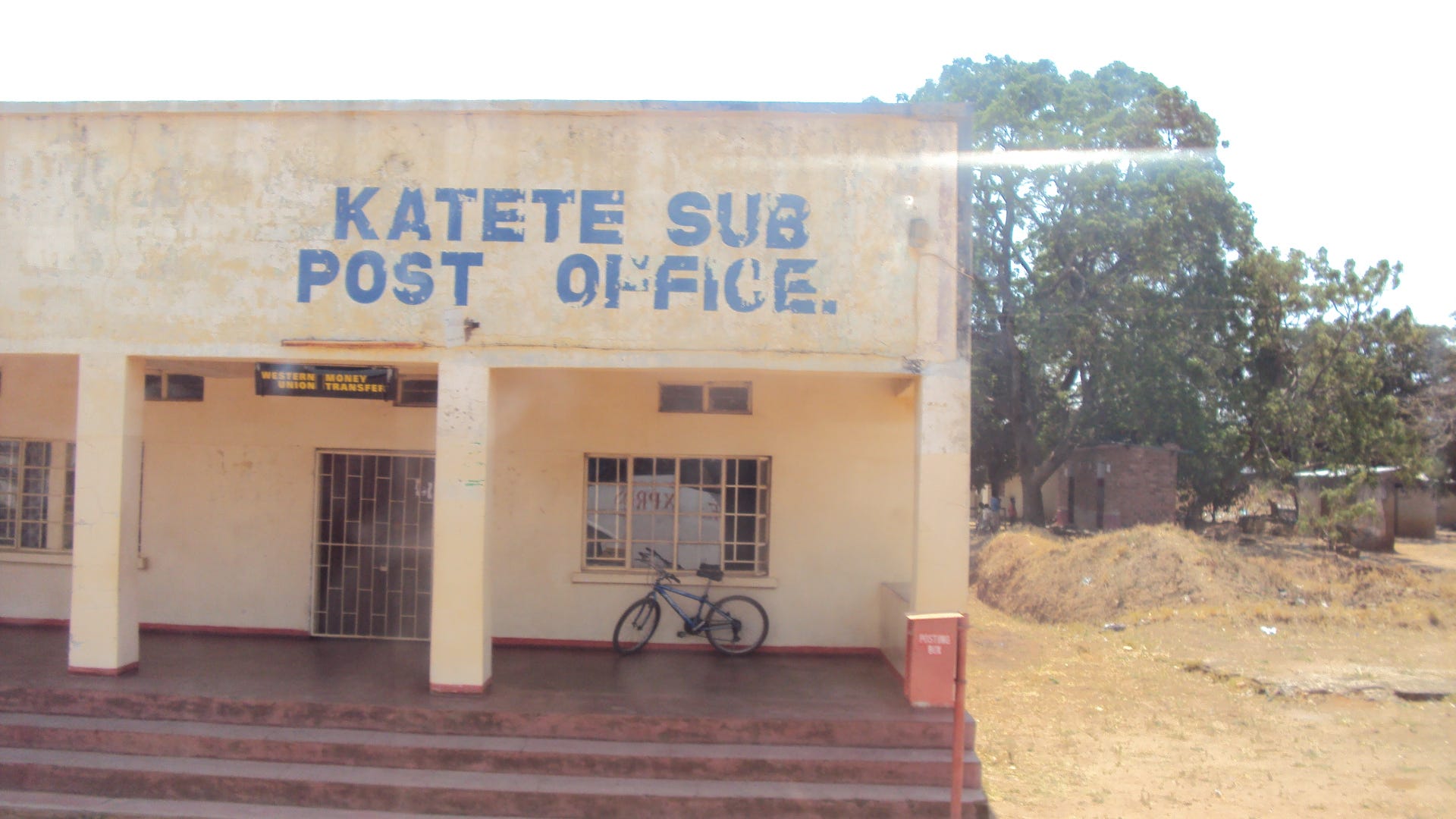
I took a moment, sitting outside the grocery store, to steady myself before deciding to hire yet another cab. This time, I gave the taxi driver $10 for a private ride to the border.
As I got in the front seat, clearly shaken, my driver introduced himself as Israel and told me the name of his tribe. This was a very formal introduction, and it put me at ease to know his family name and his standing in the community.
He was about 50 years old, with a bit of grey hair and a calm manner. Israel drove me the 5 miles (8 km) to the border, chatting with me along the way. As we approached the border crossing, he rolled up our windows and locked the doors against the onslaught of touts and money changers that lie in wait around the immigration station. They were preying on those braving the border on foot, like me.
Israel told me to keep my head down and walk directly to the immigration building, and that he would bring my bag to me so I didn’t have to endure the menacing touts any longer than necessary.
I did as he said, hoping that he would bring my bag over to me as promised and not simply drive away. But Israel was good to his word, and he stayed with me until I was safely inside the building. Thanks to his help and kindness, I passed through Zambian customs without incident.
I walked the 500 yards of no-man’s land between countries. It was a barren strip of land, dusty, with litter, and surrounded by barbed wire. I walked quickly, making my way to the Malawi side.
There, I was again greeted by the inevitable crowd of young taxi drivers vying for my business at the deserted border post. I had no choice but to take my chances.
I negotiated a ruthless $35 (the sum of one month’s salary in Malawi) to drive me less than 3 miles (5 km) into town. Alone in yet another taxi, I was nervous. But once we arrived, my driver took me to the only hotel in Mchinji ($9 for a room with a private bath). I stayed the night, planning to meet up with my contact at the NGO the next morning.
It had been a long day.
Note 1: At the gas station, I was able to extricate myself from a dangerous situation because I had taken a 3-day Empowerment Self Defense training. That course taught me several invaluable skills, including trusting my intuition, reacting quickly, and how to make a commotion to draw eyes to me.
Note 2: It is not lost on me that, as someone born in a more developed country, I was easily able to pay these prices for transportation and lodging. The economic inequality that I witnessed during this time of travel in 2011 was (and still is) stark.
Part 2 of a 5-part Series: Riots & Robbery
Read Part 1: Braving the Zambia-Malawi Border
If you like this post, please leave a comment or share it with others. This will help more readers find my work. ❤️
Christened “Wander Woman” by National Geographic, Erin Michelson has traveled to 130+ countries & all 7 continents. She is a professional speaker and author of the Nomad Life™ series of curated trips and travel guides, including the #1-ranked Explore the World with Nomads.
Want to read more about my adventures? Get the book “Adventures of a Nomad: 30 Inspirational Stories.”
Thanks for writing about the other side of travel. We try to push those thoughts aside sometimes, but a back-up plan, a "go to" behavior in difficult situations, and a few prayers always need to be available and known.
Oh Erin, this had me reading on edge from start to finish. I can’t imagine the fear of navigating that situation alone, and I’m in complete awe of your presence of mind and courage throughout it.