

Join Me for Bunna
Eritrea's Coffee Ceremony

At the age of five, she chose to wear the veil, two years earlier than was customary. Girls in her tribe take the veil at age 7 because that is the year they are allowed to be betrothed. Her father explained that she had seen her mother veiled and wanted to emulate her, so she adopted the face covering she would now wear for life.
She was a member of the Rashaida tribe, a nomadic people of Arab Bedouin ethnicity that live in Eritrea and Sudan. The Rashaida, meaning “refugee,” emigrated from Saudi Arabia and are the smallest of the nine recognized tribes in Eritrea, with a population of under 100,000.
The little girl was obviously bright, and our guide Evan gently urged the family to allow the child to go to school. As a nomadic tribe, they would need to place the beloved child at boarding school, and this was out of the question for the family. So she would not receive a formal education.
But although she imitated her mother in assuming the veil, she refused to stay in the tent during our visit (as her mother did). Instead, she perched on her doting father’s lap and played with her brother and cousins, chasing goats and collecting shells.
Pray for Rain
The Rashaida children were also playing with us, enthusiastically selling beaded necklaces to guests like me. The hand-strung beads were spread out on the blanket when we arrived. A clear indication that we were to pay for our visit with a purchase.
I didn’t mind. I liked the necklaces and was happy to support the family with extra income, especially since there will be a few hard years ahead, as Eritrea hasn’t had much rain.
The Rashaida are most likely to suffer from the impending drought since their nomadic life depends on the health of their camel herds and goats to survive. No water means less food for the animals.
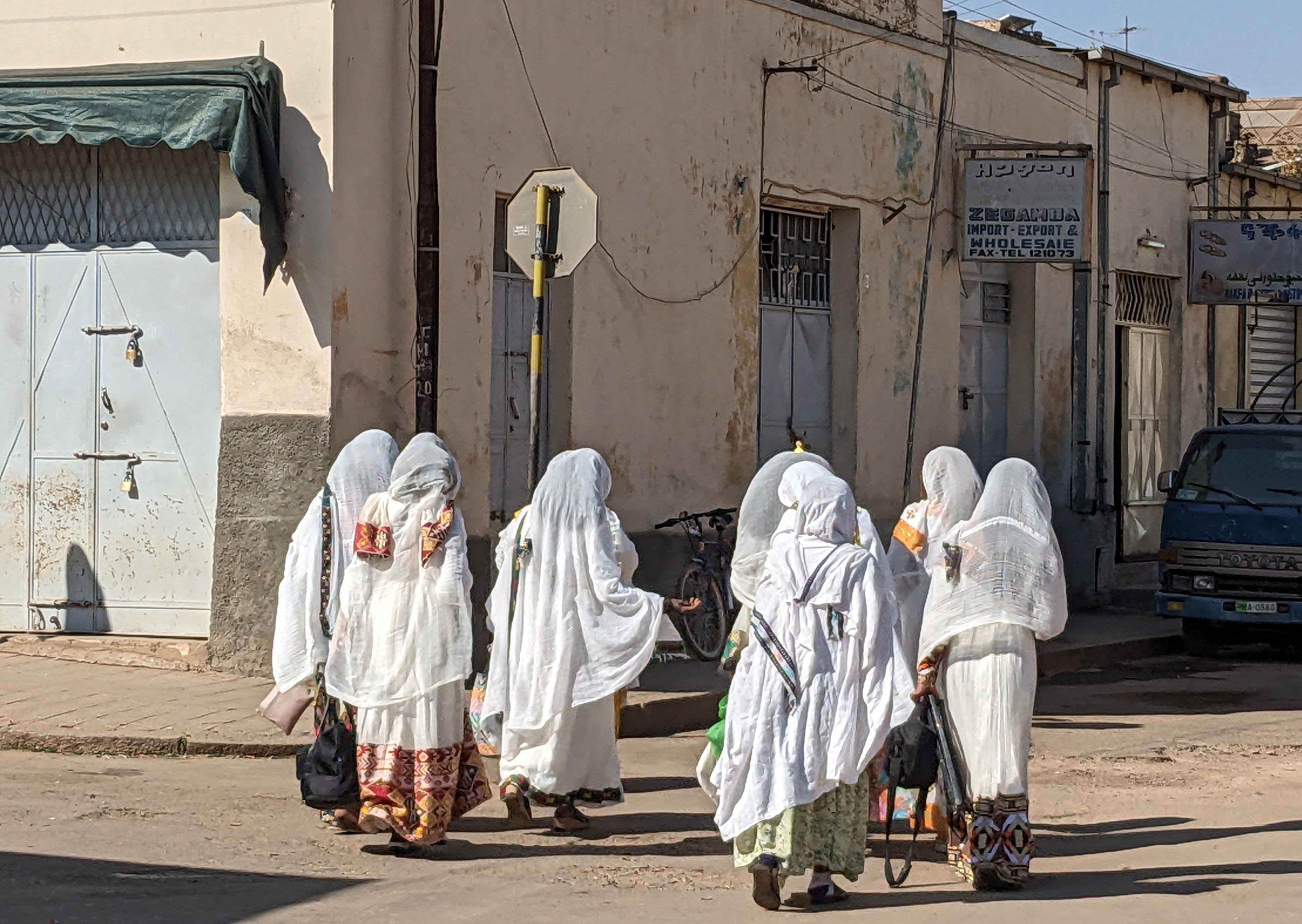
The lack of rain was a concern throughout Eritrea. In fact, we saw a group of seven women in white robes, walking the winding uphill road on our way to the coastal town of Massawa earlier that day.
The woman in the lead carried a framed picture of Mother Mary, and they were singing to the heavens. Literally praying for rain.
Bunna for Me & You
When we arrived at the family’s encampment, it was the young father and his mother who greeted the three of us and invited us for bunna, the famed coffee ceremony that is the center of Eritrean and Ethiopian culture.
Bunna, the Amharic word for coffee, is a cultural experience. Sometimes grass and flowers are spread on the floor where the coffee ceremony is held. Here at the Bedouin tents, we sat outside on carpets placed on the sand, with the sound of the ocean waves in the background.
Truth be told, I was a tad concerned about the cleanliness of the carpets we were sitting on. This was top of mind for me, having gotten a few bed bug bites from the carpets at our Bedouin camp a week earlier in Wadi Desa.
I also cast a glance at our host’s black hands and bare feet. I couldn’t tell if the elderly woman’s palms and soles were blackened from henna or years of walking barefoot in the desert. But I placed my concerns aside, resigning myself to what would be, and settled in for the hours-long coffee ritual.
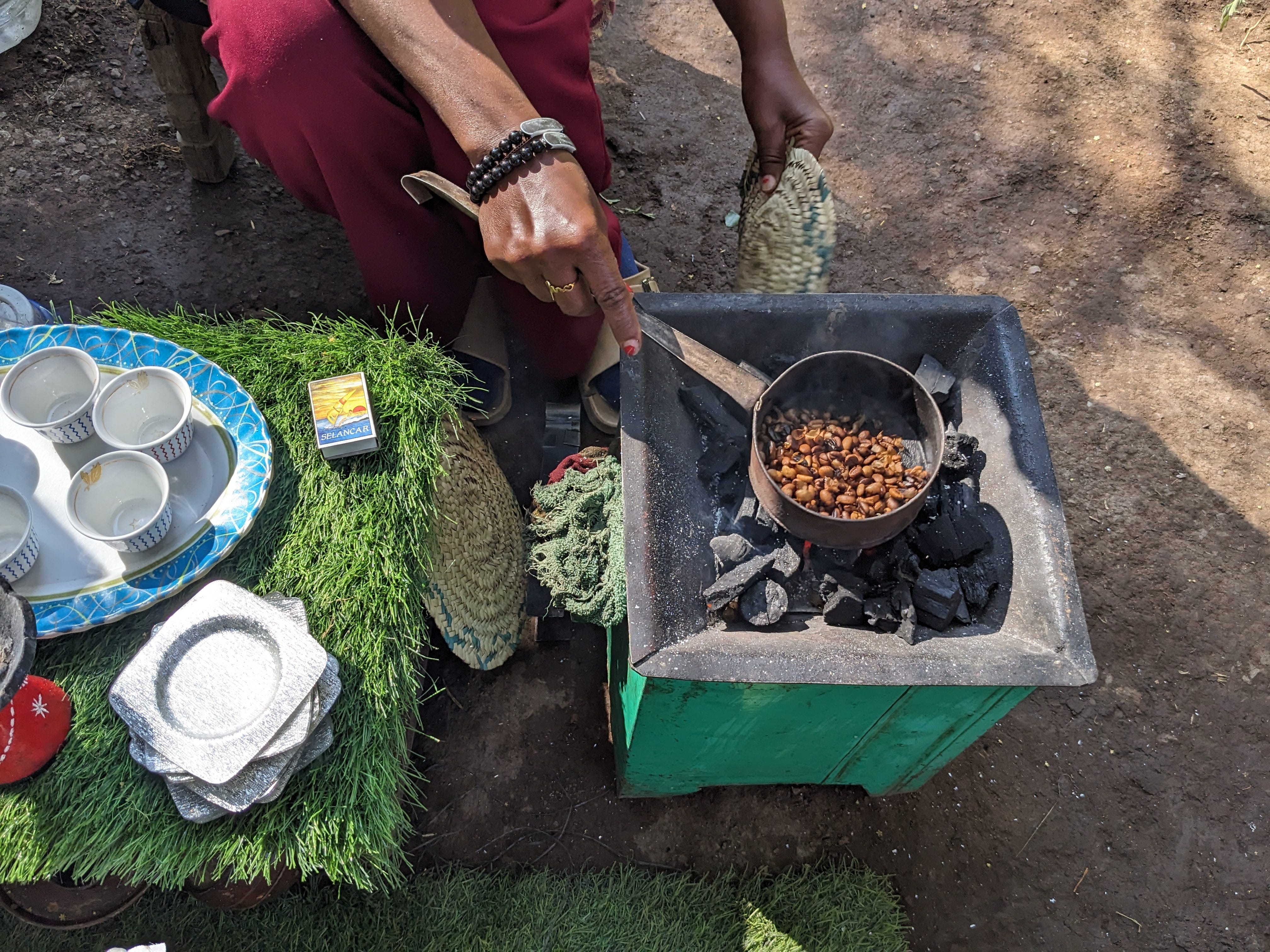
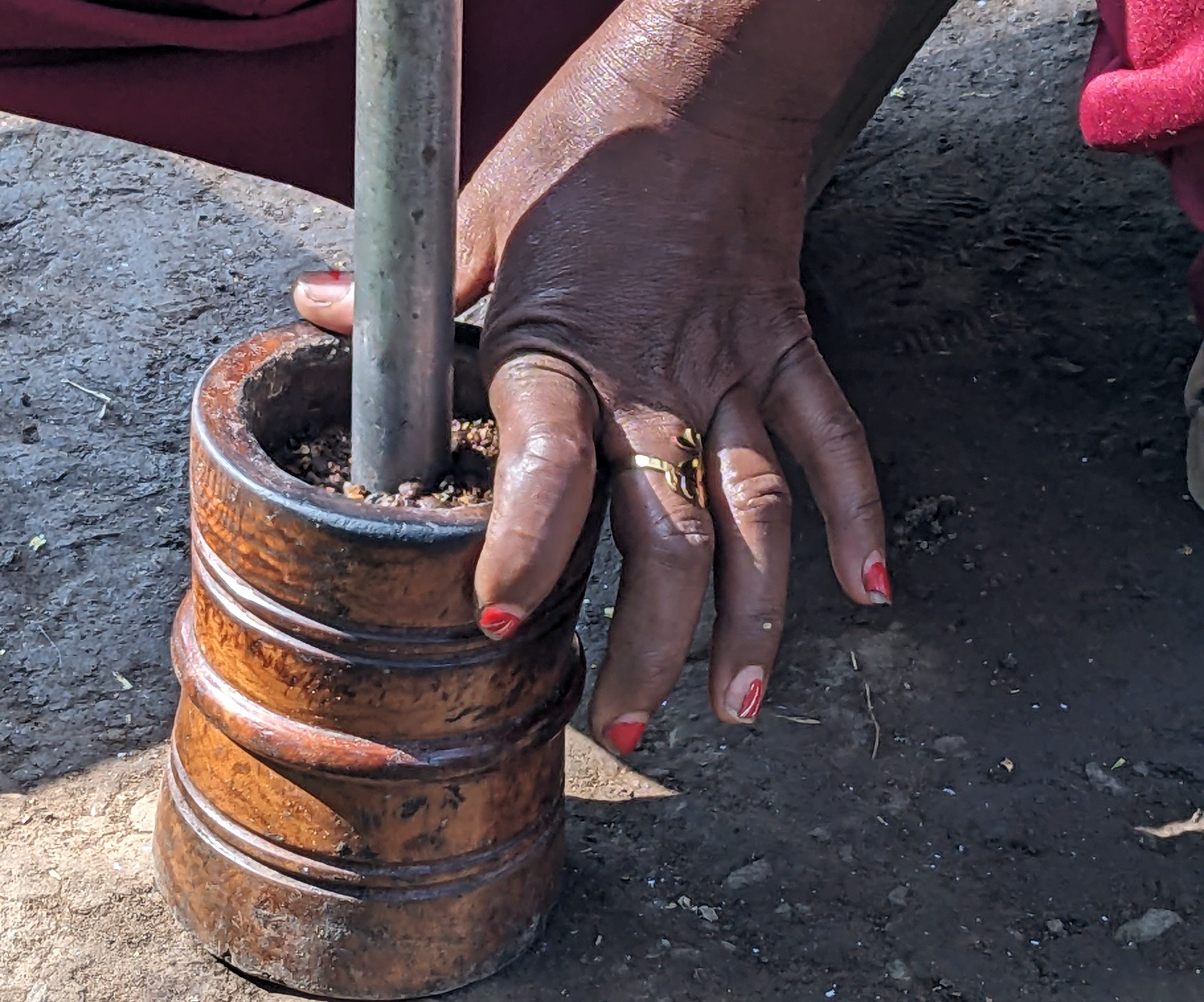
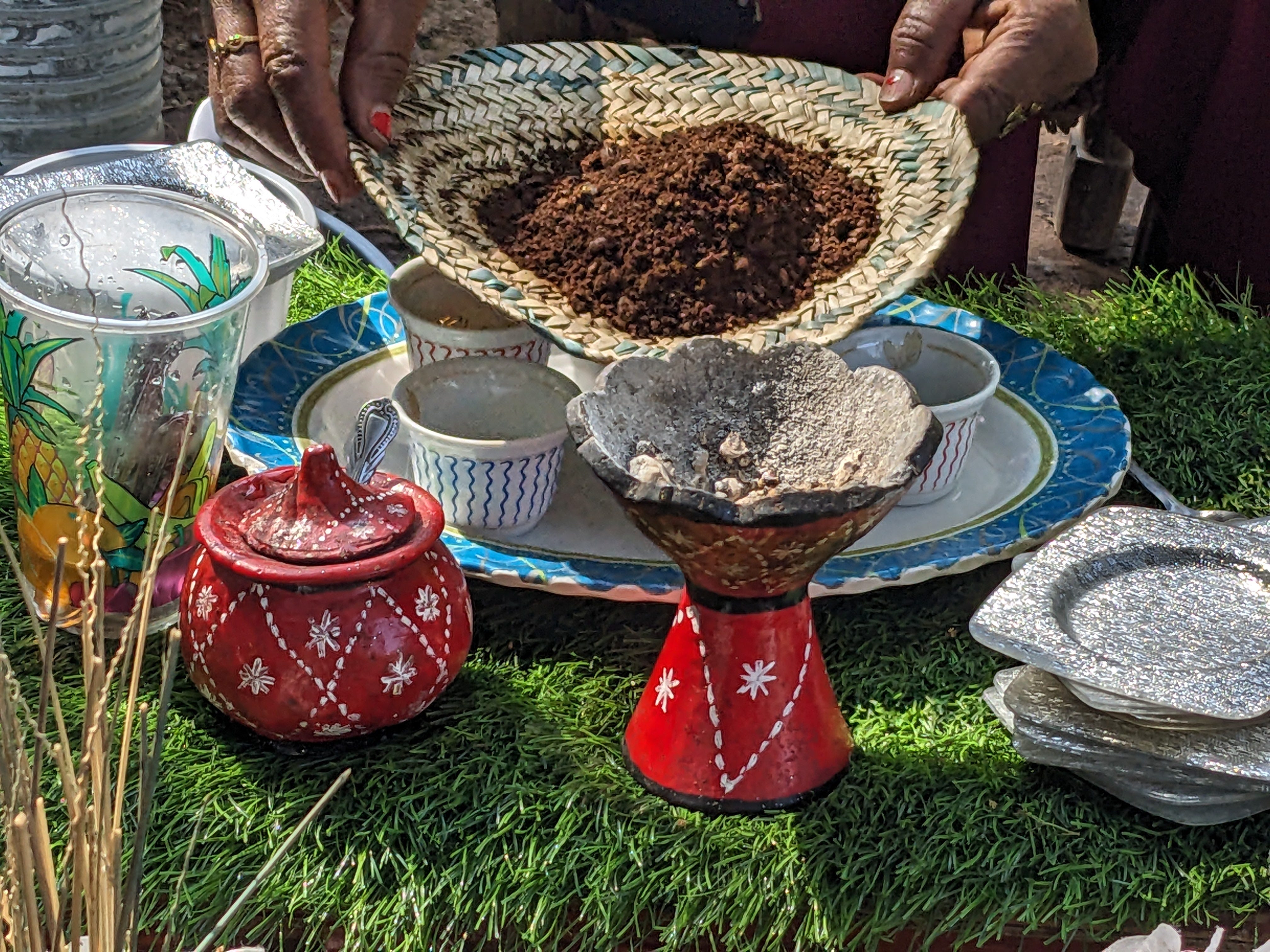
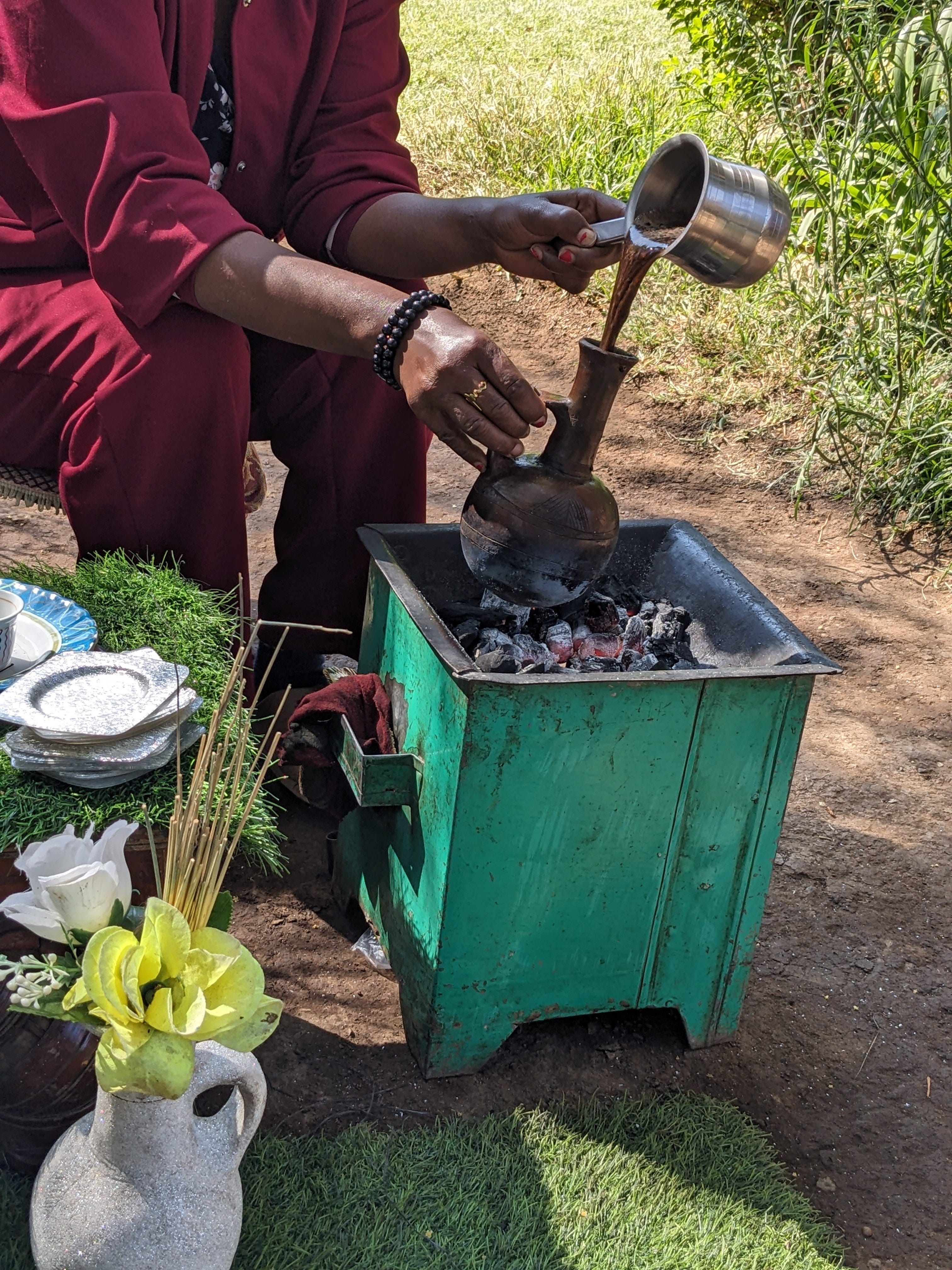
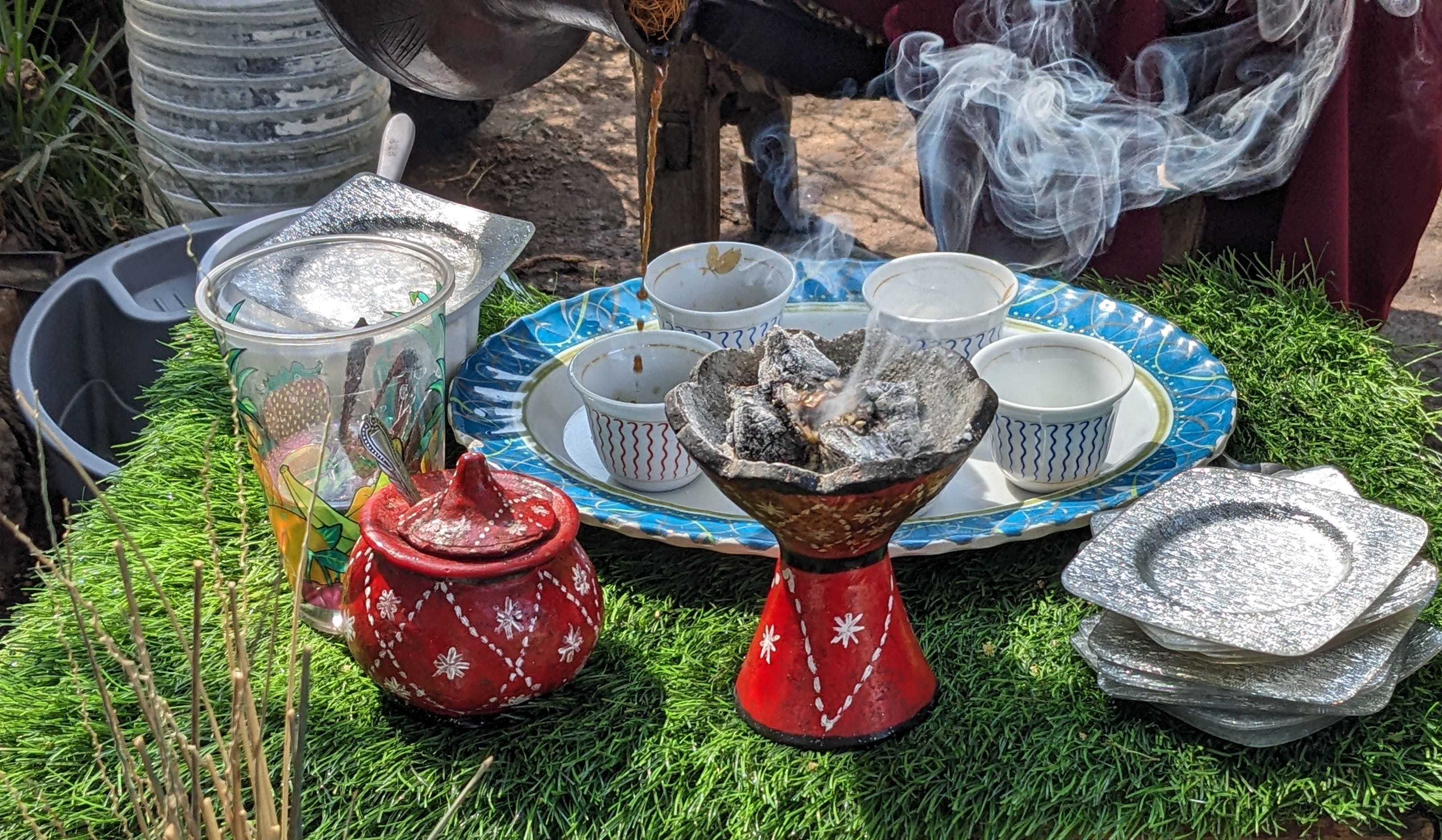
During the coffee ceremony, our host roasted the green coffee beans in a flat pan over an open fire. Then the beans are ground with a wooden mortar and pestle and brewed using a jebena, a traditional clay pot with a long neck.
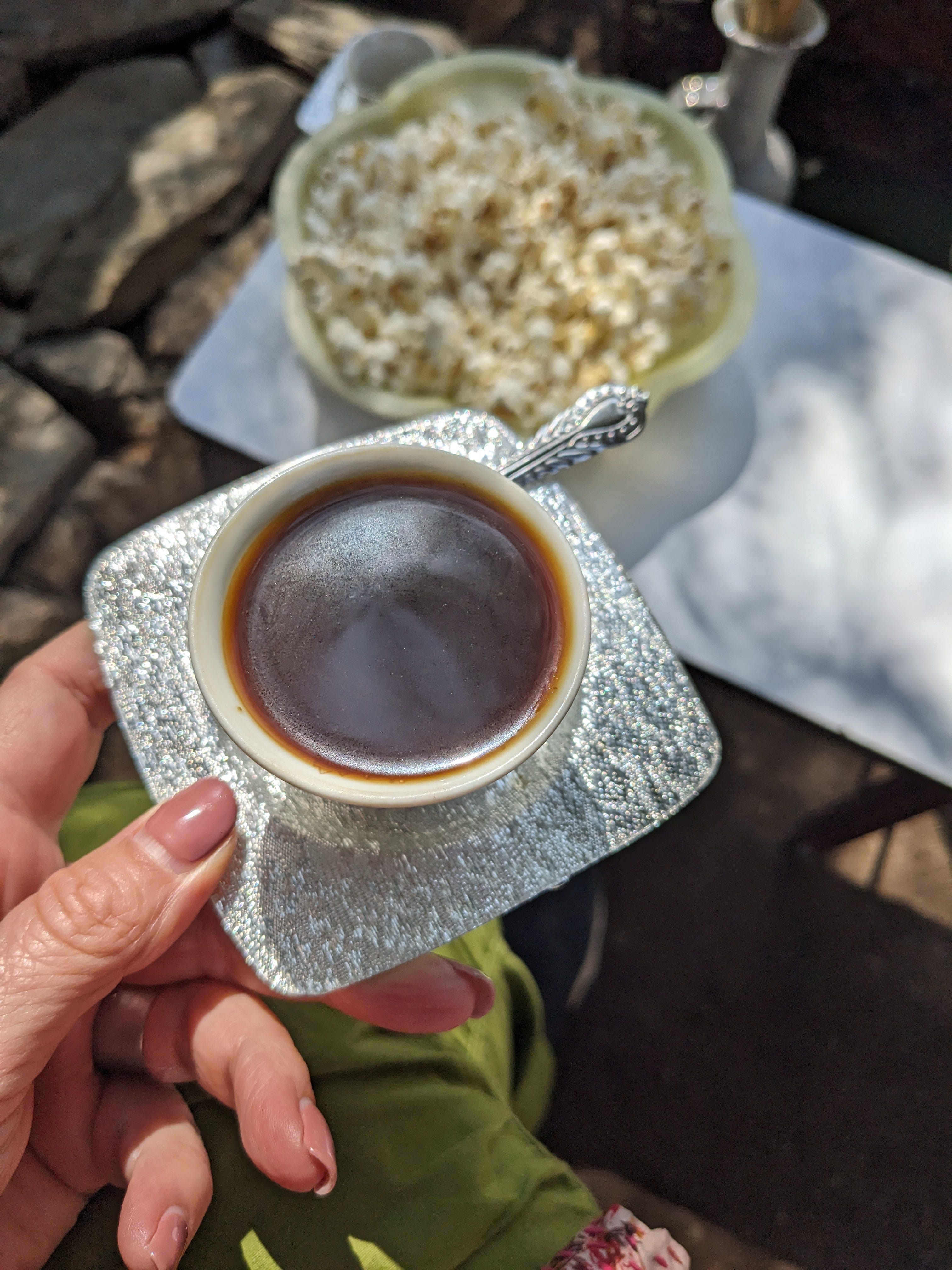
With each brew, sugar is offered with the coffee, and often popcorn too. Sometimes incense is burned, which mingles with the aroma of the freshly roasted coffee. The whole experience is magnificent.
Here is a series of photos from another bunna ceremony we enjoyed on a Sunday morning in the park filled with weddings parties. It was so lovely to sit quietly, sipping our coffee, the aromas wafting as we watched the happy brides pose for pictures.
Bunna comprises three servings:
Abol: The first and strongest cup signals the beginning of a deep conversation.
Tona: The second cup indicates times for reflection.
Baraka: The final, third cup means “to be blessed,” and portends joy for everyone gathered.
I especially like that the final coffee serving is intended as a blessing and toast to the future. It was my hope that our hosts would be blessed with continued family fortune. Eritrea would welcome rain soon. And that my friends and I would enjoy safe travel.
A blessed bunna to us all.
If you like this post, please leave a comment or share it with others. This will help more readers find my work. ❤️
Christened “Wander Woman” by National Geographic, Erin Michelson has traveled to 130+ countries & all 7 continents. She is a professional speaker and author of the Nomad Life™ series of curated trips and travel guides, including the #1-ranked Explore the World with Nomads.
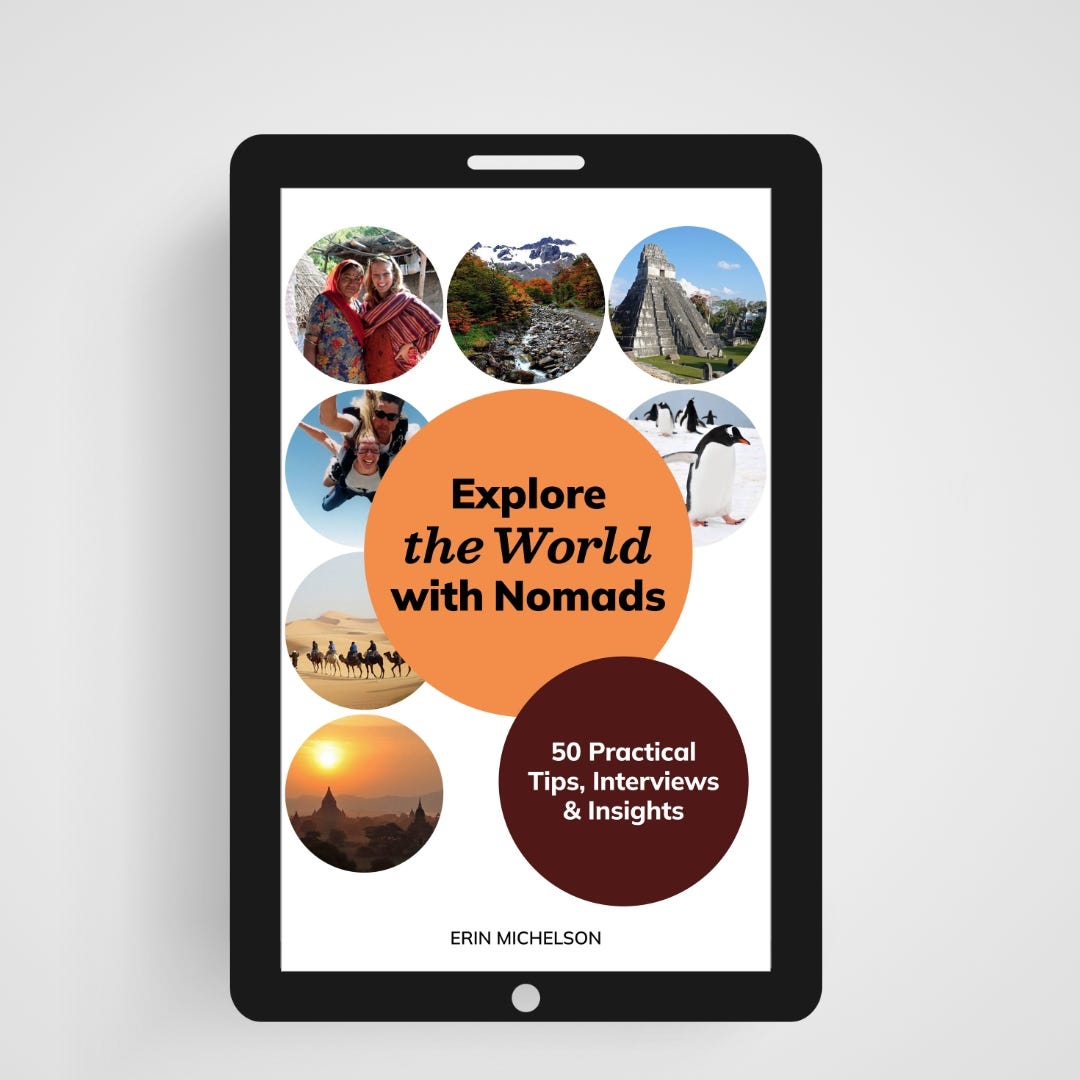
Curious to learn more about nomad life? Get the guide “Explore the World with Nomads: 50 Practical Tips, Interviews & Insights.”
Such an interesting story Erin!
Loved reading this, Erin. As a coffee lover I'm always curious to learn about different rituals and ways people celebrate this brew and this was certainly fascinating. The photos are beautiful too and that coffee looks so smooth and strong! Not sure I could handle 3 cups in one sitting though! 😄