

Bhutan in Flux: Tradition vs. Modernity
Best of Bhutan 2

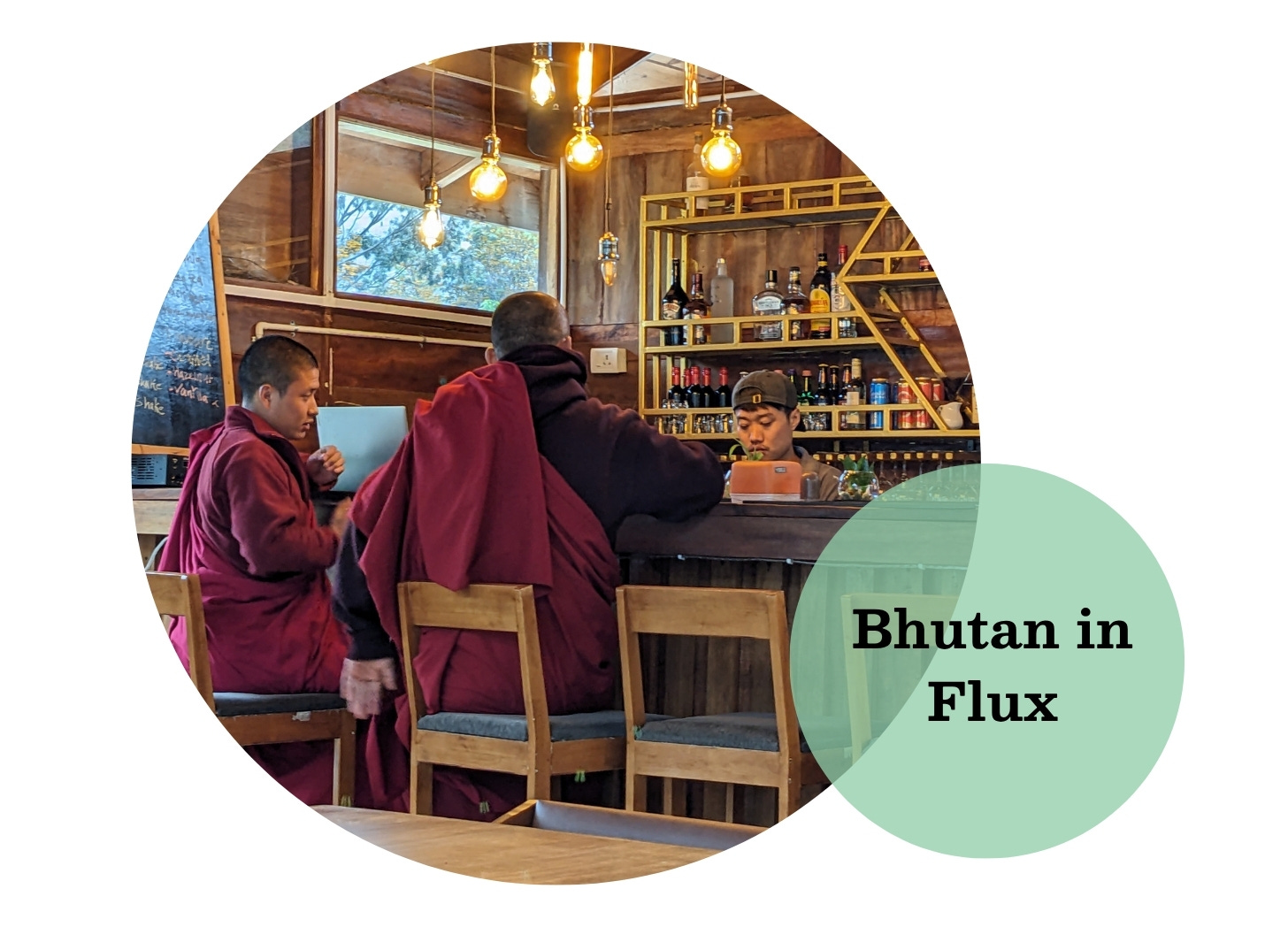
We visited Bhutan during an inflection point. The country is simultaneously trying to maintain its heritage and culture while opening itself up to the modern world. As a result, we were given a front row seat to witness its balancing act in real time.
On one hand, Bhutan is a country with no stop lights. On the other hand, Bhutan harnessed its massive hydroelectric power to become one of the world’s top miners of Bitcoin.
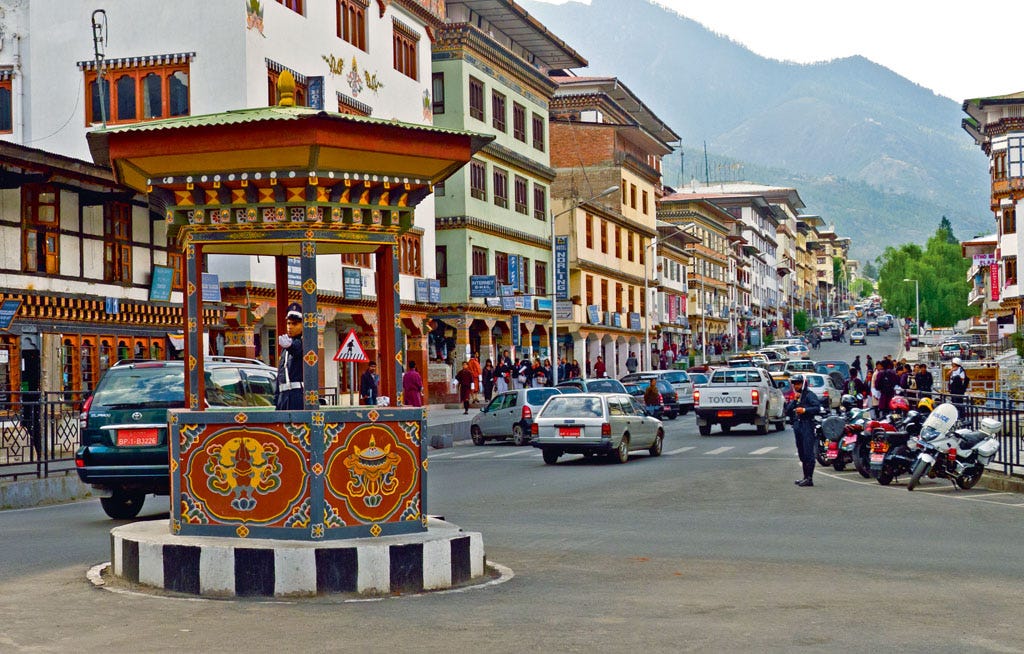
Nowhere else in the world is this attempt at cultural preservation alongside technological innovation being pursued more diligently and thoughtfully.
Bhutan’s Mastermind
The architect of Bhutan’s future is the King, His Majesty Jigme Khesar Namgyel Wangchuck, known as the 5th Druk Gyalpo (Dragon King). Known as “People’s King,” he is beloved throughout the country.
In fact, regular folks, like our driver Kuen Zang, wore a portrait of the King’s son, 10-year-old Crown Prince Jigme Namgyel Wangchuck, on his lapel. (We initially thought this was a photo of his son, but no, it was the younger royal.)
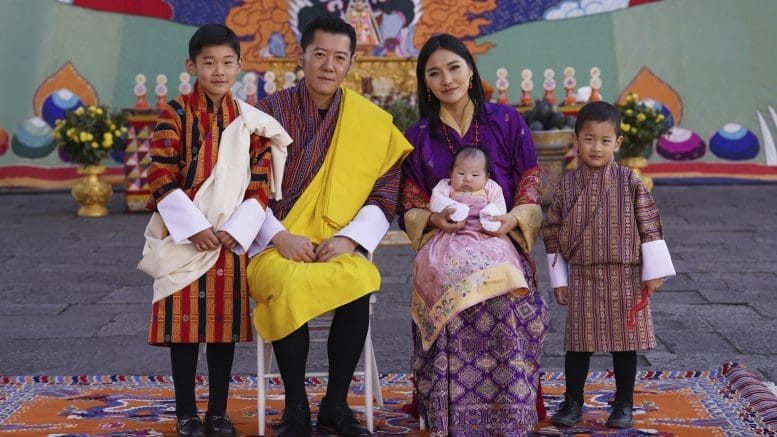
In 2008, the year the current King assumed the throne, Bhutan transitioned from an absolute monarchy to a democratic constitutional monarchy. As a result, the King remains head of state, with the government now run by a two-party parliamentary democracy.
Most of the country’s assets are held in trust by the royal family. Despite this vast personal wealth, the King’s economic focus is on building the social and economic well-being of the country’s 800,000 citizens over individual capitalistic wealth.
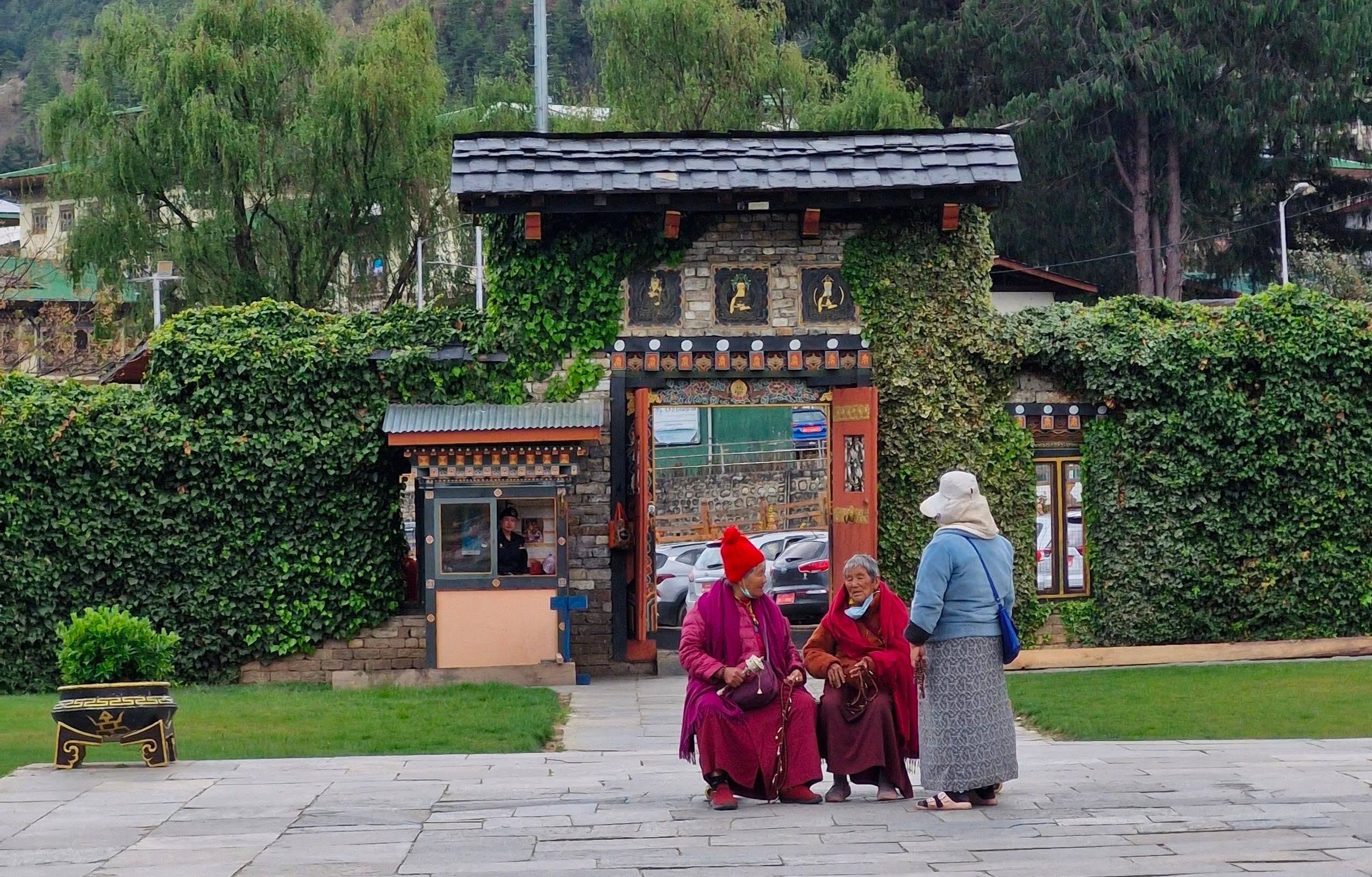
Spirituality & Sustainability
To help us better understand the transformation taking place in Bhutan, we brought in three high-level speakers during our Nomad Life Adventure last month. We were given a private audience and primer on three topics shaping the country’s trajectory, including:
Gross National Happiness
Guest Speakers: Sangye Chophel and Chencho Tshering, Director General, Office of the Cabinet Affairs and Strategic Coordination (OCASC).
Gross National Happiness (GNH) was conceived in 1974 by the 4th King of Bhutan (the current King’s father), declaring that happiness is “more important than Gross Domestic Product.” As a result, the Kingdom now measures collective happiness, emphasizing harmony with nature and cultural values over traditional economic metrics like GDP.
GNH’s emphasis on wellbeing reflect the Buddhist tradition of compassion and respect for all living things. Here are the 9 domains of the Happiness Index, which is a weighted score.
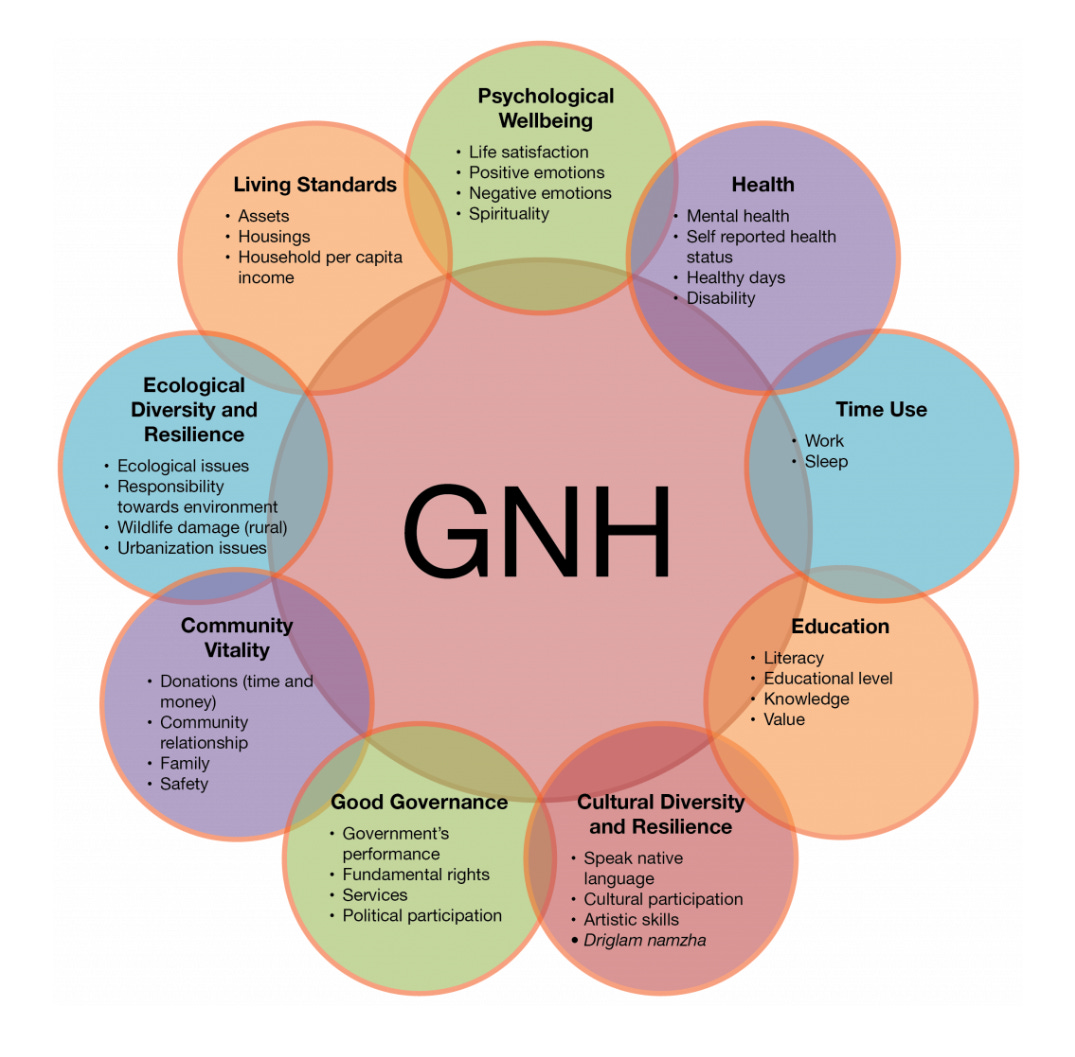
Our speakers presented the latest findings from the 2022 GNH Survey Report. And while some of us (well, me actually) were critical of the lack of scientific rigor in the survey process, we were all amazed at the candor of the presentation.
The report concluded that 93.6% of Bhutan’s population enjoys sufficiency (deeply happy, extensively happy, narrowly happy) vs. unhappy in at least 50% of the GNH conditions.
Yet while the summary was positive, one finding stuck out as potentially problematic for the government: an inverse relationship between economic advancement and cultural development was clear—the higher the income, the lower the emphasis on culture.
In addition, our speakers admitted that participants (~8,000 or nearly 1% of Bhutan’s population) may have lacked a baseline understanding of the survey. For instance, in the more remote provinces, illiteracy is still rife, so the survey was administered orally and had to be interpreted by the administrator. I found this statement surprising since I didn’t expect there to be a high level of illiteracy in the country.
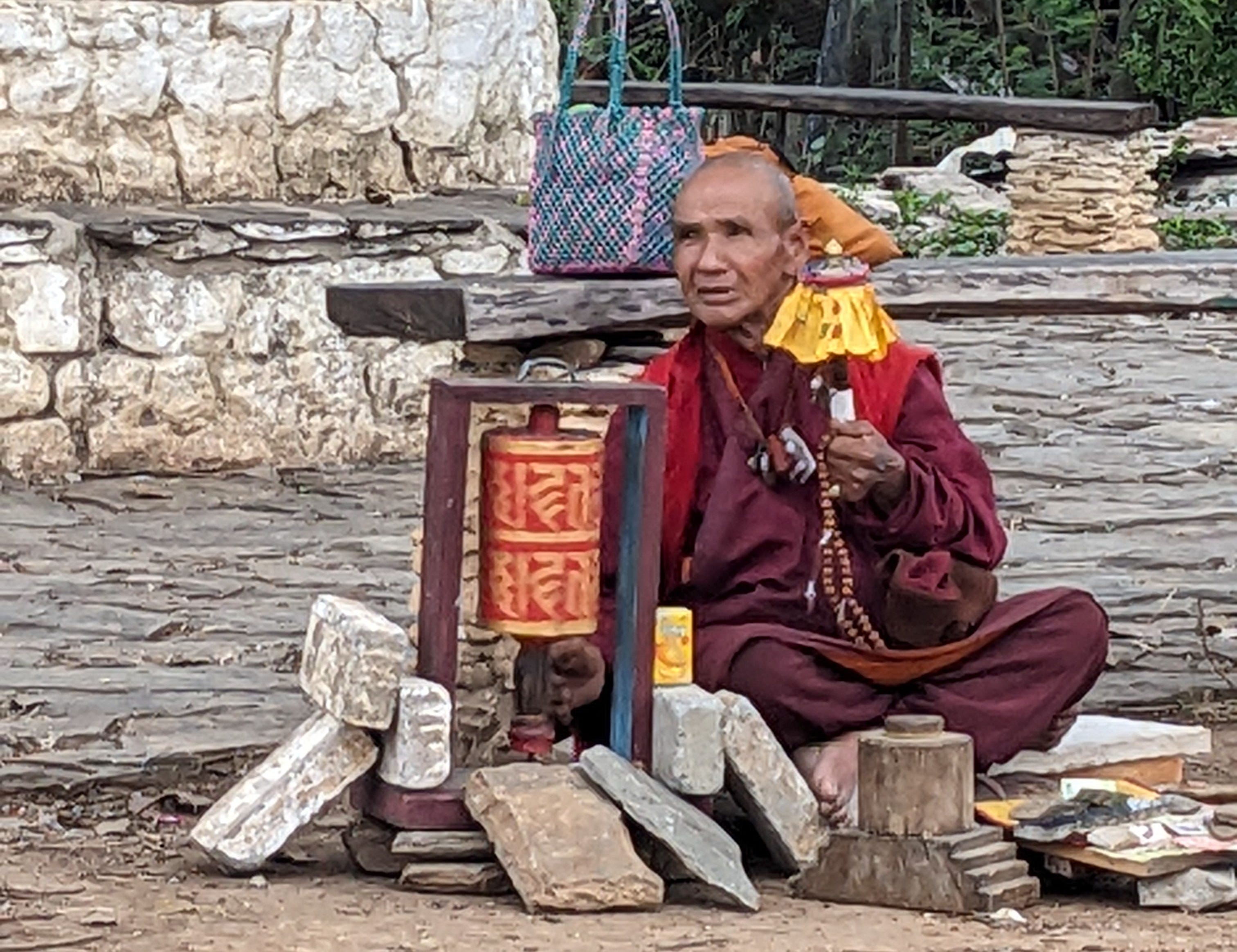
I also want to note that critics of GNH cite the philosophy as a propaganda tool to distract from the government’s human rights abuses against Bhutanese residents of Nepali origin and Hindu faith, a not insignificant 10% of the population. Source: Human Rights Watch
Sovereign Bitcoin Mining
Guest Speaker: Ngawang Norbu, CEO, Bitcoin Green Digital Limited
This presentation by the head of Bhutan’s Bitcoin mining operation was truly fascinating. Just a few years ago, Bhutan was the #4 Bitcoin miner in the world, leveraging its substantial hydroelectric power.
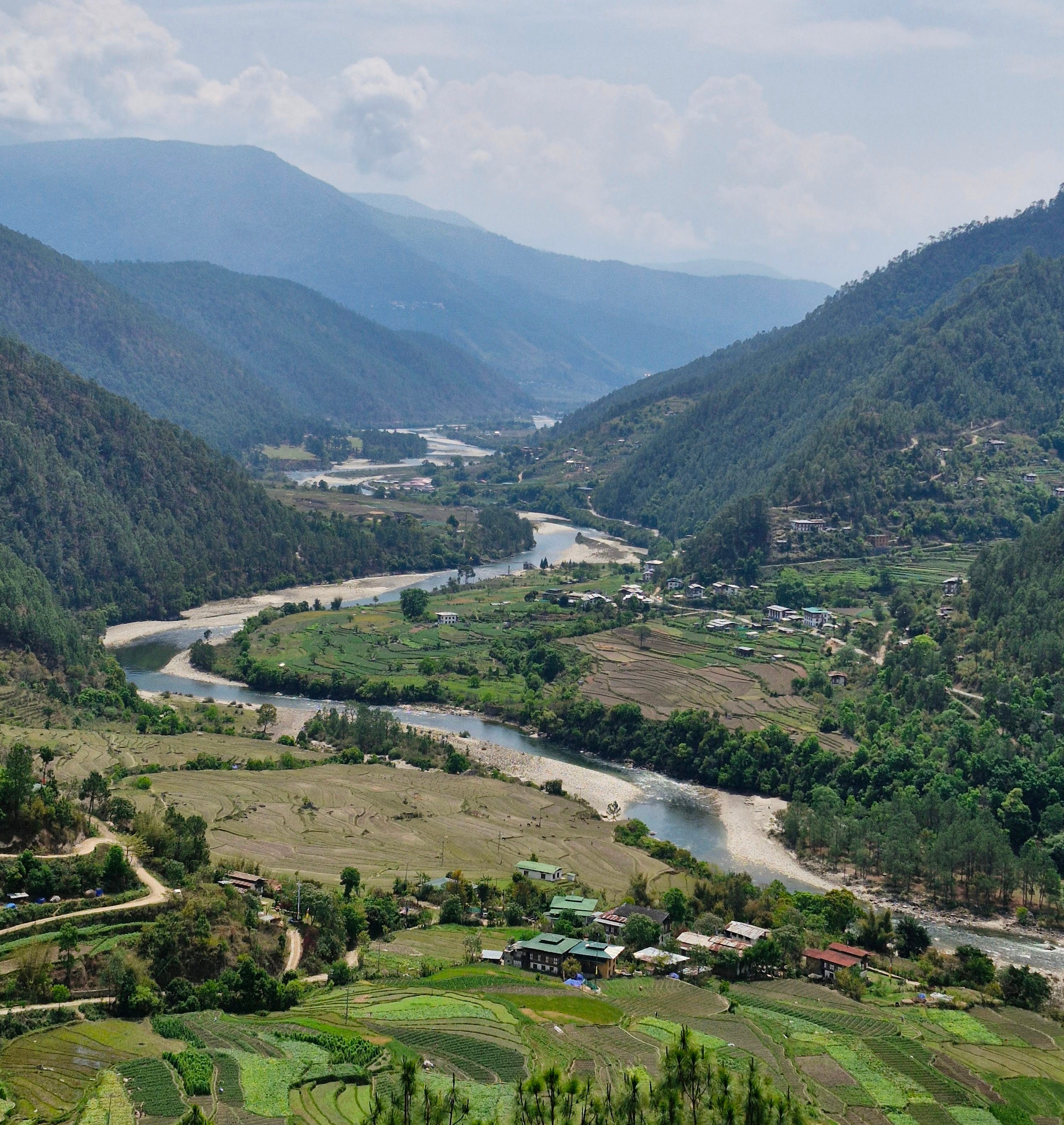
In the last 18 months, the government has sold 70% of its Bitcoin. As of last month, April 2026, the kingdom’s holdings dropped from 13,000 BTC to 3,954 BTC, with $215.7 million sold this year alone. In addition, the country’s last mining inflow over $100,000 was more than a year ago. Source: MEXC
This is interesting since Bhutan is the only sovereign-level holder of BTC to be visibly liquidating.
A few reasons may be contributing to the sell-off:
Margins on small-scale sovereign mining have compressed, so the country can earn more by selling electricity to India.
Geo-politics might be a factor as well. India is Bhutan’s largest development and trading partner, as well as a key security partner. Bhutan’s Indian ties help balance the attention of Bhutan’s northern neighbor, China, including the boundary with the Tibet Autonomous Region. The relationship between Bhutan and India is so tight that the Bhutan ngultrum is pegged to the Indian rupee at parity, with the two currencies interchangeable.
Proceeds from the sale of BTC are being used for the development of the GMC.
Gelephu Mindfulness City
Speaker: Tshering Dolker, Director of Tourism, GMC
The Gelephu Mindfulness City (GMC) is a special administrative region that promises “the world a different path of development, one where traditional Bhutanese values of spirituality and harmony with nature, blend with innovation, technology, and economic vibrancy.”
Think: an international satellite city like Dubai, but with sustainability, instead of consumerism, as the core philosophy.
The vision of GMC is to house 1 million Bhutanese and foreign residents by 2060. The city is to be a major transit hub, to compete with Singapore, and includes the country’s first railway connecting the city with Assam, India.
Using renewable energy, the project is currently focused on completing the Gelephu International Airport by 2029. This is the first major project in GMC’s “Diamond Strategy,” which initially sees the satellite city using a One Country, Two Systems model.
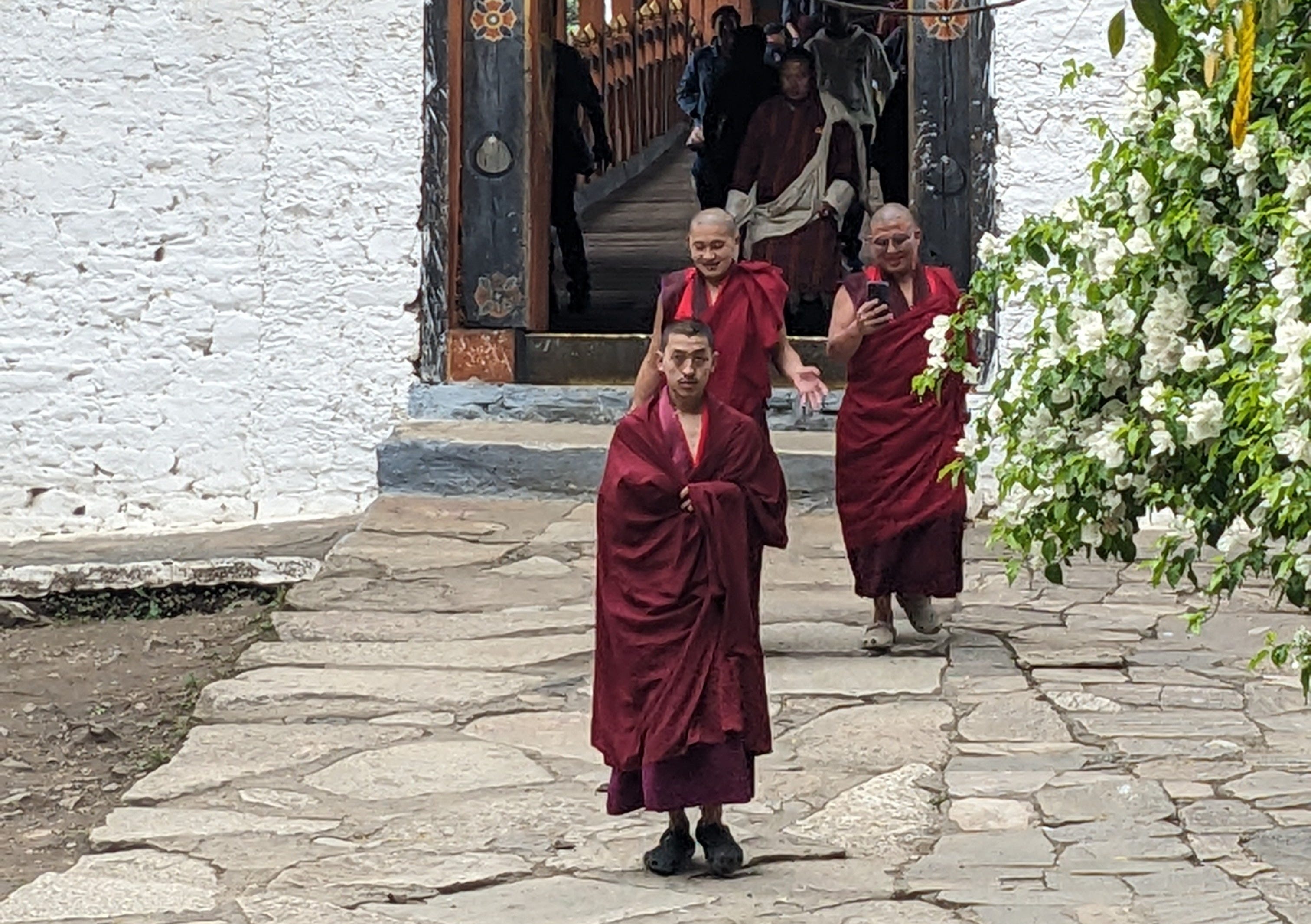
The first phase casts a wide net, aiming to attract an international community, including tech giants like Apple and Google. The second part of the diamond is the coming together of the two systems to integrate the city with the local population and more Bhutanese culture.
The Future is Bright(ish)
All told, there are big plans for this small country of less than 1 million. And kudos to the kingdom for reimaging its place in the world and how it can integrate its distinctly Buddhist values into an economic growth model. I applaud the country’s imagination and am looking forward to seeing how the country continues to progress.
But Bhutan also faces a number of challenges, including: (Source: The Guardian)
High emigration, with 1.5% of Bhutanese moving to Australia to work and study
Rising youth unemployment, standing at 28.6% in 2022
Women in the workplace have declined by more than 15% in the last 5 years
28% illiteracy in 2022 (although youth literacy is over 90%)
1 in 8 Bhutanese live in poverty
We also saw a bit of this new reality on the ground, with teenagers sporting hoodies in place of the traditional gao for men and kira for women. English is now the primary language taught in schools, and K-Pop has a firm grip since the introduction of cell phones.
I look forward to visiting again and watching as the country navigates not only a new path for itself, but a new way to exist in a modern world.
Additional Resources:
“Bhutan building Mindfulness City to create jobs, lure young Bhutanese home from abroad,” 60 Minutes episode.
“One of the World’s Most Remote Nations Opens Up,” BBC article, April 2026
If you like this post, please leave a comment or share it with others. This will help more readers find my work. ❤️
Christened “Wander Woman” by National Geographic, Erin Michelson has traveled to 130+ countries & all 7 continents. She is a professional speaker and author of the Nomad Life™ series of curated trips and travel guides, including the #1-ranked Explore the World with Nomads.
Curious to learn more about nomad life? Get the guide “Explore the World with Nomads: 50 Practical Tips, Interviews & Insights.”
I don't remember anything about the proposed Gelephu Mindfulness city, but many of the other things you discuss, positive and negative, were apparent when I was there. Thanks for mentioning the Hindu minority, who don't fit into this happiness plan at all. I'm all for what Bhutan is trying to achieve, but like any national plan, it's complicated.
Love this honest take and window into a unique developing country often shrouded in mystery. I’ve always wanted to go, maybe one day when the GMC opens up (such a strange and interesting idea).