


Fair warning for the bashful: this post contains penises.
Thunderbolt of Flaming Wisdom
Drukpa Kunley, known as the “Divine Madman,” was a Tibetan Buddhist monk who lived in the 15th century. He was known for his unconventional (ie, sexual) methods of helping others, mainly women, attain enlightenment.
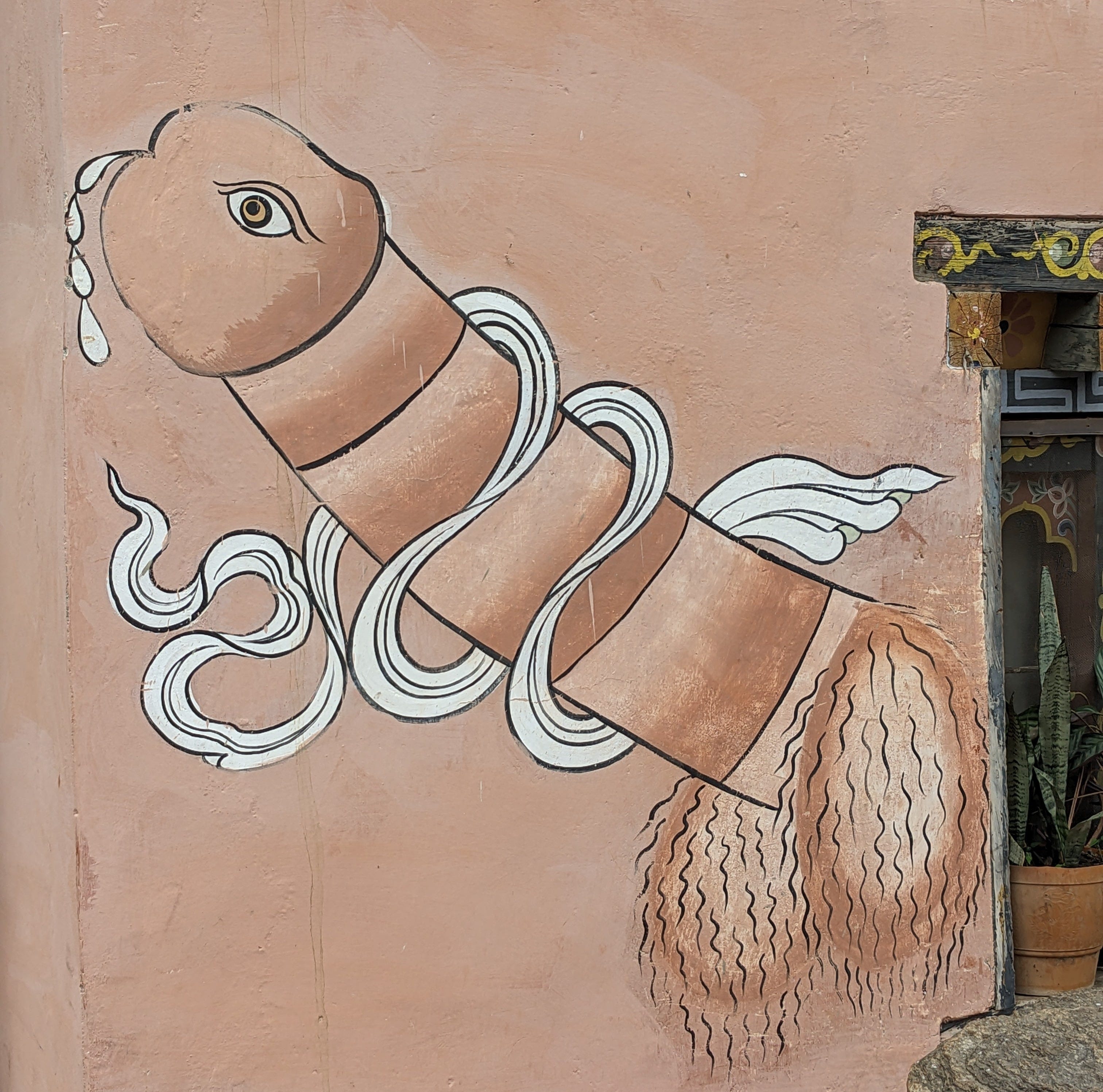
The Divine Madmen believed that we could only achieve spiritual happiness by forsaking our inhibitions. And so he helped those seeking nirvana by blessing them with sexual intercourse with his penis, the “Flaming Thunderbolt of Wisdom,” which he used to bless women and banish evil spirits.
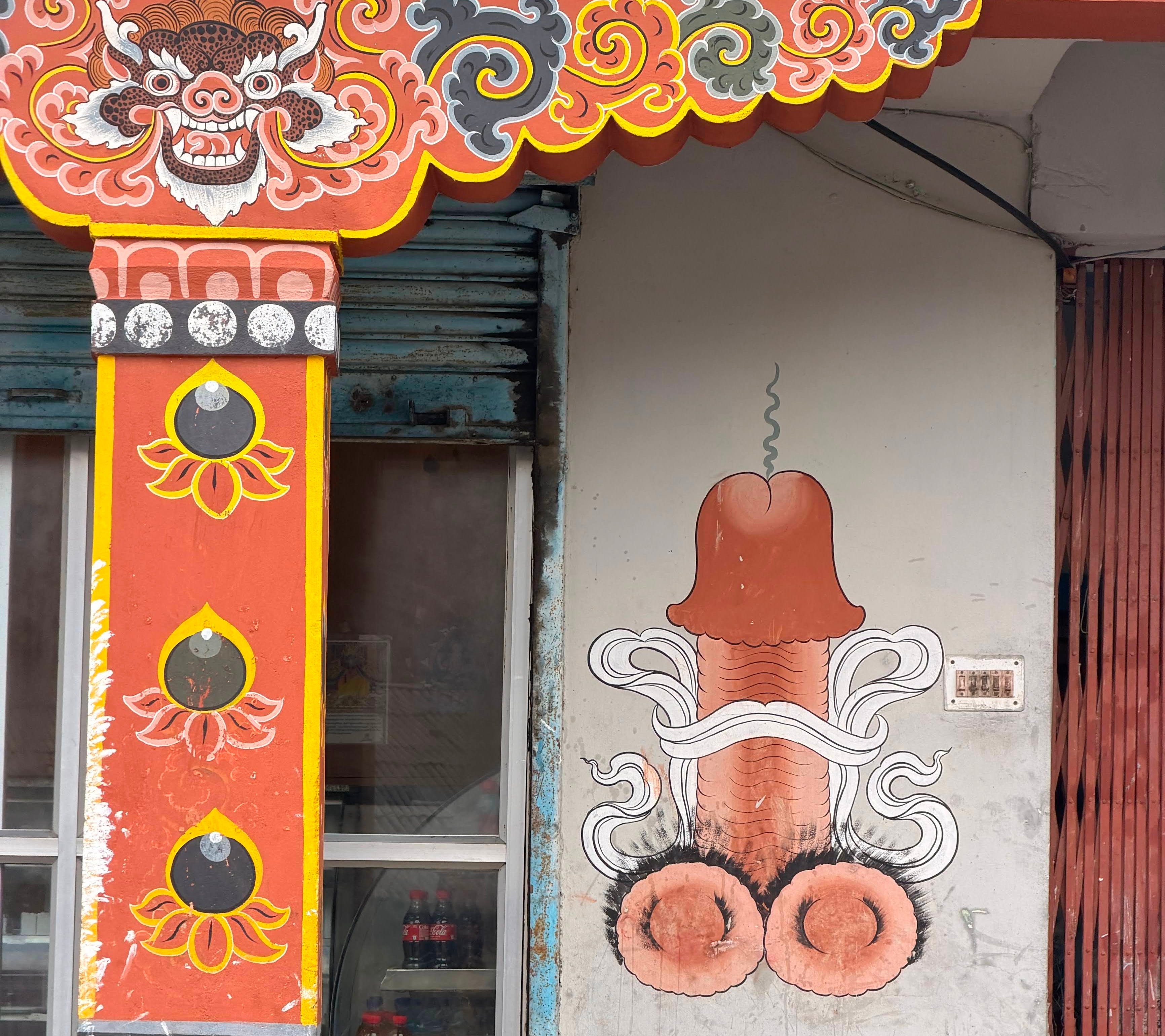
Per Bhutanese tradition, his unconventional teachings challenged religious authority, exposed the hypocrisy of the monks, and highlighted the emptiness of rituals. His main tenet was not to take religion (or life) too seriously.
The Madman & his Mother
Our guide, Tschering, told us many stories of the Divine Madman and his X-rated methods. Here’s one example. The Divine Madman insisted his mother sleep with him. She finally relented, but only if he agreed not to tell anyone. He agreed, they had sex, and he promptly told the entire village.
His mother, shamed and shunned, started living the life of a recluse. Alone, she meditated all day and ultimately found nirvana. Moral of the story: Only by ditching your pride can you be humble enough to attain enlightenment. Note: all of the Divine Madman’s teachings comprise an element of disgrace, mainly toward women.
Most of the women and I in our small group thought this type of teaching was B.S., loudly disapproving of the Divine Madman’s methods. Yet in doing so, we realized that we were offending our guide by rejecting one of Bhutan’s most revered figures.
Bhutanese hold the Divine Madman in such high regard that they paint colorful phallic symbols on their homes, not only to ward away evil spirits, but also to attract good luck and grant fertility.
In fact, the Divine Madman is esteemed as a “fertility saint,” with couples from around the world visiting his monastery. Inside Chimi Lhakhang, his fertility temple, is a photo album of all the happy couples and their children that have received his blessing.
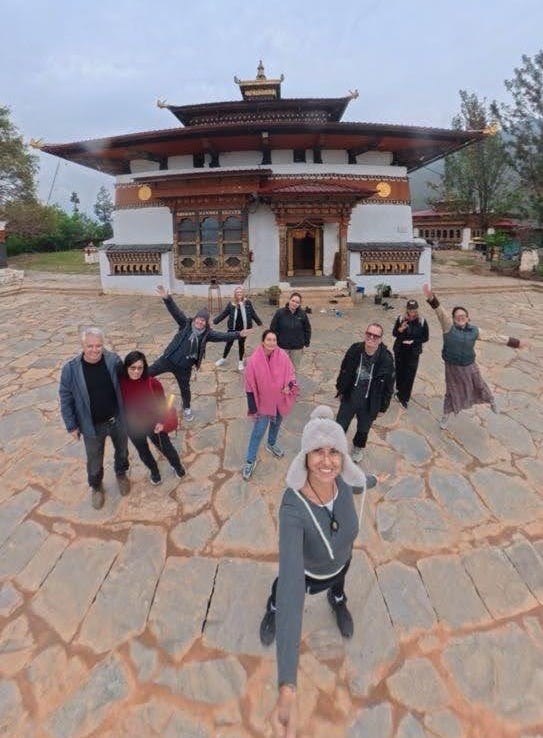
In the end, we learned the lesson of the Divine Madman. Who are we to judge others’ traditions and beliefs?
Flights of Fancy
Another Bhutanese myth prompts us to suspend our notion of reality: The legend of the Tiger’s Nest.
According to local folklore, the Buddhist master Guru Rinpoche ensconced himself in a sacred cave for 3 years, 3 months, 3 weeks, and 3 days. When he emerged, he rode a flaming tigress across the Himalayas to Bhutan’s Paro Valley, where he introduced Buddhism to the country.
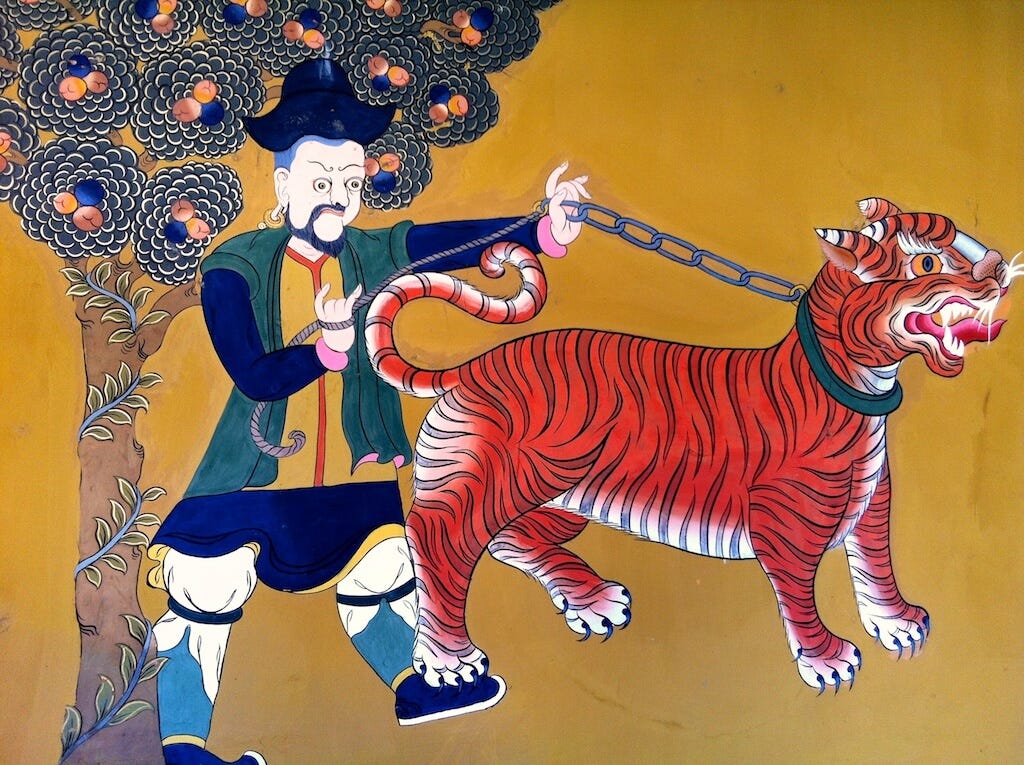
Here, on a 3,000-meter (nearly 10,000-feet) cliff, he landed and created the “Tiger’s Lair,” today known as Paro Taktsang Monastery or Tiger’s Nest Monastery. From this perch, the Buddha tamed the valley’s evil spirits.
The sacred monastery, built in the late 17th century, sits on a sheer rock face and is one of the most iconic sites in the Himalayas. Built without iron nails, the monastery features massive, whitewashed walls and traditional Bhutanese woodwork.
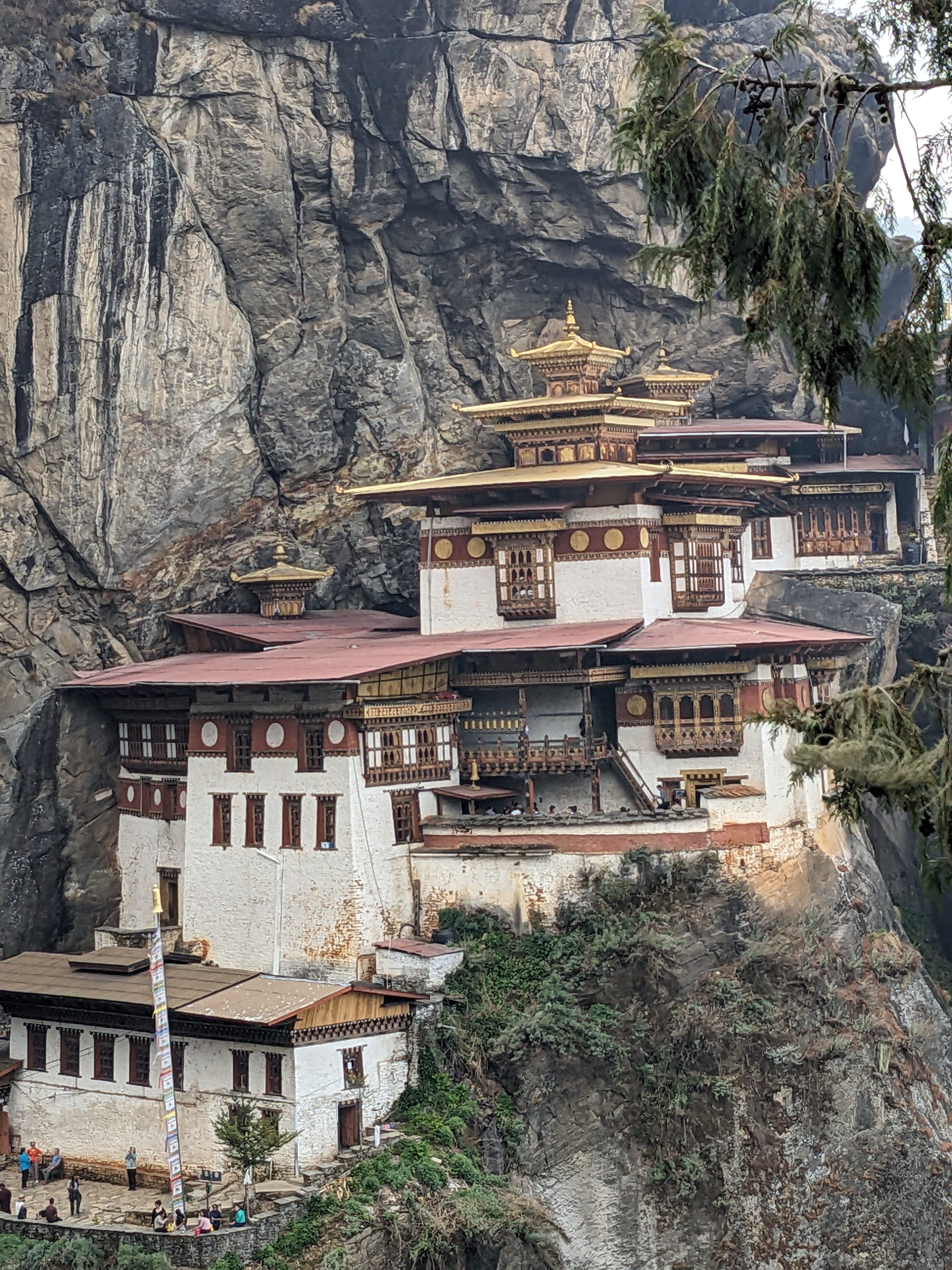
The 3-4 mile climb to Tiger’s Nest is not nearly as difficult as it appears. While the hike is steep, gaining 500 meters (1,700 feet), it is very doable in 4-5 hours, with stops for lunch and tea.
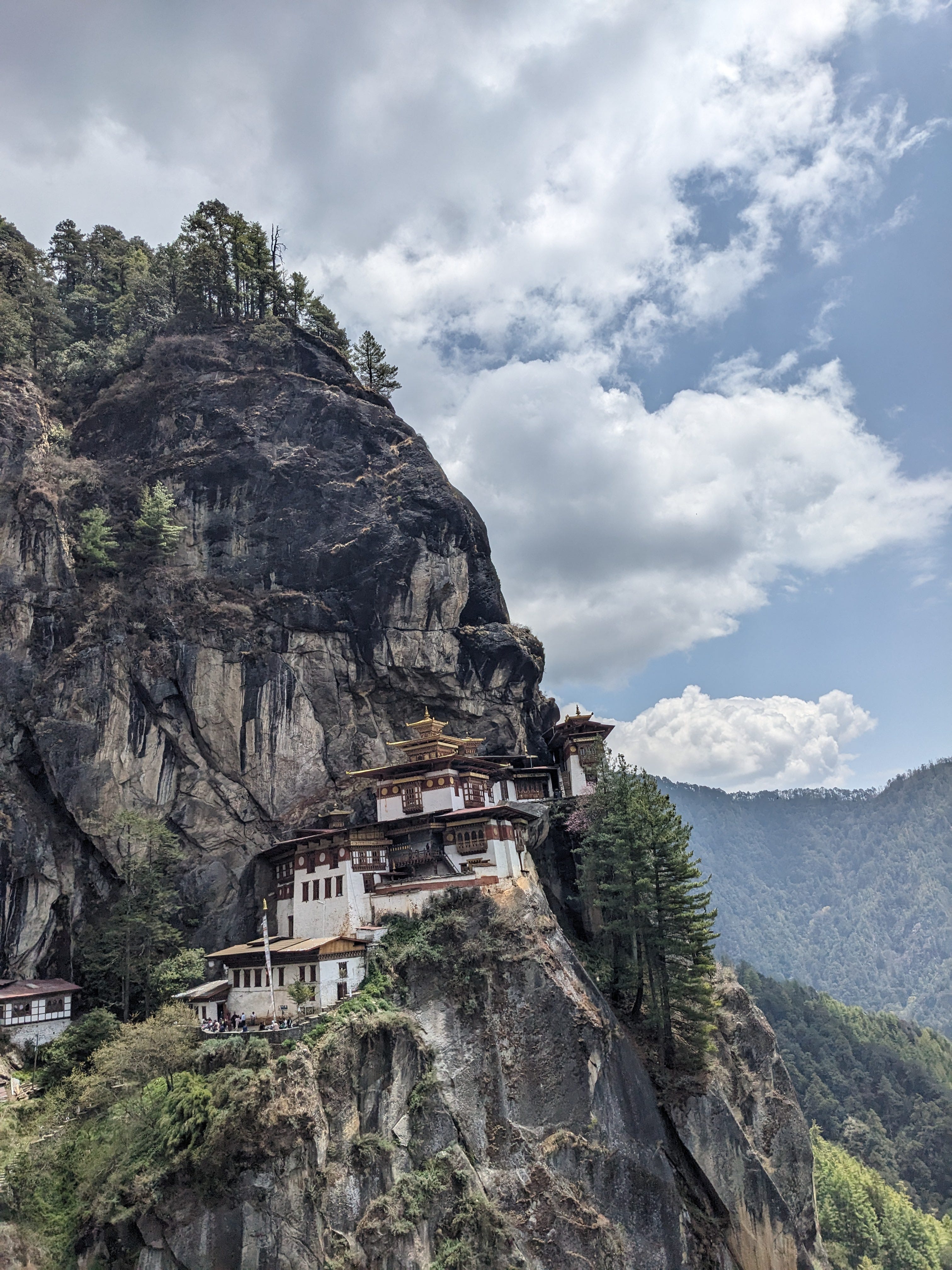
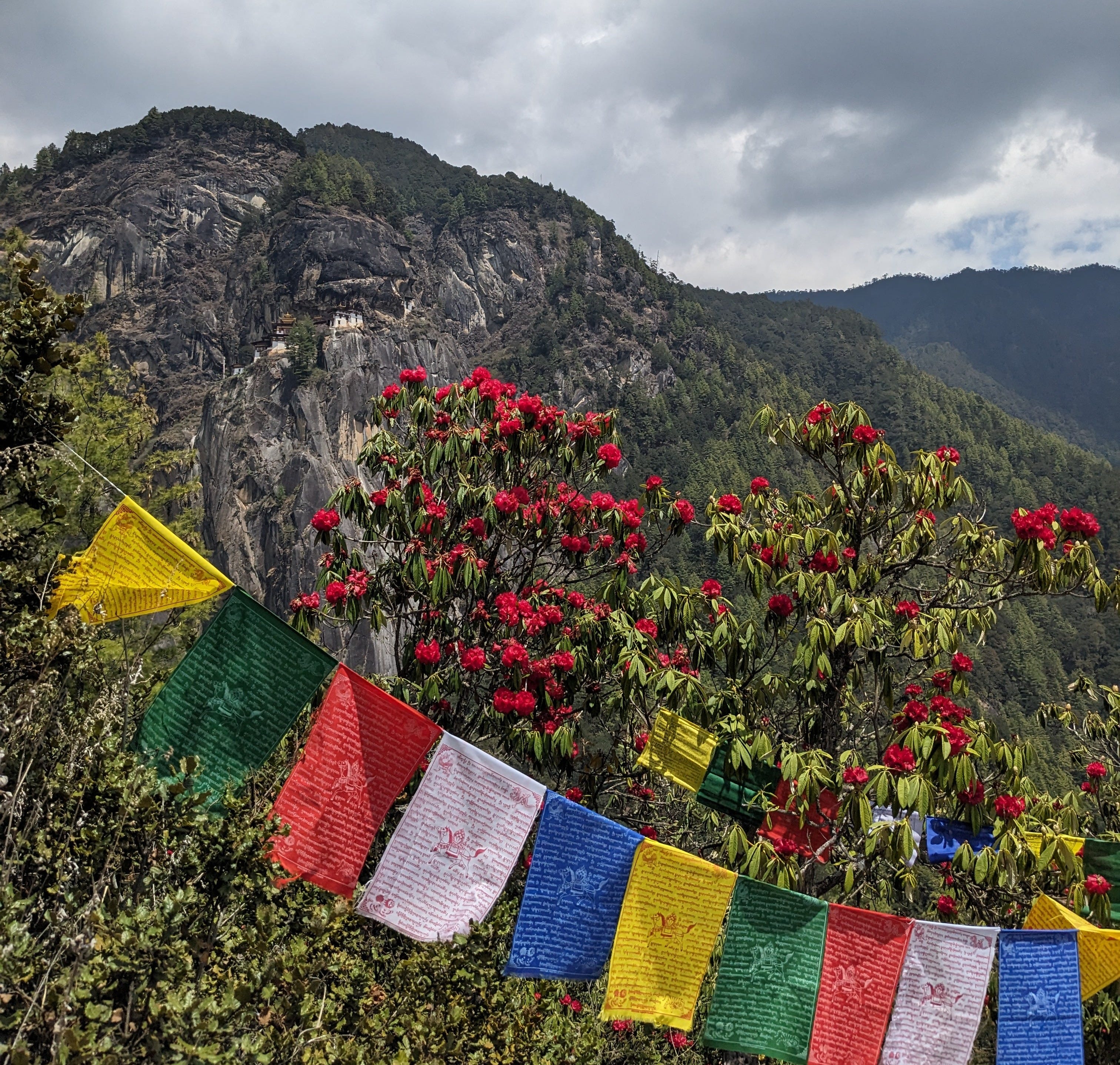
Like most tourists to Bhutan, Tiger’s Nest was the cultural pinnacle of my visit. The beautiful Monastery perched on the cliff was awe-inspiring. As was the walk up through the pine and rhododendron forest, bursting with red flowers. It was a magical day that I will never forget.
Mask Dances
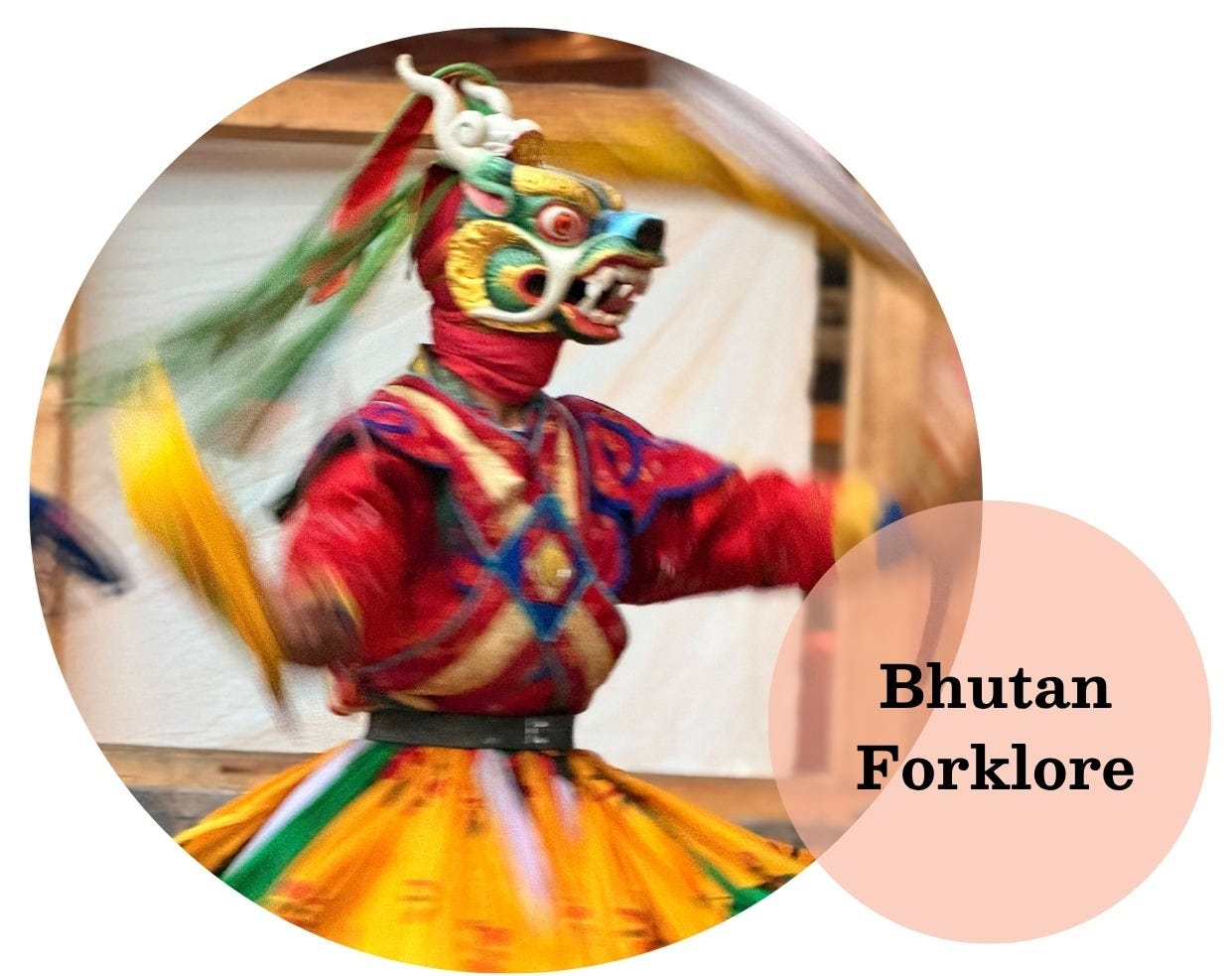
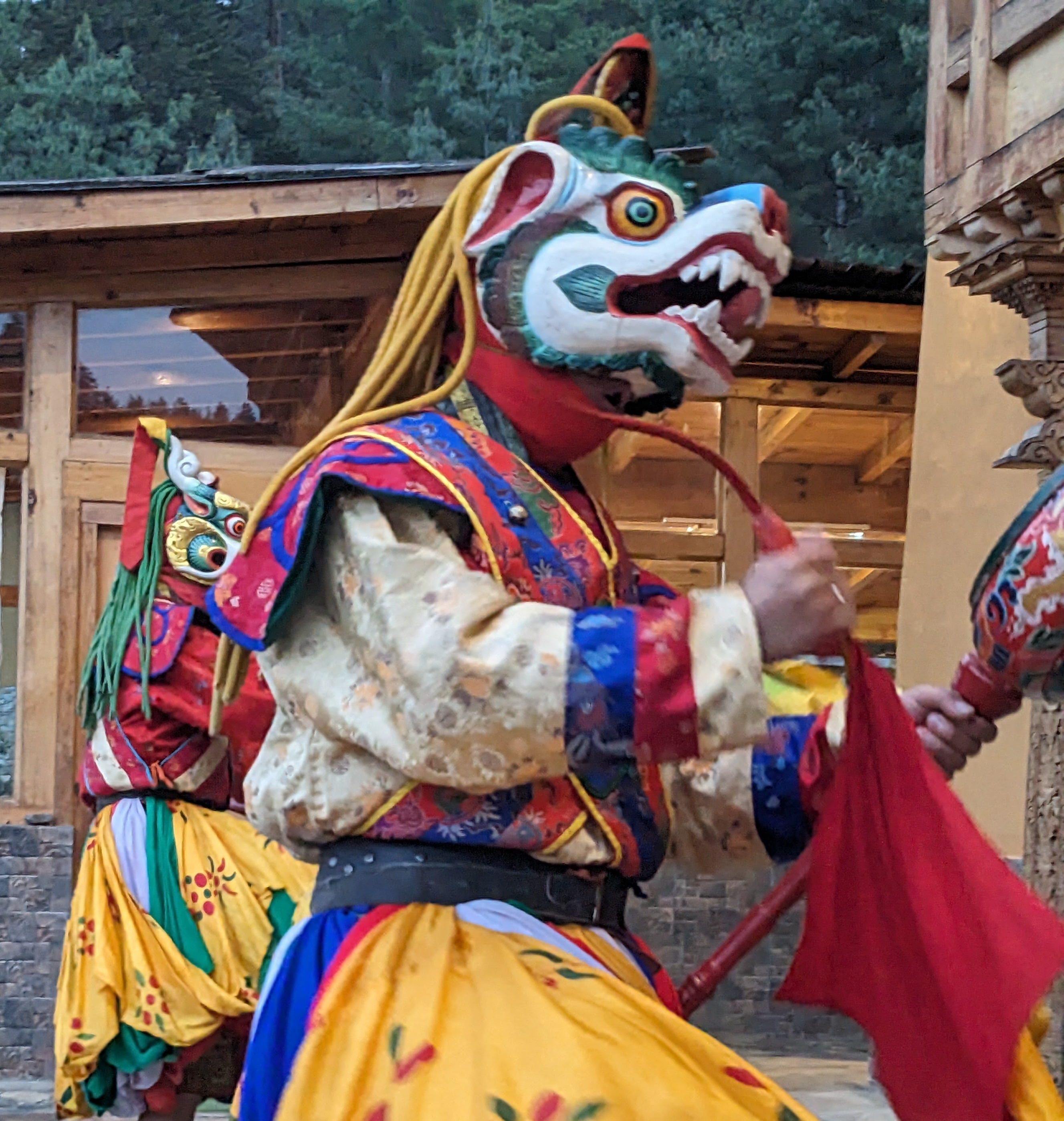
The final bit of folklore fantasy is Bhutan’s incredible masked dances. Known as Cham, these sacred performances are performed by both monks and laymen.
Adorned with bright costumes and intricate masks, the music and dances honor deities, drive away evil spirits, and bless the land.
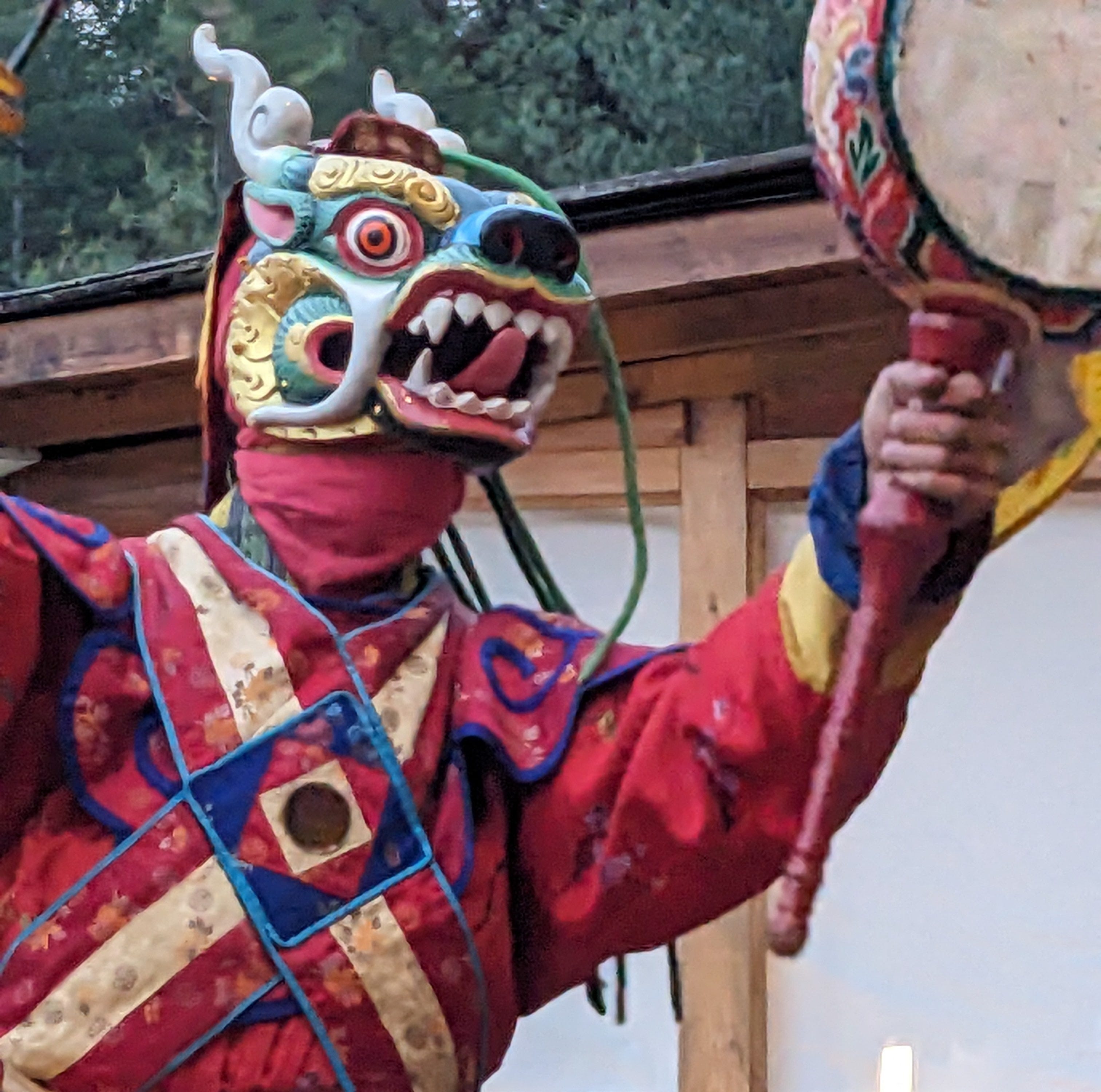
Rooted in cultural and spiritual traditions, the mask dances are part spiritual ritual, part historical storytelling. Meant to educate the public, many of the dances focus on themes such as death, purification, and karma, urging onlookers to consider the afterlife and take steps in the present to purify their souls.
Himalayan Imagination
Each of these three flights of fancy—the tales of the Divine Madman, the Tiger’s Nest myth, and the fables portrayed by masked dancers—underscores the rich history of Bhutan. They’re also a visual key to the emotional, cultural, and spiritual power that makes Bhutan one of the world’s most fantastical places.
If you like this post, please leave a comment or share it with others. This will help more readers find my work. ❤️
Christened “Wander Woman” by National Geographic, Erin Michelson has traveled to 130+ countries & all 7 continents. She is a professional speaker and author of the Nomad Life™ series of curated trips and travel guides, including the #1-ranked Explore the World with Nomads.
Curious to learn more about nomad life? Get the guide “Explore the World with Nomads: 50 Practical Tips, Interviews & Insights.”
I loved this Erin and find the mystical traditions and beliefs fascinating.
Also, don't most guys think their penis is a "Flaming Thunderbolt of Wisdom"? 🤣
Such a beautiful piece that highlights the culture, beliefs, and values are passed down through generations of stories!
Also, may I be so lucky as to one day start a post with a penis warning 😂