

Bhutan Blessings: Purification, Protection & Parades
Best of Bhutan series

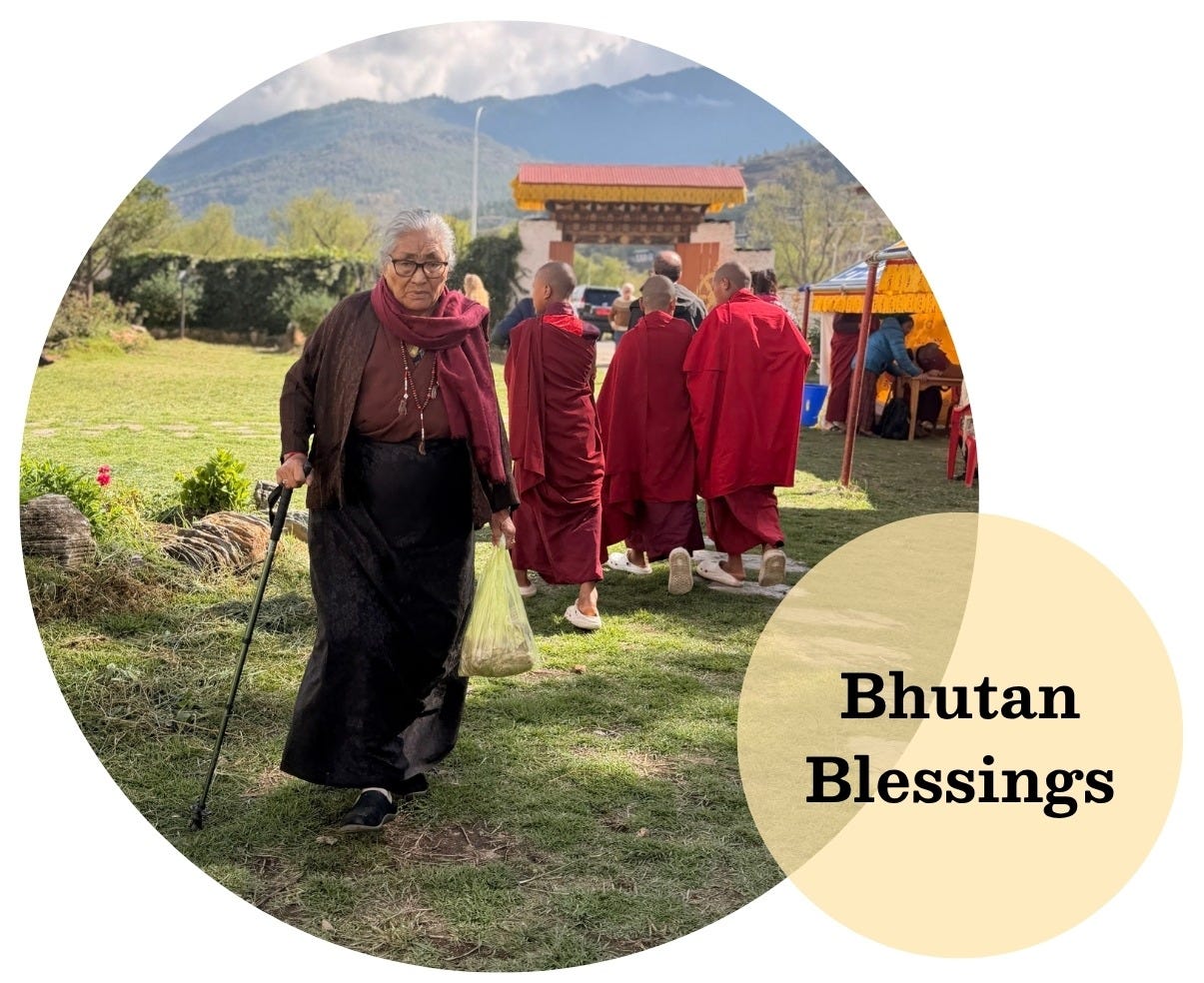
My favorite part of visiting a (new-to-me) country is learning about the culture. And Bhutan did not disappoint. Bhutanese society is grounded in Buddhism, rich in tradition, and swimming in superstition—it was fascinating!
Whether or not you’re a religious person or believe in the mystical, these spiritual rites can nevertheless serve as a potent reminder of the main tenets of Buddhism personal responsibility, ethical living, and mental discipline as one strives to eliminate suffering (dukkha) and achieve enlightenment (nirvana).
It is with this view that I participated in the Buddhist ceremonies that we were gifted during our time in Paro. I am grateful to have received these lessons in mindfulness and compassion.
Purification & Protection
Our first two days in the small town of Paro set the tone for our entire adventure. To kick off our travels, we were treated to a private purification ceremony by the head abbot at Druk Choeding Lhakhang, a 16th-century temple built in the heart of Paro.
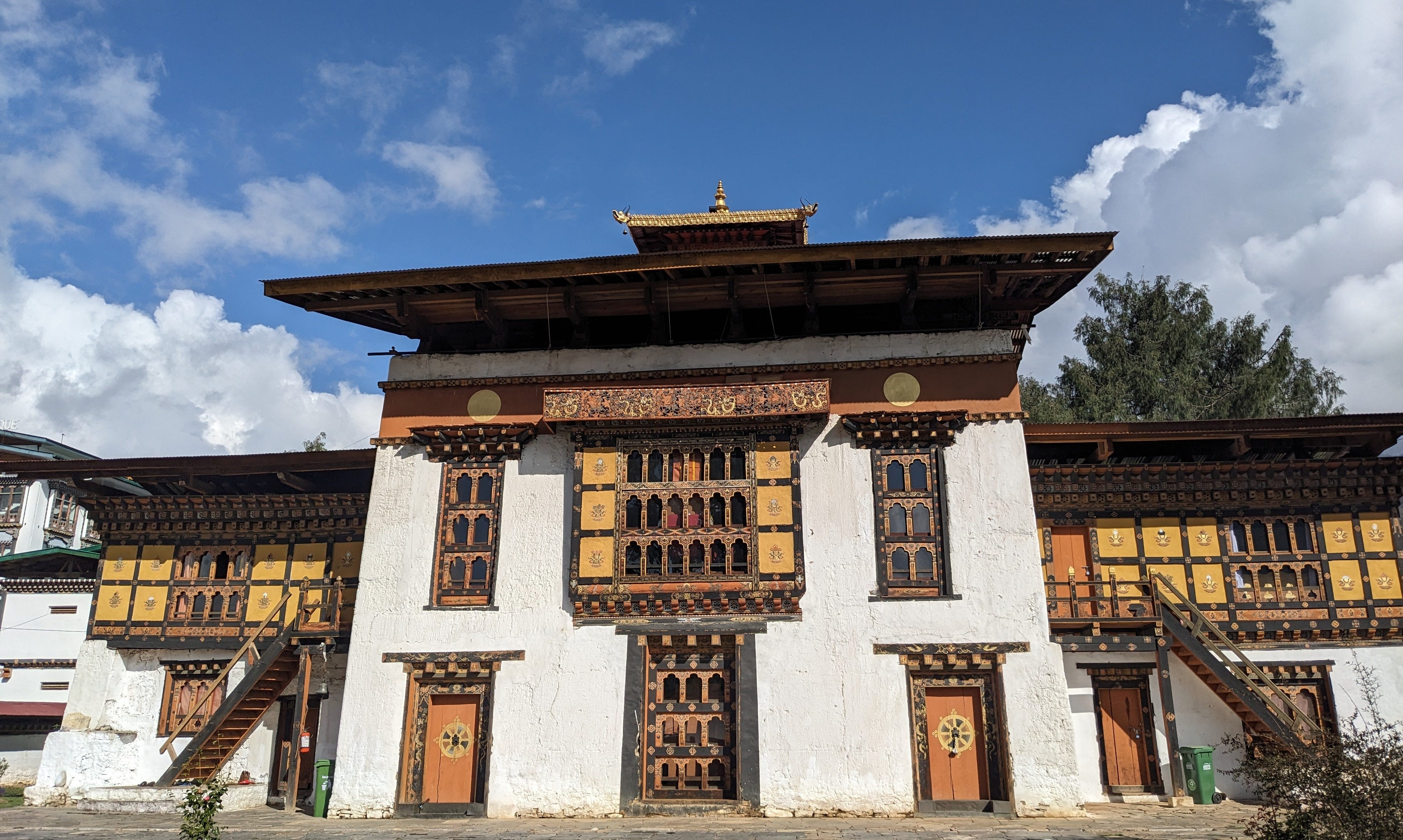
Inside the two-story temple are colorful paintings and wood carvings depicting the life of the Buddha. Within this grandeur sat the head abbot. During the solemn ceremony, we each walked up to him and bowed our heads. He blessed us by reciting a prayer, then poured sacred oil on our heads.
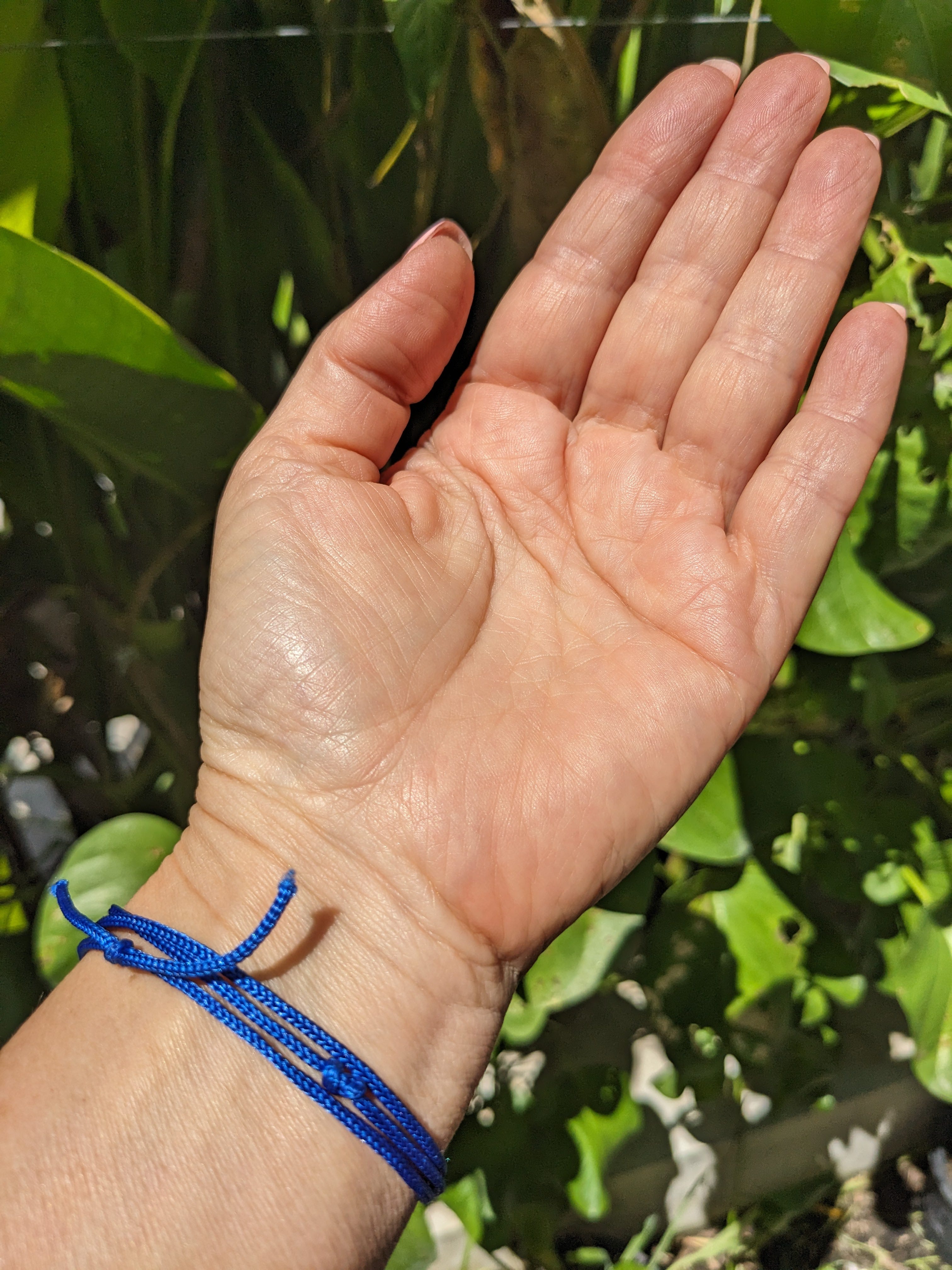
The abbot then gave us a colored string with a knot in the middle called Sungkü, a protection cord. The string was blessed by the Lama, who recited a mantra and blew onto the knot to imbue it with spiritual power.
The knot is thought to resemble a thunderbolt, symbolizing the indestructible and enlightened nature of reality. The knot is also sometimes referred to as an “Endless Knot,” symbolizing the interconnectedness of all things.
The color of the string (blue, white, red, green, or yellow) represents the five elements of sky, air, fire, water, and earth. The cord is tied on your wrist and is said to protect the wearer against misfortune and negative energy. We were instructed to leave it on for at least 3 days.
Observant Meditation
During this private viewing, we were seated on pillows before the abbot. He proceeded to give us detailed instructions on how to meditate. Here’s a summary:
Keep eyes open
Exhale one big breath out through your mouth to expel negative energy
Take three slow breaths in through your mouth and out through your nose to inhale positive thoughts and pure breath
I used this breathing technique throughout my time in Bhutan, relying on it if I was stressed or wanted to dispel bad energy surrounding me. Midway through our adventure, I came to believe that learning to pacify my mind was the primary reason I came to the country.
I discovered how to maintain my own inner harmony and reset my balance despite my surroundings. This newfound meditation was one of the reasons that I came away from our trip to Bhutan with a greater sense of tranquility and peace.
Temple Donation
Our luck continued, with the next morning ushering in Jana Chay, a celebration that only happens once a year. During the festivities, villagers come to the monastery to cleanse themselves of bad karma and receive blessings.
Since giving back to communities is central to our ethical travel ethos, I was happy that we came bearing gifts. Our donation included a 25-kilo bag of rice, milk, and snacks.
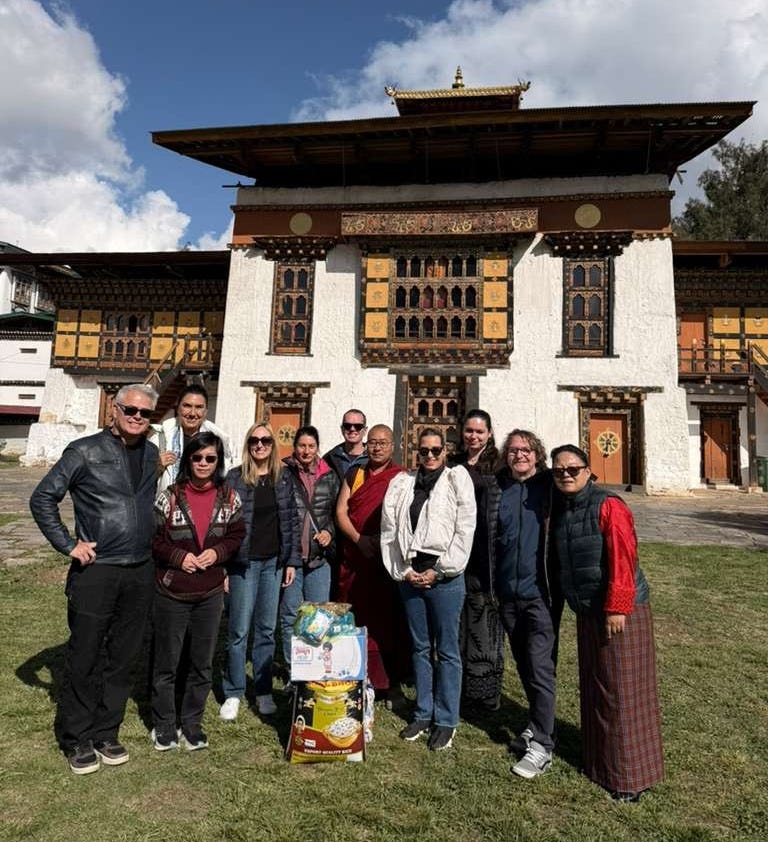
Apparently, the few tourists who do attend the festival don’t donate, so the monks were very appreciative of our gift. I was happy that our group returned the favor of their blessing, and we were granted permission to participate in the ceremony.
As is customary in Bhutan, we were first served milk tea before being invited into the hall where the ceremony was to begin. Again, escorted to a space with special viewing privileges, we sat facing the opening proceedings of the ceremony.
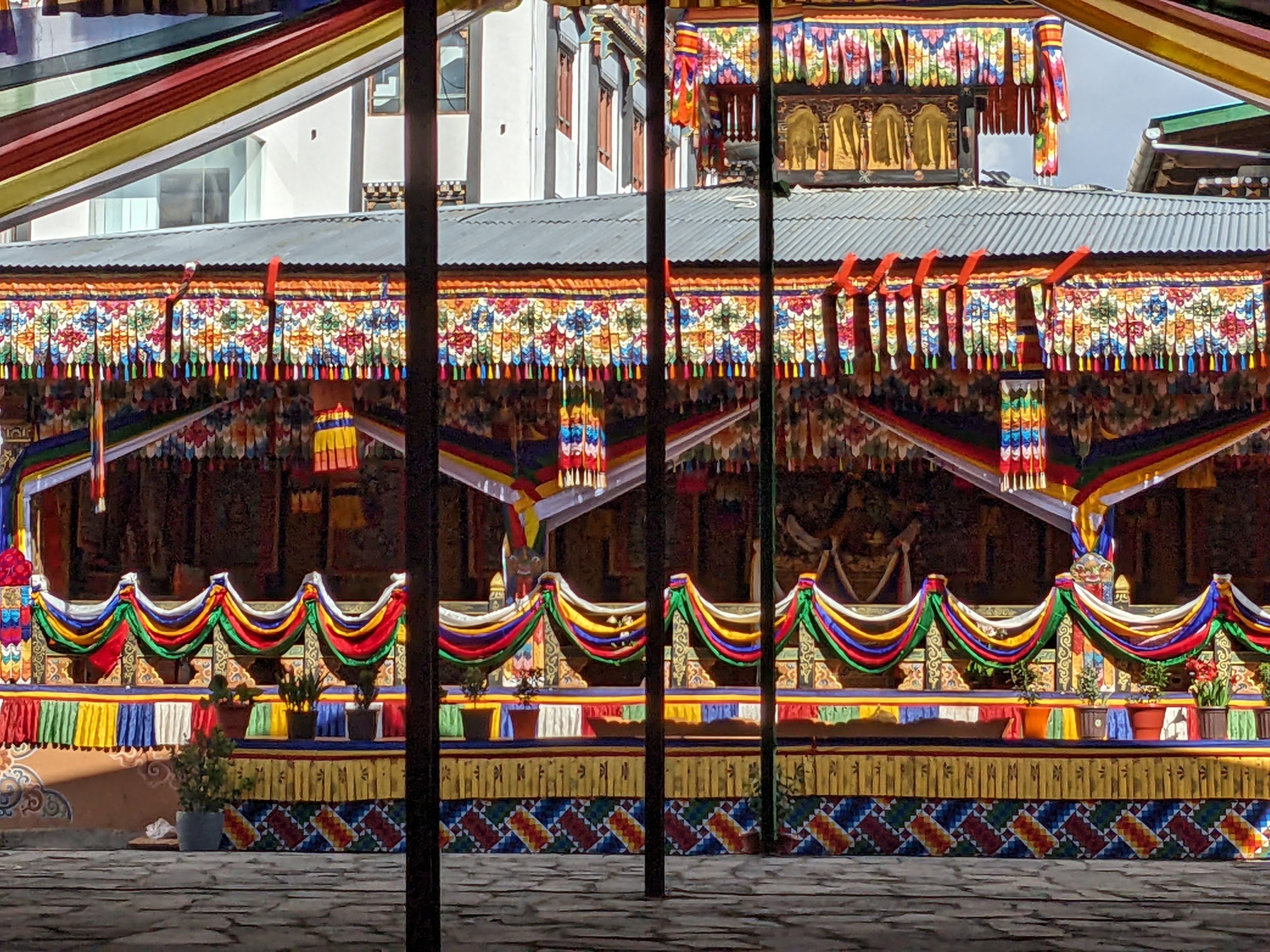
From our front-row vantage, we could see several generations of monks and novices, some as young as five, chanting and playing instruments. With the full monastery in attendance, the music reverberated throughout the open-air hall.
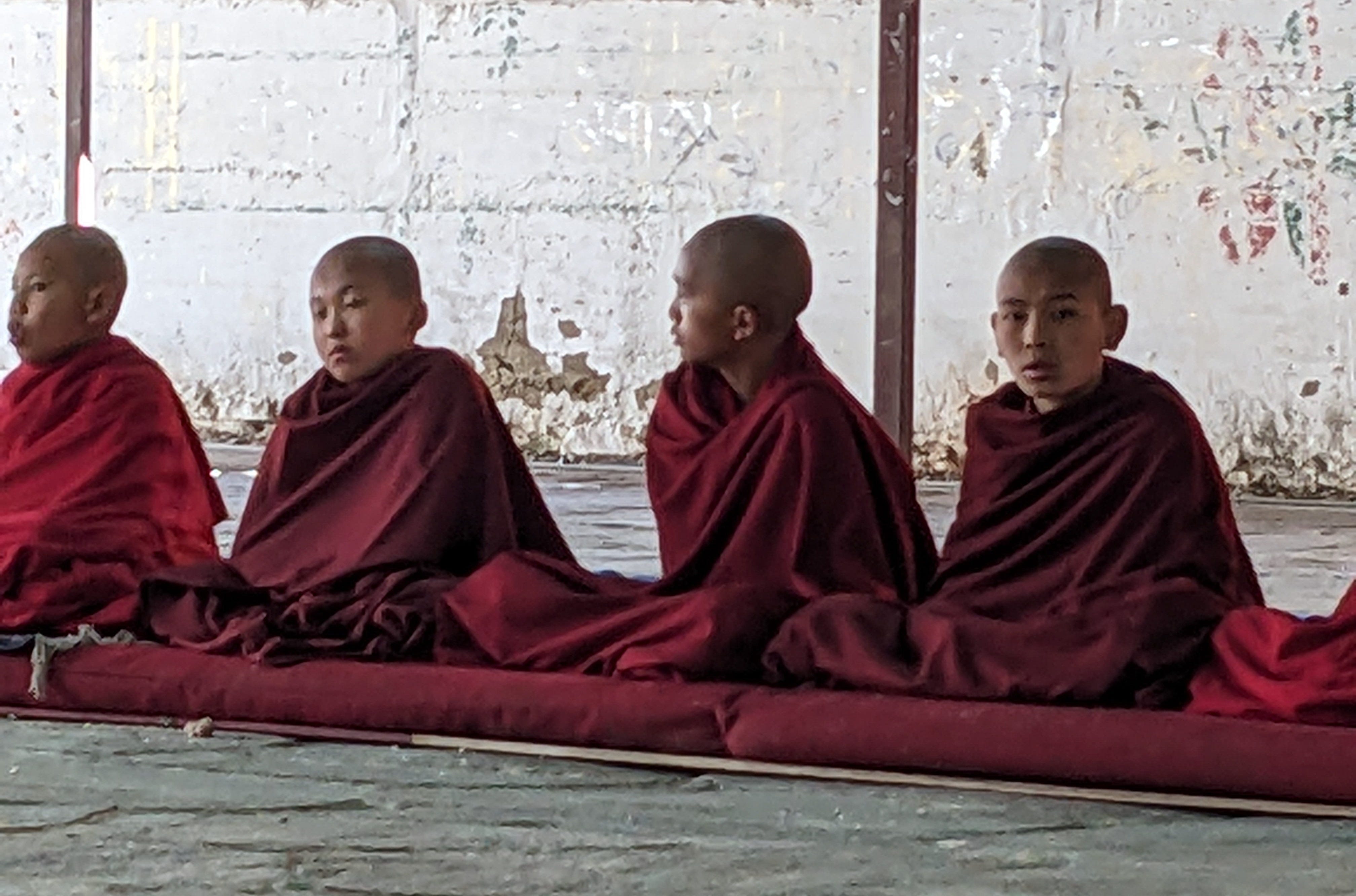
Chatting a sacred text, including mantras (a sacred sound or word) and sutras (a type of scripture), is a form of devotion. The ritual music and intonation are seen as an offering to Buddha. It is a way for monks and laypeople to prepare their minds for silent meditation.
In Bhutan, taking photos and filming is strictly prohibited within monasteries (punishable by deportation), so this was a rare opportunity to film a Bhutanese Buddhist ceremony.
Pilgrimage
As the chatting continued, villagers began to parade into the hall. Dressed in traditional clothing, which is mandatory in Bhutan, men wore their best gho (knee-length robe), and women wore a kira (skirt and jacket).
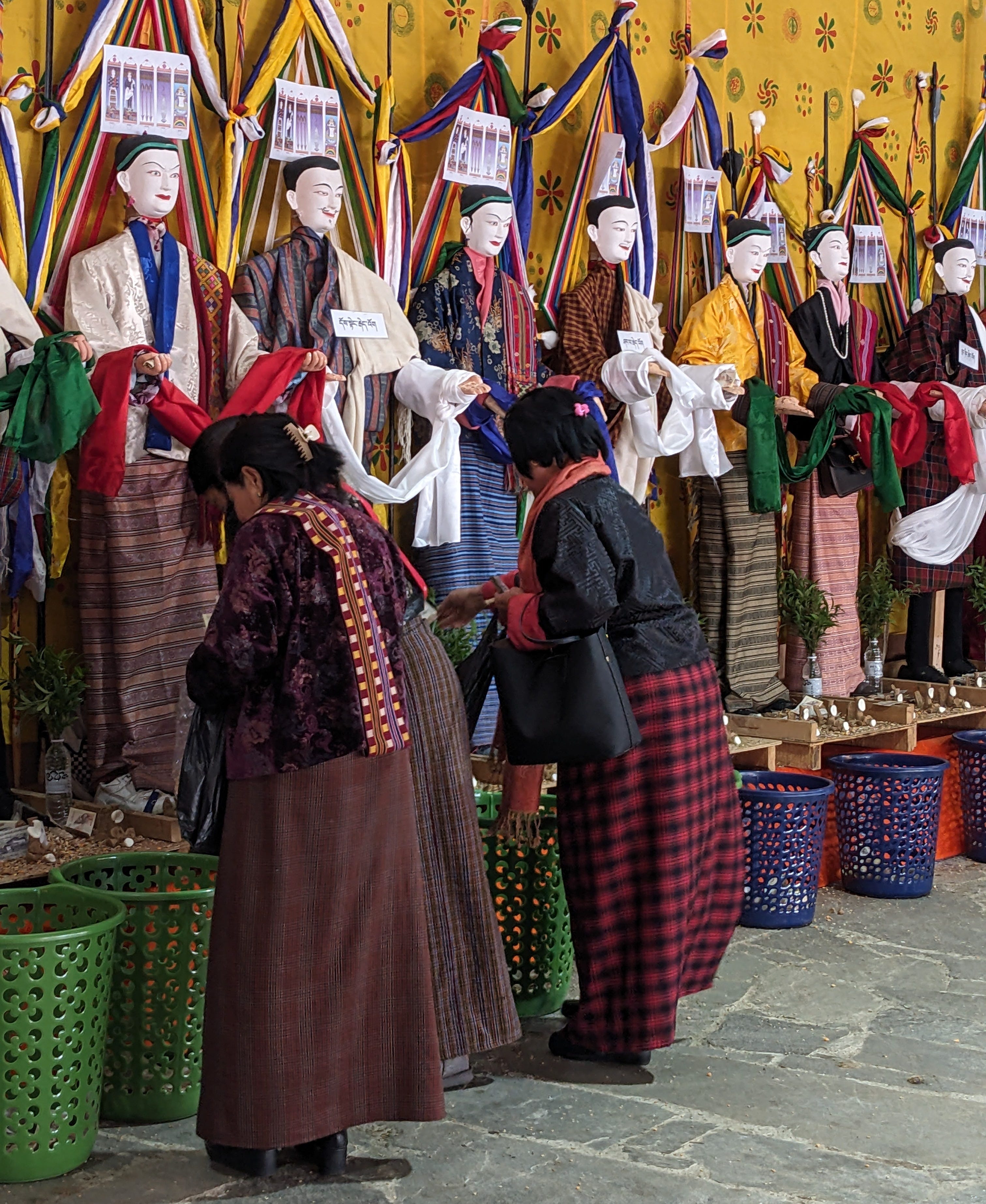
The villagers filed past displays from each of Bhutan’s 20 regional districts. Each display featured a man and woman from the district, providing each pilgrim an opportunity to pay homage to their home region. Most stood in front of their birthplace to pray and make a donation.
Animal Parade
Rounding out the experience was a display of each animal of the Chinese zodiac. Again, each pilgrim visited their animal to make a donation and receive a blessing.
My Chinese zodiac animal is the goat. Don’t know your zodiac animal? You can look it up here.
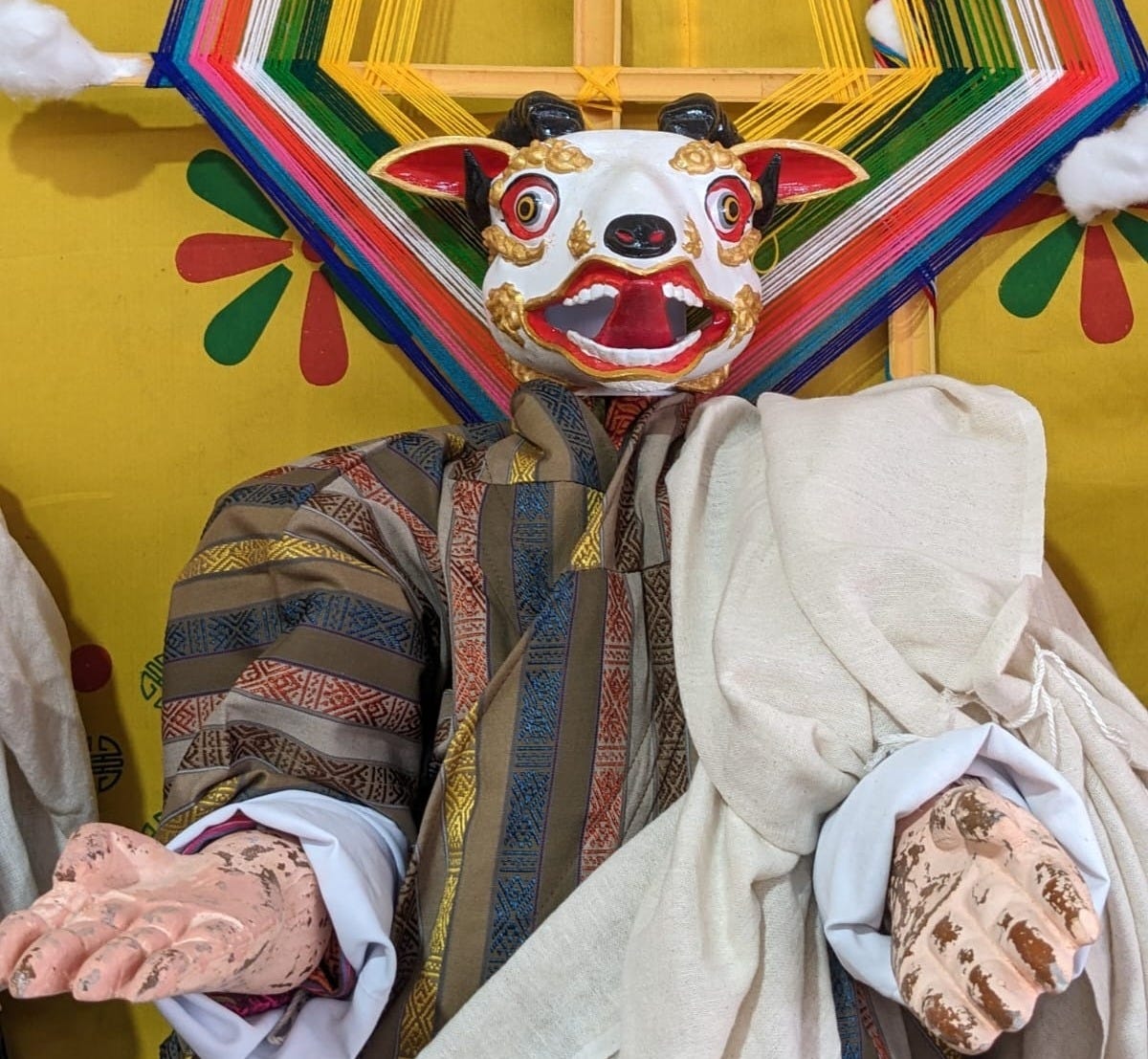
As a very religious and superstitious society, nearly all Bhutanese participate in these festivals. But for the elderly, they are particularly important as they believe it is a chance to begin preparing for the afterlife.
Animals, in particular, are thought to be courtiers of the lord of death, so Bhutanese believe that honoring your animal will help guide you to the right path in your passing.
For me, the animals, chanting, blessings, and talismans all point to Bhutan’s vibrant mystical life. I cherish the opportunity to participate in the ceremonies, considering myself fortunate to have been given a window into this wondrous world.
If you like this post, please leave a comment or share it with others. This will help more readers find my work. ❤️
Christened “Wander Woman” by National Geographic, Erin Michelson has traveled to 130+ countries & all 7 continents. She is a professional speaker and author of the Nomad Life™ series of curated trips and travel guides, including the #1-ranked Explore the World with Nomads.
Curious to learn more about nomad life? Get the guide “Explore the World with Nomads: 50 Practical Tips, Interviews & Insights.”
Bhutan has been on my short-list for a while. It's been tough to swing it back to Asia since we've been in Africa and need to get as much as we can out of this continent while where are here, but someday...And you've certainly helped keep it fresh and inviting and in mind until I get the chance. Thanks for writing.
What an opportunity to take part in these ceremonies! Tibetan Buddhism, which includes the schools practiced in Bhutan, has a particular atmosphere that I've never seen anywhere else. There is a sense of peace to it that would serve well elsewhere in the world.