

Redefining Depression as a Nomad
Nomad Profile

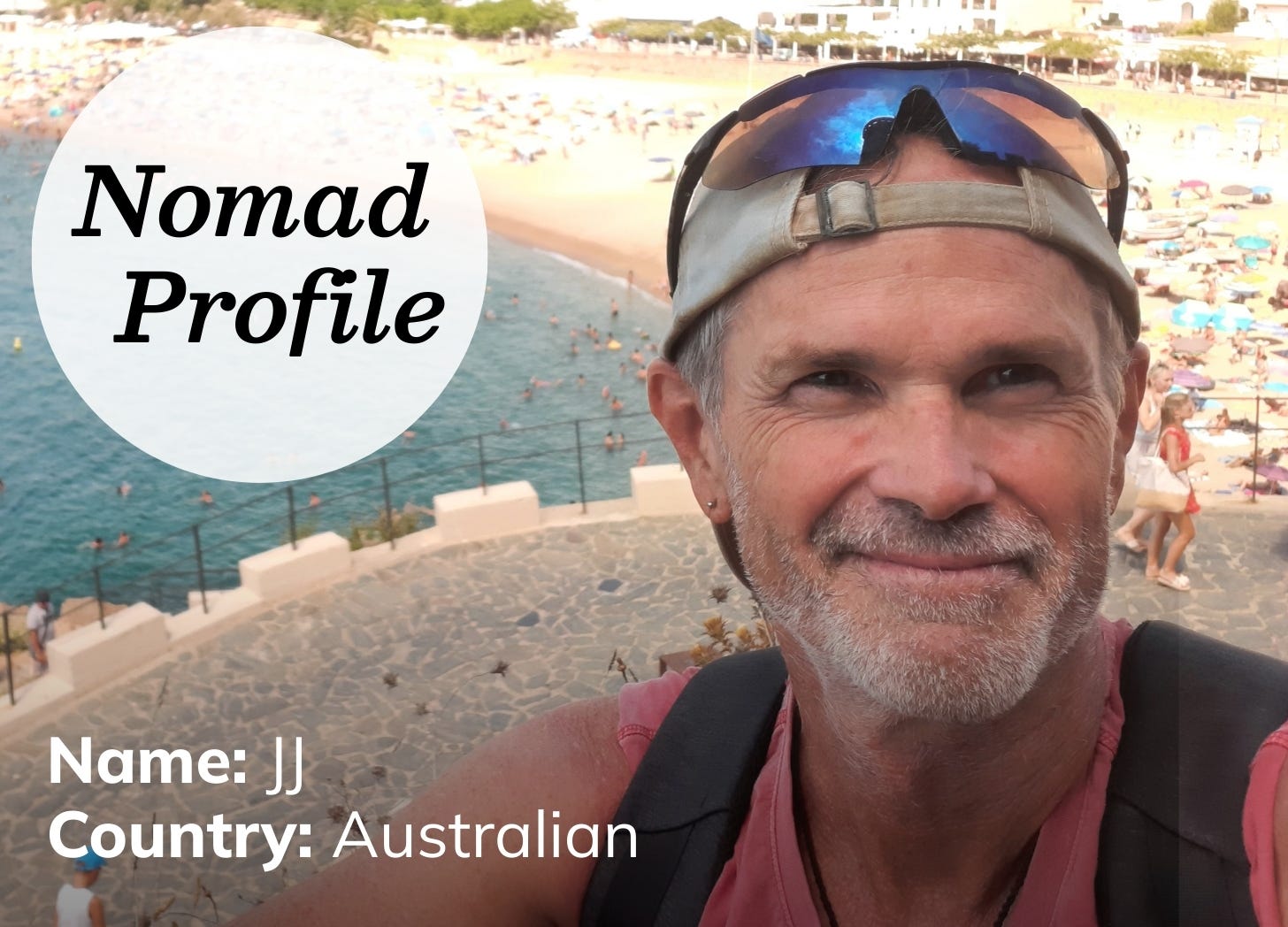
JJ is the author of Inside the Outside. I find his writing both intimate, almost raw, and reflective. As he says, he takes us “Inside my head as I take in the outside world.”
JJ also narrates some of his work, which I love. This is my favorite piece: The Shadows of Tangier. I also really like the 2-part poem The Map of Belonging: The Why and The Where, also with audio versions. Give ‘em a listen and let me know what you think!
9 Fun Facts
First Name: James - JJ - (my family calls me J)
Age Range: 60s
Nationality: Aussie
Nomadic Stance: Not sure what category - I have been on the road most of the last 3 years, and been home maybe 8 months during that time. I don’t actually have a home in Australia and am a housemate at a mate’s place in Melbourne, or am a live-in property manager at my sister’s BNB, near Melbourne when I’m back.
Last Corporate Job: I’ve never had one and have worked for myself or been freelance for 30+ years. But I did work in national politics in the 1990’s, have written freelance for big legacy newspapers and mags, and I started a business - ethical investment research - which had corporate clients, which wrapped up about 15 years ago.
Current Job: F/T writer - that means ghostwriting, copywriting, media advice, and author (the latter barely counts as the royalties are pathetic)
Favorite Country: Long term: Spain - Short term: Laos or Morocco
Next Stop: Malaysia, then back home for 2 months
2 Questions
You openly discuss your struggle with depression in your writing. How does travel and/or writing support your mental health?
Ah, well, that’s a big question.
Travel both challenges and supports my mental health.
On one level, it’s relatively easy to transcend one’s own existential rubbish when walking through Petra or listening to buskers at a Christmas market in Copenhagen.
At a deeper level, the hassles and stresses of actually getting around, borders, visas, online bookings, costs, consistently push me out of my comfort zone on many levels, as does the disorientation and uncertainty of being somewhere new and weird without knowing a soul or where TF my hotel is…at 11pm…
But those challenges are self inflicted and so a) I find gratitude for even being there in the first place and b) have to learn how to be comfortable in discomfort.
Both are great techniques for strengthening one’s mental health.
So,I guess the answer is counter-intuitive: the challenges support my mental health.
Does reading your work aloud through narration influence the writing process for you?
Absolutely. I have worked as a speechwriter so have learned a few techniques which come in handy.
I read each audio piece out a number of times as I’m writing it, as the pacing and tone need to be rehearsed. It’s a great way to get noticed in a cafe…
I also attempt to create a more intimate feel, like I am having a chat with the listener. So, that means writing a little less wafty or formal (I can hear my readers laughing at that: really?!) and leaving some room for spontaneity in the reading.
I also need to watch word combos that are hard to verbalise, or tricky alliterations: lots of w’s for instance are hard, or too many s’s that will sound snaky.
If you like this post, please leave a comment or share it with others. This will help more readers find my work. ❤️
Christened “Wander Woman” by National Geographic, Erin Michelson has traveled to 130+ countries & all 7 continents. She is a professional speaker and author of the Nomad Life™ series of curated trips and travel guides, including the #1-ranked Explore the World with Nomads.
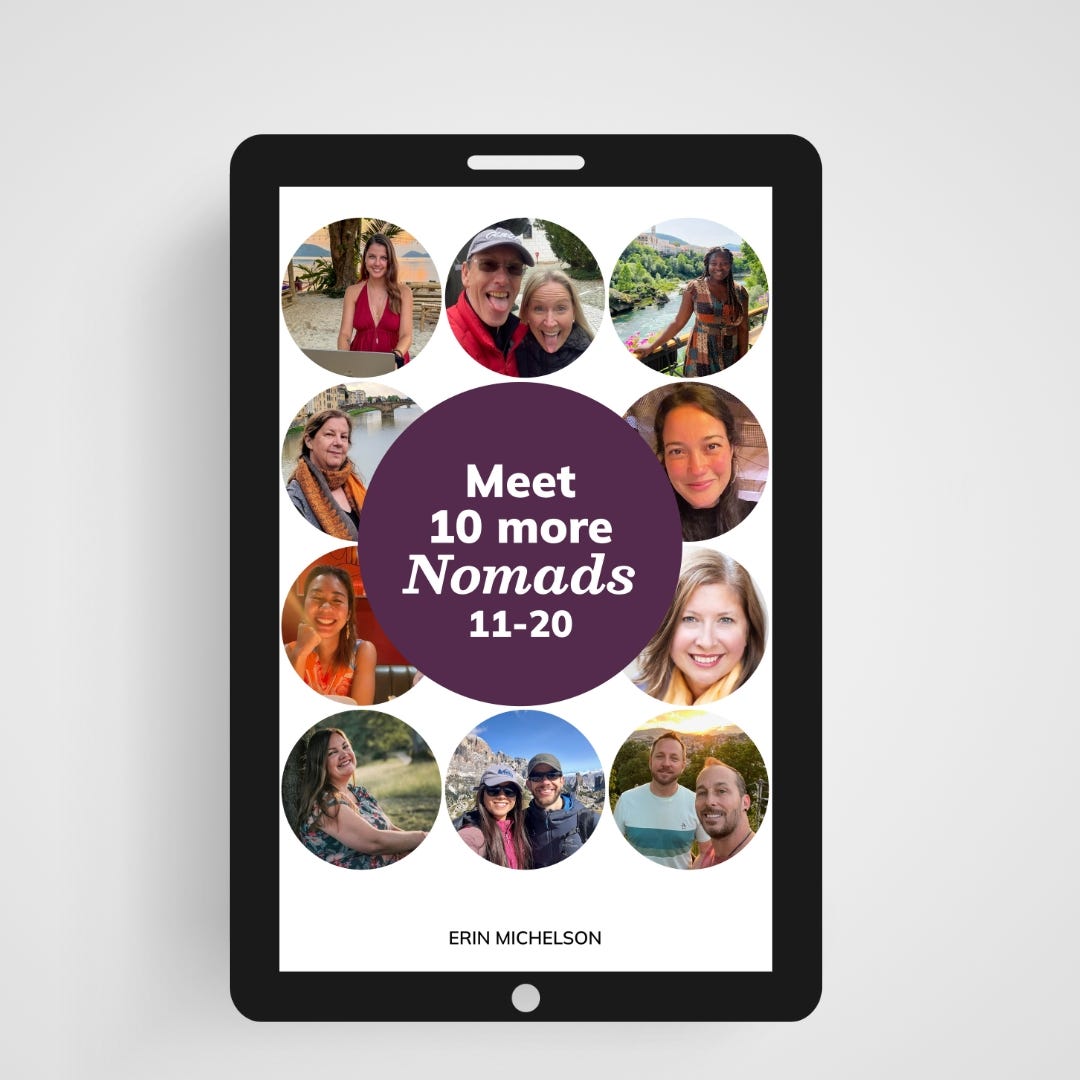
Curious to read more Nomad Profiles? Get the bonus edition to the guide—Meet 10 More Nomads: Bonus Interviews 11-20.
A legend of the game.
Thank you for the restack, @Teodora Gaydarova! JJ’s voice deserves a wider audience.