

💰✍️ How to Monetize Our Writing
Nomad Life Meetup - July 15, 2026 Call Recap

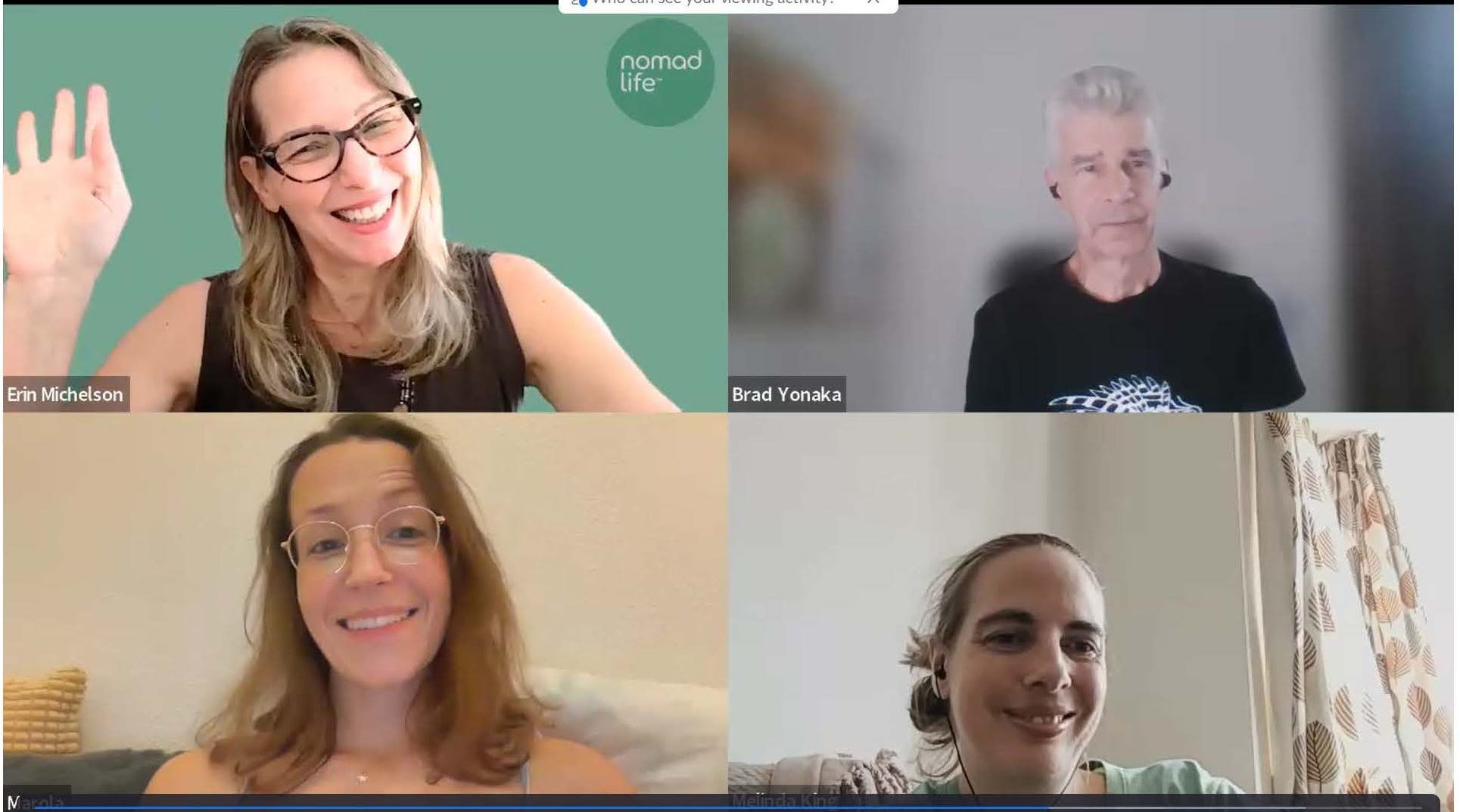
💗 Thank you to our Nomad Life folks for joining the community meetup yesterday, including Brad Yonaka and Melinda V King. You were missed Linda Jackson 🌏, Chris Englert (EatWalkLearn), Kat - Fifty & Free, and Memoirme. A special shoutout to Marola Vaes of the Rola Coaster for guest co-hosting with me and suggesting the topic: How to Monetize Our Writing.
Expert alert: Veronica Llorca-Smith 🍋 - We gave you a shout-out! I also came across this helpful post this morning by Katharine Gallagher: “How Do Substack Writers Actually Make Money? I Analyzed 100 Top Earners: There Are Only 5 Income Engines Powering Their Knowledge Businesses.”
Join the conversation with your hot take in the comments below.
Which channels do you use for monetization?
What have you found to be successful?
Which do you want to try but are hesitant?
Anyone using the new Substack Perks option?
Self-Publishing Books: Key Lessons
Own your ISBN — always.
Both Brad and Erin stressed this emphatically. An ISBN (International Standard Book Number) is the unique identifier that gives you ownership and control over your book. Both used Bowker (isbn.com) to purchase their own ISBNs in a pack of 10, which is inexpensive and preserves full control.Watch out for platforms that offer “free” ISBNs. If a publisher or platform (including Amazon via KDP) provides the ISBN for free, they control it — and by extension, your book.
Traditional publishing is largely not worth it for most writers. Brad went through a traditional publisher on one book, only to discover they still expected him to come with a complete marketing plan, speaking dates, and self-promotion strategy — essentially doing all the work himself, for a royalty of only 10–20 cents per copy.
Self-publishing requires the same workload with far better margins.
Lulu.com was recommended by both Erin and Brad for print-on-demand self-publishing, with good author discounts and quality results. Brad noted that when he received sample copies he didn’t like, Lulu redid them without charge. Here’s one of Brad’s print books: Rendering Divine Names on Coins: Images from Antiquity to Modern Times.
For design, Brad used Adobe’s book design tool (useful for text-heavy books; more complex for graphic-heavy ones). Erin hired a designer from Upwork to create an interior Canva template and original cover illustration — fast, affordable, and she retained the files.
Structure matters more than chronology. Erin noted that the hardest part of turning blog writing into a book is structure. Her book, “Adventures of a Nomad” organized travel stories not chronologically, but by the emotions she felt as she traveled (anger, love, awe, fear, etc.) — much more compelling than a travelogue.
Build the audience before you write. Both agreed the marketing is harder than the writing. Erin kept a blog throughout her first two-year world journey specifically knowing she’d eventually write a book. This weekly writing not only provided the content (and helped her remember key details), but created an engaged audience.
Leveraging Kickstarter. Erin ran a Kickstarter campaign for her first book, raising $10,000 before writing a word. Backers got their name in the book and early access — it also built her community of first readers and made the book profitable before launch.
Speaking engagements are the highest-margin book sales channel. Erin consistently sold books most profitably through public speaking — companies like Salesforce, Microsoft, and Opera Media would buy 200–300 copies at a time for employees. Selling at your own event (e.g., a sold-out Commonwealth Club appearance in SF) at ~$7/book vs ~$3/book on Amazon makes a significant difference. She was also able to get her book added to college syllabi.
Selling books through Substack is largely passive and low-converting. Erin puts her books at the bottom of every post but has never sold a single one that way. The issue: posts already ask readers to subscribe, share, and comment — adding a book sale may be one ask too many. Brad also noted that readers tend to just stop reading after the primary article.
Erin now uses Kit as her main email and sales platform, using Substack more as a community-building and marketing tool rather than a direct sales channel. Her books, as well as curated trips, are sold direct through Kit.
Erin abides by a self-imposed “anti-oligarch policy” — no Amazon, Facebook, Twitter/X or Instagram. Curious? Find out more during this 15-minute LIVE.
Sponsorships on digital guides can make a product profitable before it's written. For her travel guides, Erin pitched 20 people in her network, got 5 sponsors, and covered production costs (Upwork designer, Canva template) plus profit before launching. Sponsors included ethical travel companies, co-living spaces, and a coaching service. Erin’s rule: Always secure a profile before you write a word.
Medium vs. Substack
Brad offered a useful comparison of the two platforms:
Medium pays by engagement — the minute someone reads and likes your articles, you earn a small amount automatically. Over 4 years of articles, Brad’s Medium archive generates passive background income every month without any active selling.
Substack requires active subscription acquisition — you’re waiting for the next paid subscriber to show up, which can feel stressful if you’re relying on it as income.
Substack wins on community — notes, restacking, comments, and conversations make it a richer community experience. Medium is more of a reading platform without the same sense of belonging.
Brad curates content between the two: some stories feel right for Substack’s community, others better suited to Medium’s broader readership. You can check out Brad’s writing on Medium here.
Paid Subscriptions on Substack — Is It Worth It?
This was a candid discussion. Key takeaways:
Nobody in the room was making significant money from Substack subscriptions directly. Erin doesn’t have paid enabled; Brad gets a paid subscriber every couple of months organically without promoting it.
Marola’s paywalled content strategy: Put more personal, vulnerable, or emotionally taxing stories behind the paywall — these tend to perform better. Generic destination write-ups do not. Brad also noted that more personal articles get far more traction, and those might be worth reserving for paid subscribers.
The tip jar model (Ko-fi) was discussed as an alternative to subscriptions. Erin prefers tipping over recurring subscriptions — both as a reader (avoids the awkwardness of canceling) and as a strategy. Brad has a Ko-fi account on Medium that gets occasional clicks.
Avoid too many asks in one post — subscribing, sharing, commenting, and buying a book is too much. Prioritize the CTA that matters most.
Growing your Substack to impress a traditional publisher generally requires very large numbers (tens or hundreds of thousands of subscribers) to carry real weight in a pitch. Unless, of course, you have a niche subject and then a small amount of subscribers with high engagement may work.
*️⃣ AI Alert: I used Claude to summarize our Zoom call. I then edited the transcript.
If you like this post, please leave a comment or share it with others. This will help more readers find my work. ❤️
About Erin: Founder of Nomad Life, Erin was christened “Wander Woman” by National Geographic. She has traveled to 140+ countries & all 7 continents. As a professional speaker and author of the Nomad Life™ series, she offers travel safety tips, ethical adventures, and travel guides, including the #1-ranked Explore the World with Nomads.
Thanks for the summary and I’m already following Veronica 😁 I was happy to bring up the topic of monetization because I’m completely new to writing (for an audience, at least). What is most helpful for me right now—and I’m sure many other beginners experience the same—is developing the habit of writing often and regularly. One book that has been a huge motivator is The Practice: Shipping Creative Work by Seth Godin. Hope this can help 🙏🏼
Wish I'd been able to join you - thanks for the helpful summary! I hope I can join you for a meetup soon!