

Geological Lens as a Nomad
Nomad Profile

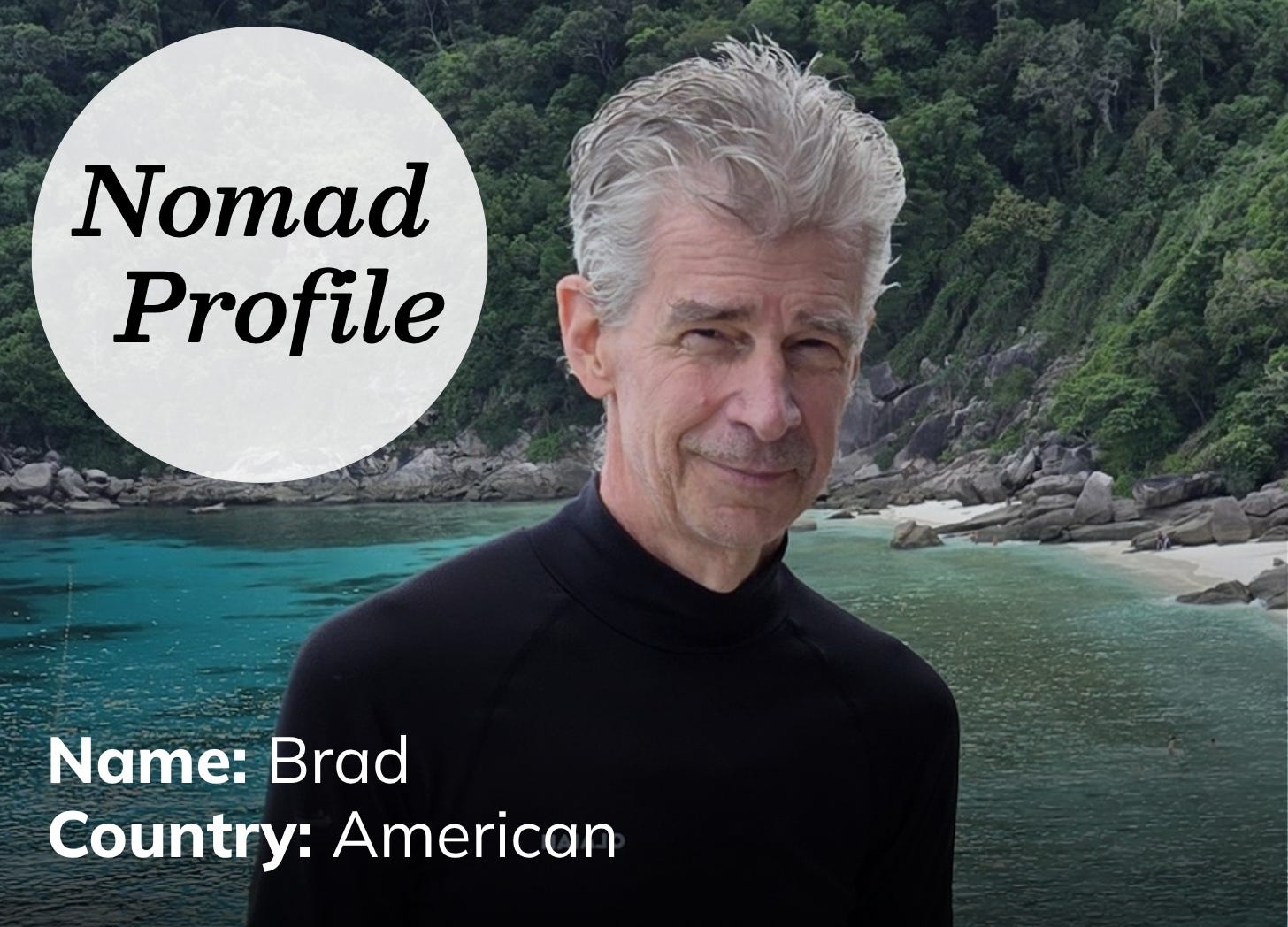
Brad writes the Substack Odyssey & Meaning, and it’s—hands down—one of my favorites. Equal parts history + adventure + cultural sensitivity, he never fails to deliver a fresh perspective on a remote place.
Take, for instance, his recent post “Hostile Beauty in Bioko” about his time exploring this small island off the coast of Equatorial Guinea. His piece weaves together island creation myths, insights on how the Bubi people survived (or, unfortunately, didn’t survive) attacks over the years, and a sampling of the island’s rich flora and fauna.
Reading Brad’s work is a treat for both the mind and the senses.
9 Fun Facts
First Name: Brad
Age Range: 50s
Nationality: USA
Nomadic Stance: Part-time
Last Corporate Job: Exploration Geologist, working in Colombia
Current Jobs: Geological consultant, historical researcher, writer
Favorite Country: For the overall experience, Iran
Next Stop: Sri Lanka
What do you like best about the nomadic life? Fulfilling
2 Questions
1) You often go to countries where few venture: Suriname, Cameroon. What draws you?
Part of it is authenticity (I know, loaded term, so will explain). Countries that fall well outside of normal tourist routes aren’t trying to soften the edges and make it comfortable or recognizable for foreigners.
You just jump in, start figuring out how things work, and you end up learning a lot about the way people live there. You are unlikely to see souvenir shops, spas, or boat tour hawkers on the corner.
The people you meet are more likely to be genuinely curious as to why you are there. This leads to engaging conversations. How likely is it to start talking to a local on a street in Prague and end up meeting their family? Much less likely than in Cameroon.
The bonus is that you can go for days without seeing a ‘Western’ face.
2) Does being a scientist (geologist) shape how you see the world?
This has definitely shaped me in very specific ways. First, I usually teach myself the geology of a region before I go visit, and I try to visit sites of geologic interest.
I understand culture, history, and even religion as partially influenced by geography, geology, climate, and resources. Mountain ranges separate languages. Silver trade links two empires, such that now, a thousand years later, their cultures have intertwined. The rich soil of a tropical volcanic island means the inhabitants can feed themselves and produce art rather than focus on trade, while the occupants of a barren desert island become expert traders and seafarers.
These aren’t just random historical facts. They demonstrate patterns of how societies have evolved into what we see today.
If you like this post, please leave a comment or share it with others. This will help more readers find my work. ❤️
Christened “Wander Woman” by National Geographic, Erin Michelson has traveled to 135 countries & all 7 continents. She is a professional speaker and author of the Nomad Life™ series of curated trips and travel guides, including the #1-ranked Explore the World with Nomads.
Curious to read more Nomad Profiles? Get the bonus edition to the guide—Meet 10 More Nomads: Bonus Interviews 11-20.
Love Brad’s writing (and choice of places he wanders to) ❤️