


Get Practical Tips on Ethical Travel
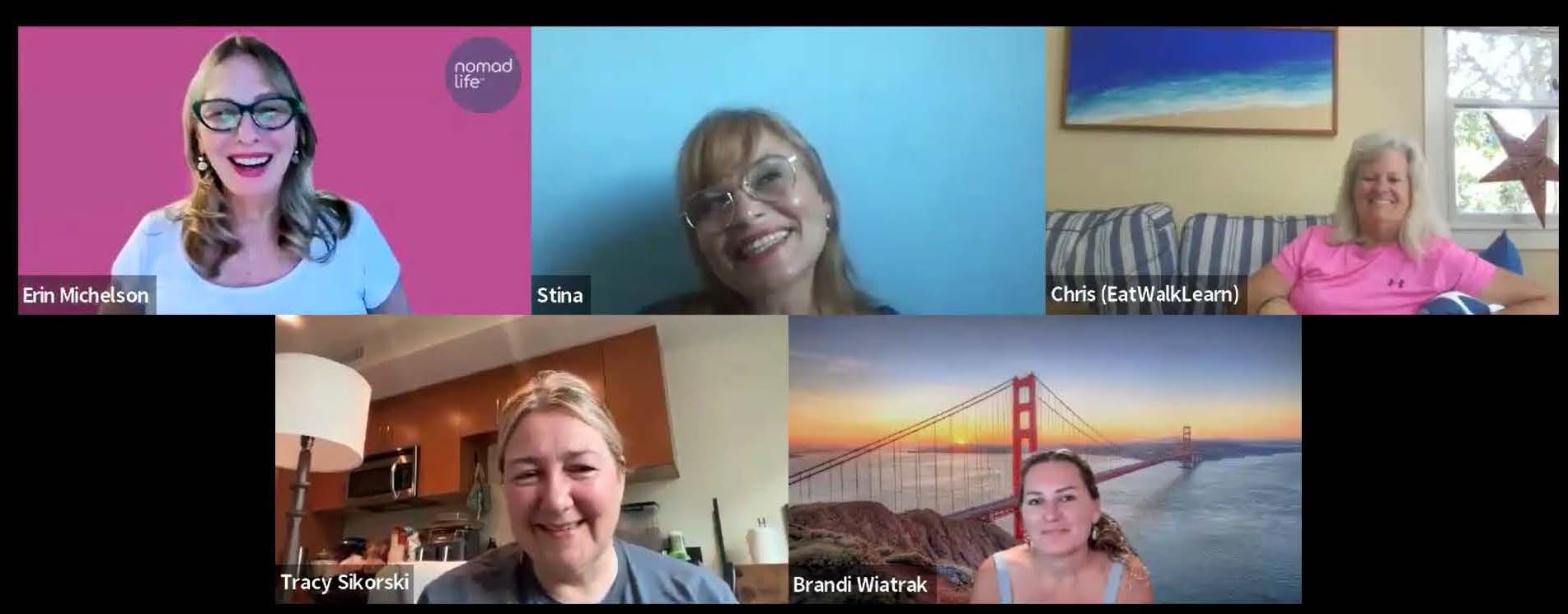
💗 Thank you to our Nomad Life folks for joining the community meetup yesterday, including Chris Englert (EatWalkLearn), Tracy Smith, Ph.D., Brandi Wiatrak, Jennifer Paquette (hidden from view!), and me, Erin, Nomad Life. With a special shoutout to Stina Gustafsson of Far From Here for guest co-hosting with me and suggesting the topic: 🏛️ Can travel help address historical inequalities or does it reinforce them?
Stina introduced the topic and framed it around a question she thinks about constantly, especially after extensive travel in West and North Africa and the Middle East:
“Can travel to former colonized countries ever be truly ethical, and what is our responsibility as travelers and writers?”
Here’s a call re-cap:
The Core Dilemma
The group explored the tension between wanting to engage authentically with communities in the Global South — and in Europe — while grappling with the weight of colonial history, economic disparity, and how tourists are perceived (and treated) based on nationality and race. Key threads included:
Slum/poverty tourism: Stina described joining a locally organized slum tour in Lagos and still feeling uneasy about it, even when money went directly to the local organization. Chris shared a contrasting experience in Medellín — a packaged narco/art tour felt voyeuristic, while a second tour with a local hiking group visiting micro-funded women’s businesses felt far more meaningful and authentic.
The “white American bubble”: Several participants noted how being perceived as a wealthy Westerner creates an invisible barrier. Erin shared that a Russian travel companion always warns her not to speak, as her American accent immediately triggers price inflation. Chris noted that in Southeast Asia she was often assumed to be British rather than American — and wondered what her responsibility was to correct that.
Europe’s unexamined history: Stina pushed the conversation toward European destinations, noting that travelers rarely read up on colonial history before visiting Paris or Rome, even though much of Europe’s wealth and cultural capital was built through colonization and the slave trade. The group agreed this is a less-discussed dimension of ethical travel.
Practical Recommendations for More Ethical Travel
Tours & Experiences
Seek out locally and community-run tours rather than big aggregator platforms. Chris found her most authentic Medellín experience through a local Spanish-language hiking group she found independently.
Consider private tours — Tracy said she almost exclusively does private tours now, which are more expensive but lead to genuine relationships rather than being “just a number” in a group. She’s been back to Vietnam multiple times and forming a real, lasting bond with her guide – even attended her wedding.
Look for tours that directly support local livelihoods — the micro-funding tour in Medellín that visited women-owned small businesses felt markedly more meaningful than the packaged tourist route.
Ask questions on tours. Erin cited a Cape Town township tour where tour participants challenged the whitewashing of history — being an engaged, questioning tourist rather than a passive one matters.
Accommodation
Stay in locally and Black-owned hotels when traveling in Africa, not just “African-owned” but specifically Black-owned, as Stina noted the distinction matters given colonial land ownership patterns.
Avoid international hotel chains where money leaves the community. Erin’s partnership with a women-owned ethical tourism company, centering locally owned businesses, homestays, cooking classes, and community activities rather than luxury hotels.
Spending & Tipping
The group acknowledged the awkwardness of tipping in lower-income countries — feeling gaudy handing over large sums, but also wanting to compensate guides fairly. Tracy noted she agonizes over this, trying not to look like a “flashy American” while also not under-tipping.
Donations to communities, not individuals — Erin’s ethical tourism model for her Bhutan trip involved asking the community what it needs and letting the community distribute resources rather than giving money directly to individuals.
Research & Preparation
Read up on colonial history before visiting former colonies — Stina called this a baseline requirement, not just for Africa but for all destinations. Understanding why poverty exists, and where European wealth came from, changes how you engage.
On Responsible Travel Writing
A significant part of the call focused on what responsibility travel writers have to portray places honestly, especially hard-to-visit or struggling countries.
Chris’s rule: She doesn’t publish anything negative — if a hotel was bad or food was poor, she simply won’t review it, to avoid damaging a small business with what might be a one-off experience.
Erin’s approach: She sees herself as an eyewitness and feels there is value in honest emotional reporting, including difficult or depressing travel experiences. She cited Eritrea as an example — going somewhere most readers have never heard of and saying “this country is struggling, and here’s why” has real value, even if it’s not a glowing review.
Brandi’s journalistic instinct: As a former journalist, she tries to balance pieces by including perspectives other than her own, using quotes or references to other travelers’ differing experiences and acknowledging subjectivity.
Tracy’s view: She writes creative non-fiction rather than travel logs, and consciously avoids applying Western standards (reliable electricity, hot water) to judge her experience in lower-income countries.
Stina’s reminder: Read colonial history, travel with awareness, and let that knowledge shape how you tell stories — not to glorify or exoticize, but to help readers understand why places look the way they do.
Agreed conclusion: Writers can actively promote people and organizations doing it right — e.g., the Portsmouth, NH heritage walk that added Black history plaques alongside the existing white history plaques, or the Harvard Museums that now include the provenance and corrected interpretation alongside artworks. Calling out good tourism practices publicly is something travel writers can and should do.
📅 Save the Date for our next call
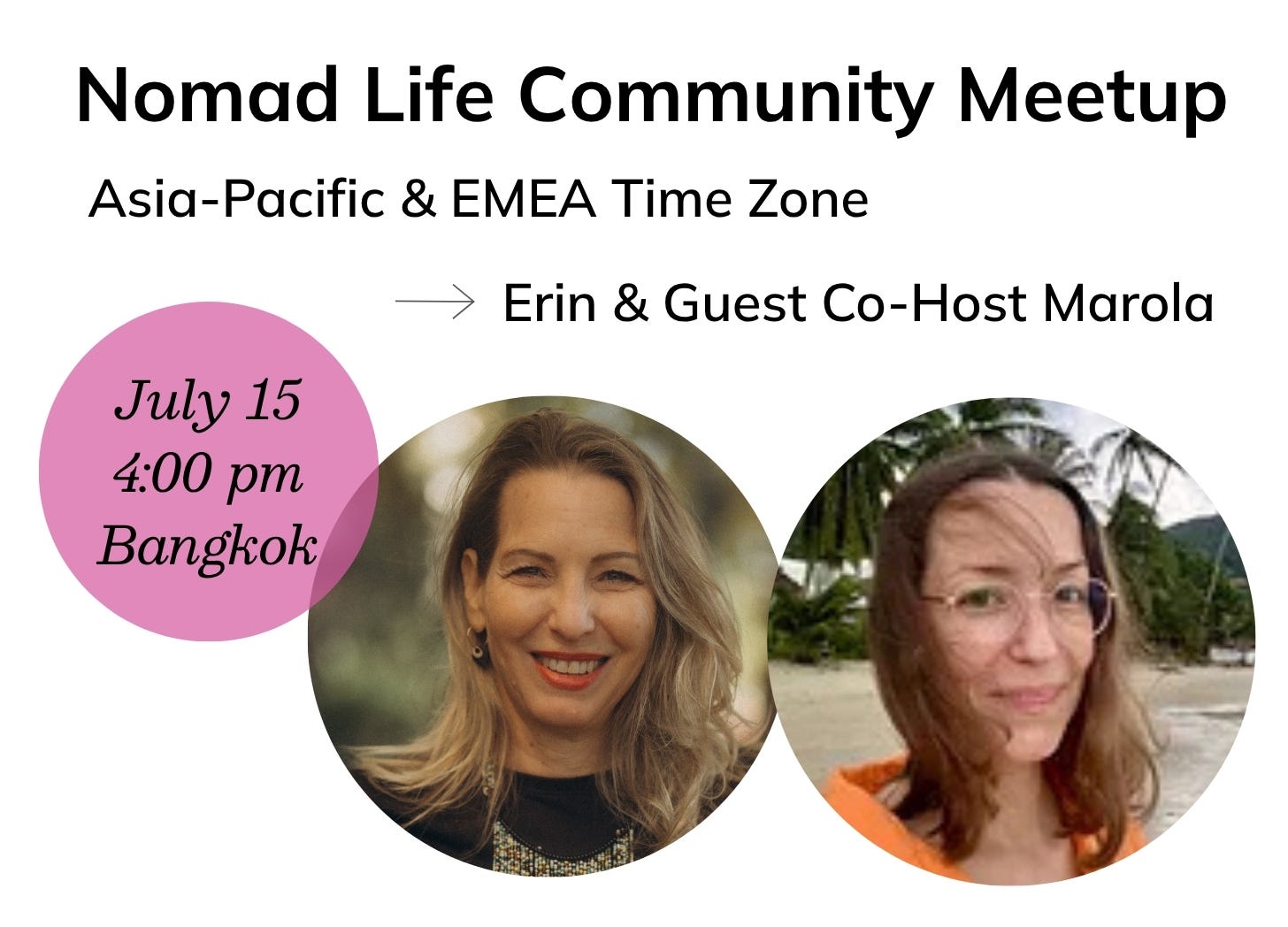
Online Meetup: Asia-Pacific & Europe, Middle East, Africa
Jul 15 @ 4:00 pm Bangkok
Guest Co-Host Marola of The Rola Coaster
Topic: ✍️ How to monetize our writing
RSVP here for call-in information and replay
📌 AI Alert: I used Claude to summarize our Zoom call. I then edited the transcript.
If you like this post, please leave a comment or share it with others. This will help more readers find my work. ❤️
About Erin: Founder of Nomad Life, Erin was christened “Wander Woman” by National Geographic. She has traveled to 140+ countries & all 7 continents. As a professional speaker and author of the Nomad Life™ series, she offers travel safety tips, ethical adventures, and travel guides, including the #1-ranked Explore the World with Nomads.
Wow great recap Erin thank you!!!!
Wow, what a great conversation you all had. I wish I'd been able to join that one. Thank you all for the great tips on thoughtful engagement.
The part of the world I am in now bears many scars of colonialism, and opressive foreign involvement - even now with development geared to foreign investment. I am doing my homework and doing my best to be mindful in my actions and impressions.
Thank you all for this, and excellent recap Erin!
See you on the next call!