

Cultural Complexities
Middle East Adventure

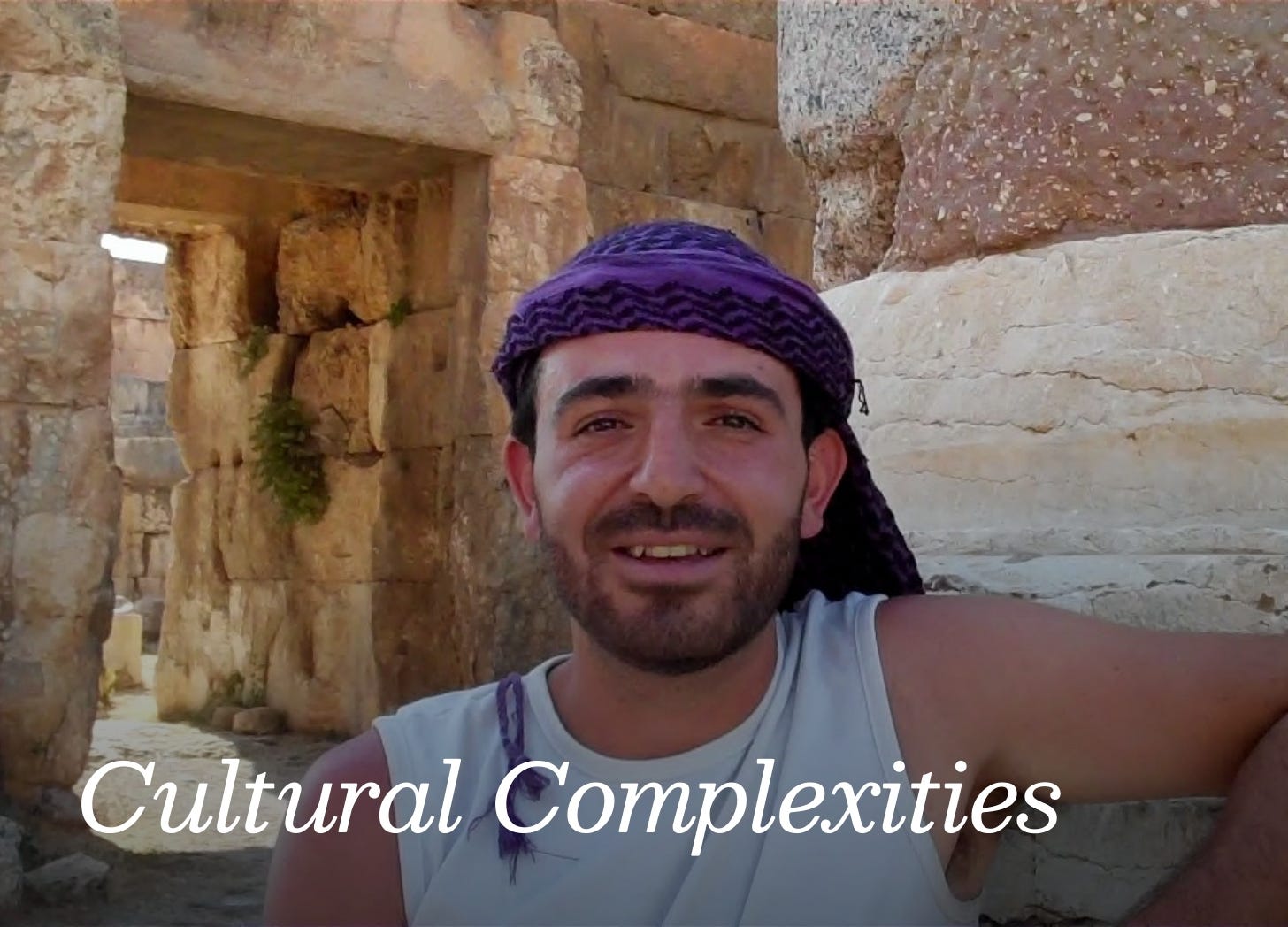
Part 1 of a 2-part series on my travels through Lebanon.
My heart hurts for the innocent people throughout the Middle East, including Iran and Israel, as well as the expats and travelers, who are caught in a war zone.
As war rages on through the region, I reflect back on my time traveling in Lebanon and the beauty of that country.
The warmth and generosity of the Middle Eastern Arab cultures are unparalleled. I have never had so many people open up their homes to me. I was honored to be a guest in their countries and their lives.
This hospitality was particularly evident in Lebanon, one of the most complex countries I have visited. On one hand, you have Beirut, the cosmopolitan capital, complete with a seaside corniche, trendy restaurants, high-end shopping, and colorful street performers.
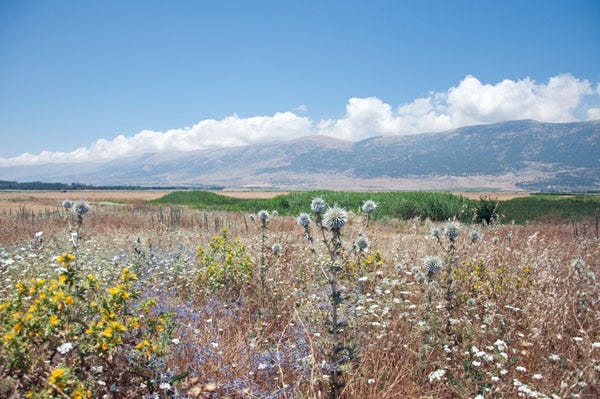
On the other hand, Lebanon offers a glimpse of a timeless rural life that still exists throughout much of the Middle East, complete with ancient medinas, leisurely lunches, and endless afternoons filled with coffee and conversation. This tranquility of the countryside is punctuated only by the sounds of singing birds and the Muslim call to prayer.
Baladi: Of The People
I was invited to Beirut to work with the nonprofit This is Baladi. (Baladi is Arabic for “my country” or “of the folk”). The organization is dedicated to preserving and promoting Lebanon’s heritage by encouraging youngsters to learn about their country’s cultural diversity.
Children who participate in Baladi’s field trips learn about the rich texture of their country in a fun and interactive way, using food and the arts to promote and foster a sense of collective belonging among the country’s youngest generation.
Baladi’s work has another important benefit in that it helps to build harmony among the country’s cultural and religious divides. Aiming far beyond simple tolerance of cultural and religious differences, Baladi’s intercultural excursions are considered a model in helping to rebuild unity in post-conflict countries such as Iraq and Sudan.
I spent several days volunteering with Joanne Bajjaly, founder of Baladi, and my fellow consultant and friend Inji, whom I had met years earlier while volunteering in Cairo. We were discussing new ways to generate revenue and assessing new avenues for organizational growth.
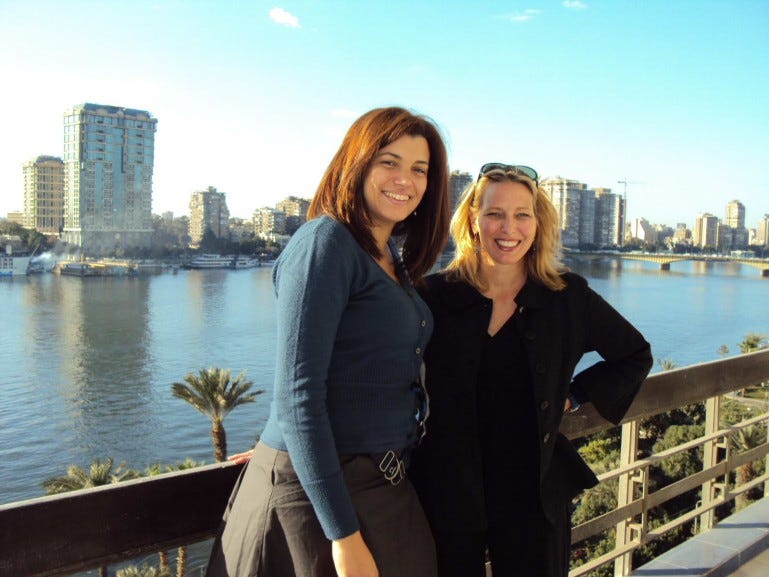
While staying in Beirut, Inji and I shuttled between our apartment in the city’s center and Joanne’s home on the coast. Here, on Joanne’s balcony overlooking the sea, we three women collaborated to find new ways to expand Baladi’s social business model.
One of the advantages of meeting in Joanne’s apartment was the chance for me to see a modern Middle Eastern lifestyle up close. Joanne lives with her extended family in a stylish apartment that has sweeping views of the Mediterranean. I got the chance to meet and dine with her charming husband, her mother, and her children.
Personal Tour of Lebanon
Ever the gracious host, Joanne had arranged a two-day tour of Northern Lebanon with Baladi guides and historians Charles and Roger. She wanted to give me a personal “taste of Baladi” as a thank you for volunteering my time and traveling to Lebanon to work with her.
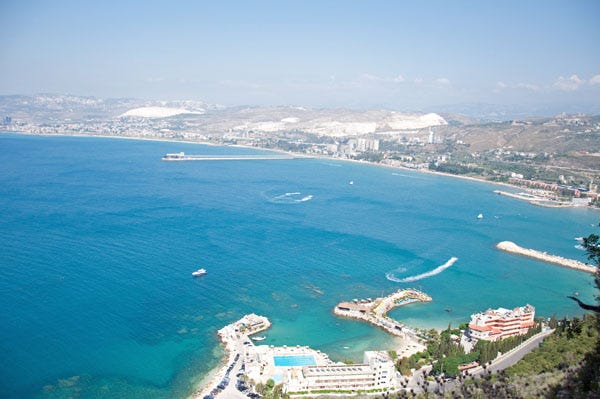
During my personal tour, I was treated to the varied terrain of Lebanon, including mountains, wetlands, seascapes, and cities. And visited its diverse populations: Sunni, Shiite, Maronite Catholics, Druze, and Bedouin.
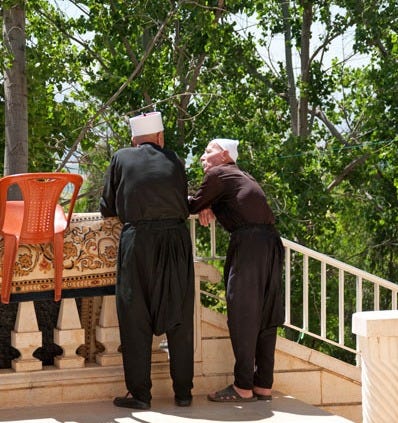
Until this insightful tour, I had no idea the variety of landscapes and how culturally rich Lebanon is as a country, which is exactly the point Joanne and Baladi are making. The tour was fantastic. Roger and Charles led the way, each of them taking great pride in their home country.
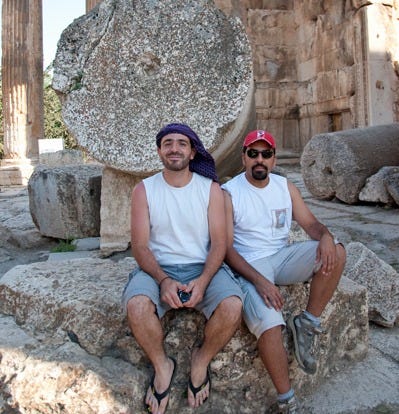
Roger, an avid basketball fan, enjoyed both educating and coaching the children during their camps. Charles, a trained historian and Francophile, is an ardent Arab nationalist, raised in the Maronite Church and a reader of tarot cards.
Charles and Roger were two complex individuals living in a complex country. They didn’t fit into neat categories. Nor did they fit into my preconceptions of Arab men.
Except in one regard: Charles’ outspoken anti-Semitism.
During my time working in Cairo (this just weeks before the Arab Spring), my Egyptian friends referred to their Israeli neighbors as their “cousins.” But in Lebanon, Charles referred to Israelis as their “enemies.”
To my great discomfort, his anti-Israeli sentiments became increasingly vocal as the 2-day trip wore on. You see, I, too, am complex. As someone who was raised Catholic, is now an atheist, and has Jewish ethnicity on my paternal grandfather’s side.
While I don’t identify as a Jew (nor would Jewish people consider me Jewish), Hitler certainly would have. And I think Charles would have too, if I had revealed my background.
But I didn’t. I stayed quiet. I was fearful of his reaction and what might happen since our safety was in his hands during this road trip.
Yet the farther we traveled, the more uncomfortable I became. And then we got lost. And I got scared.
This is Part 1 of a 2-part series on my travels throughout Lebanon.
Read Part 2: Lost in Lebanon.
If you like this post, please leave a comment or share it with others. This will help more readers find my work. ❤️
Christened “Wander Woman” by National Geographic, Erin Michelson has traveled to 130+ countries & all 7 continents. She is a professional speaker and author of the Nomad Life™ series of curated trips and travel guides, including the #1-ranked Explore the World with Nomads.
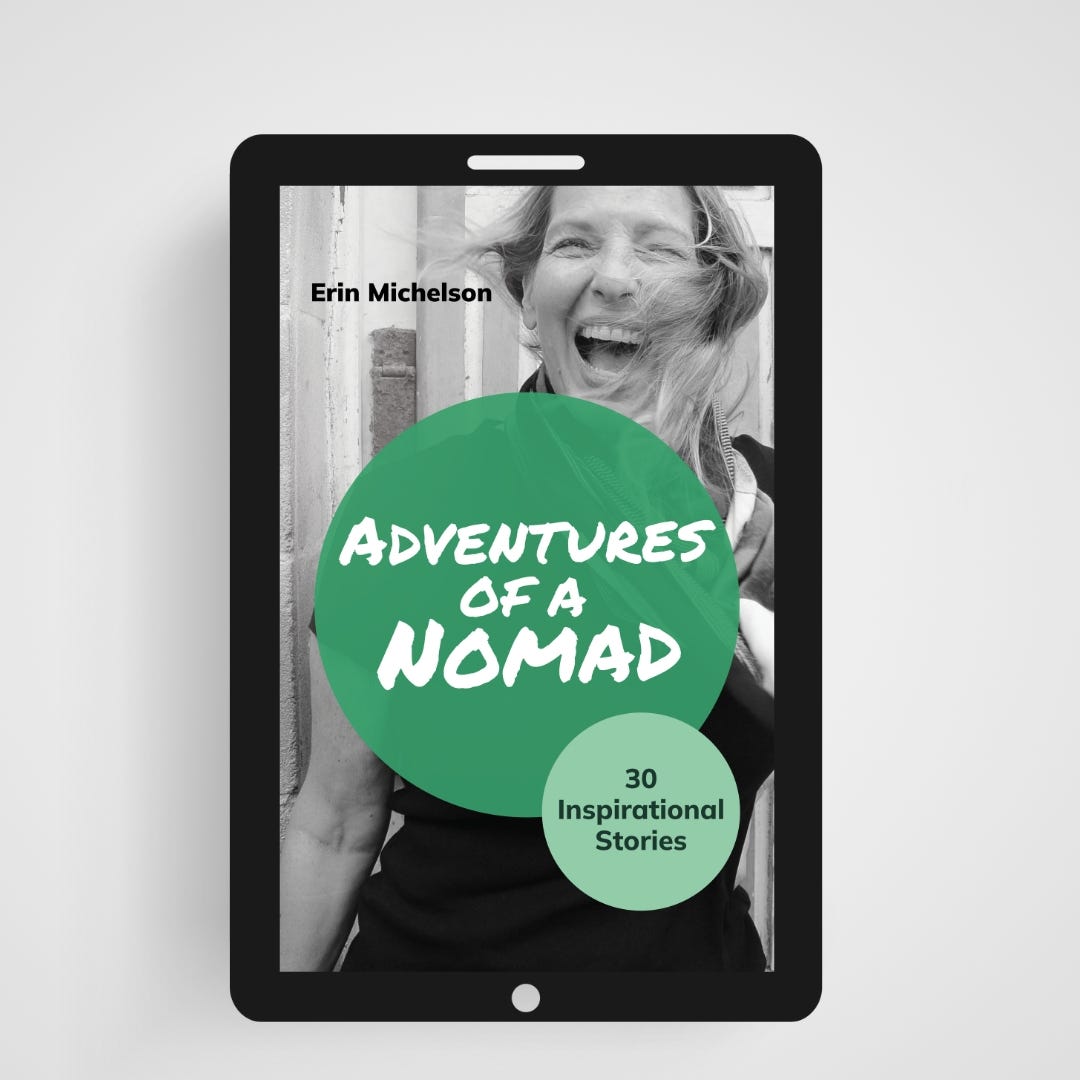
Want to read more about my adventures? Get the book “Adventures of a Nomad: 30 Inspirational Stories.”
I worked in Israel and one of my teammates said …..we and the Arab shares the same background and same attitudes we know each other like brother and sister this why we are always fighting…..
Excellent piece Erin. That Middle East hospitality is rightly legendary and I too have experienced it enough times to vouch for its authenticity. A beautiful people. The anti-semitism is of course, there as, is anti-Arab sentiment in Israel. But, I am convinced by both learning and experience that much of that is manufactured and that the ties between these two broad groups is more easily cultivated than the differences, if given the chance. I call it the I-to-I effect when people from different backgrounds can see each in person and good things generally happen. Manufactured separation is a curse that affects all. I love that you are open to exploring the better side of humanity. It is there that our future is written...