

Children’s Muay Thai
Danger in the Ring

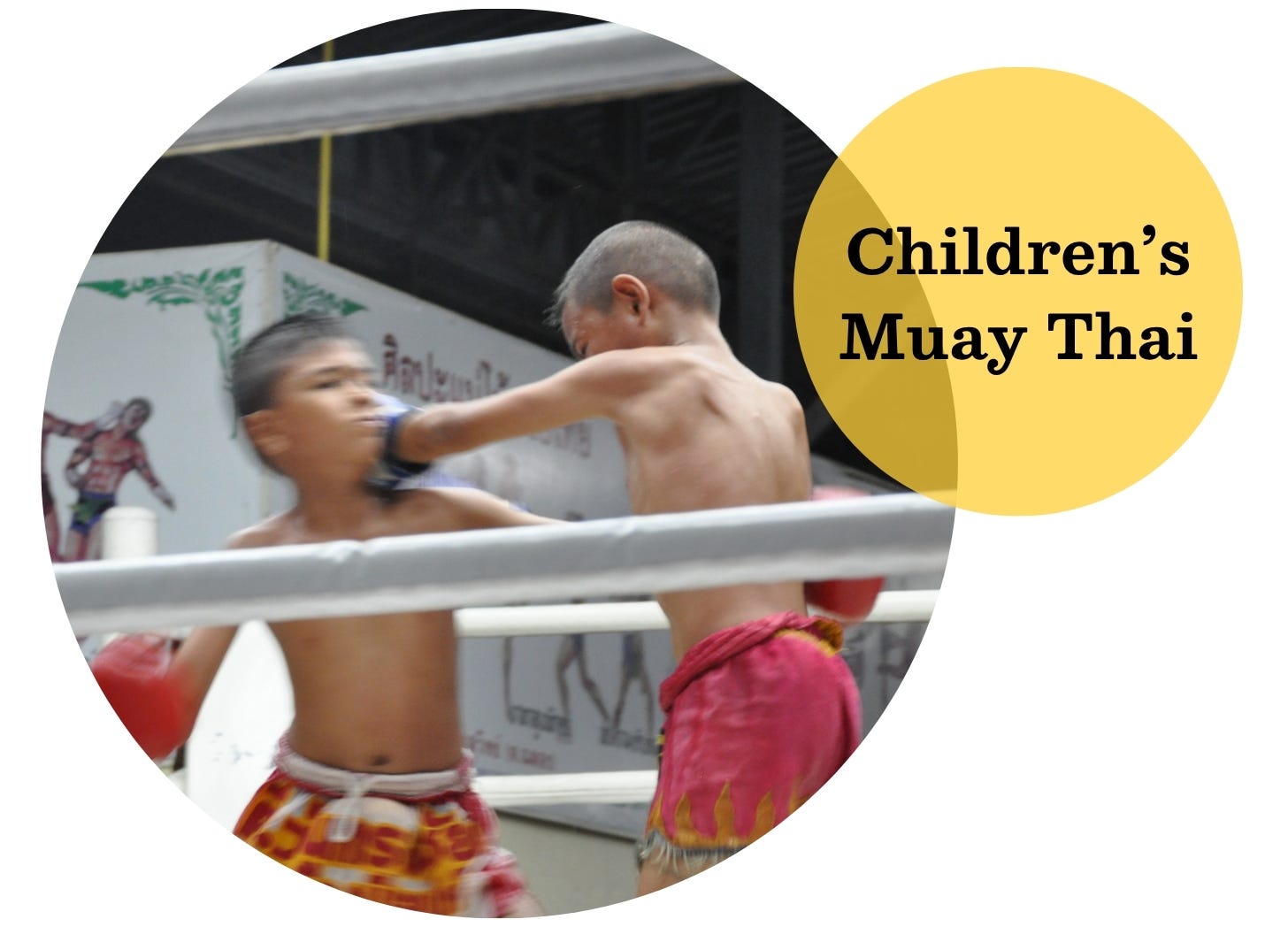
Last week, my friend Carmen asked if I wanted to go see Muay Thai. Her friend, a young woman, was fighting for the first time, and she was going to go and support her.
While I’m generally a “Hell yeah!” in support of women taking bold action, this time, I declined. The world is inundated with violence right now (well, always, really), and frankly, I didn’t want to subject myself to more of it.
In addition, one of the lasting memories I’ve had of Thailand over the years was attending a Muay Thai event in which children participated. The images have stayed with me for more than a decade.
National Sport & Cultural Heritage
Sometimes called Thai boxing, Muay Thai is a martial art and full-contact sport that uses fists, elbows, knees, and shins to strike an opponent. The winner is the fighter who lands the most full-contact blows.
Muay Thai is not only the country’s national sport, but it is also deeply ingrained in Thai culture. The word Muay, derived from Sanskrit, means “unity.” The word Thai comes from the word Tai or “free.” Muay Thai has been around since the 7th century.
The Thai government has been lobbying the International Olympic Committee to include it as a new Olympic sport. While short-listed for the 2028 Games in Los Angeles, it was yet again denied. (Passed over in favor of flag football, no less.)
Financial Underpinnings
Enthusiasm for Muay Thai is increasing both as an amateur and professional sport. The Bangkok Post estimates that Muay Thai gambling is worth 40 billion baht annually (US$1.2 billion). Price fixing is also common, with fighters earning between 60,000-150,000 Thai baht (US$1,800-$4,500) for throwing a fight.
This financial motive doesn’t just incentivize fight organisers, but parents as well. Thousands of Thai families are thought to rely on the income from child boxing. In fact, studies suggest that half of the children who fight contribute to their family’s finances. (Source: US Department of Labor, the National Youth Office, and the International Labour Organization (ILO).
Some of the documentaries I watched this week contend that, compared to other choices, namely working in a sweatshop or in the sex trade, Muay Thai may be the better bet for children from poor families. This is, indeed, sobering. Surely there must be other options that make educating a child worth it for families struggling to survive.
Child Fighters
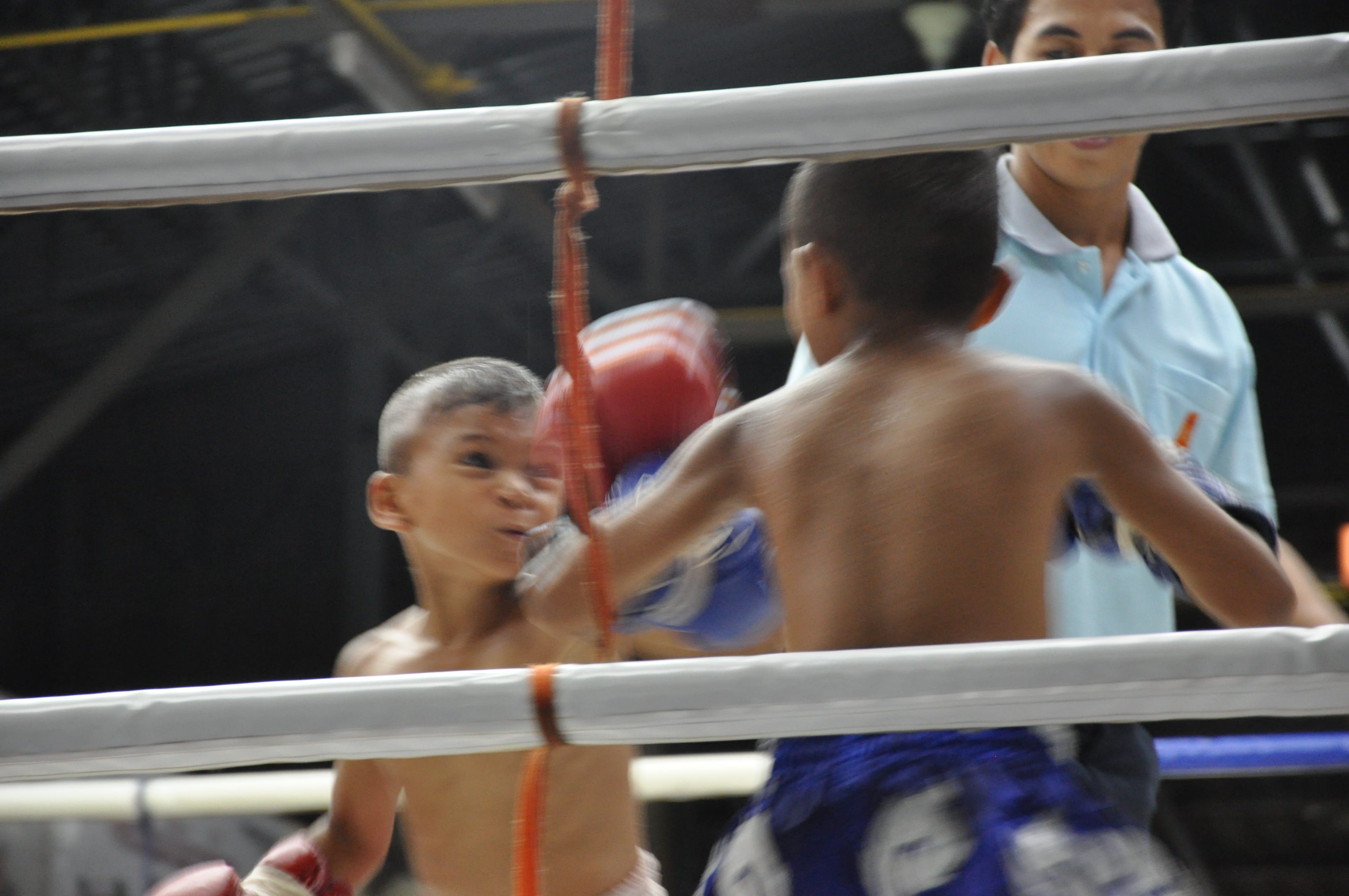
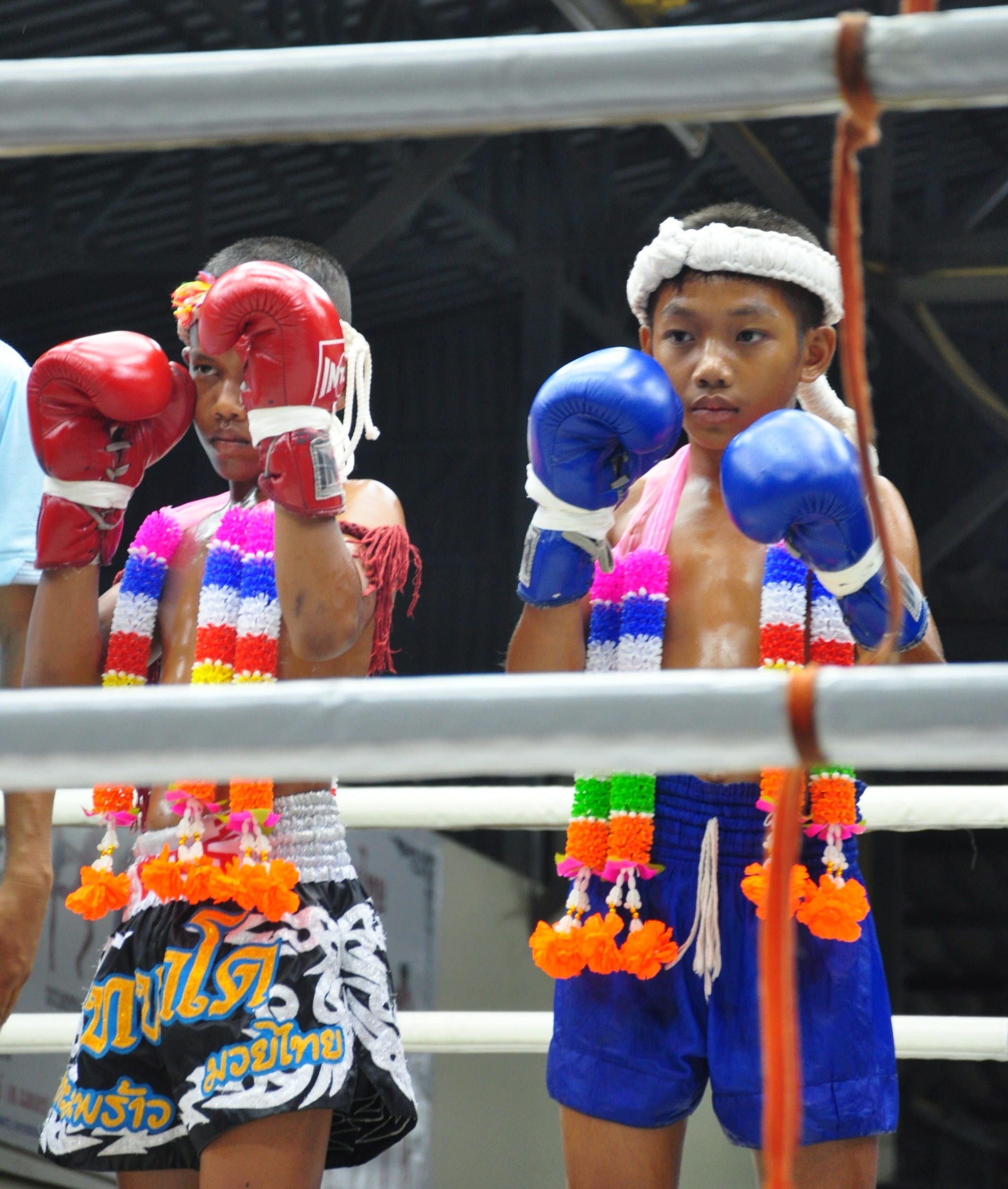
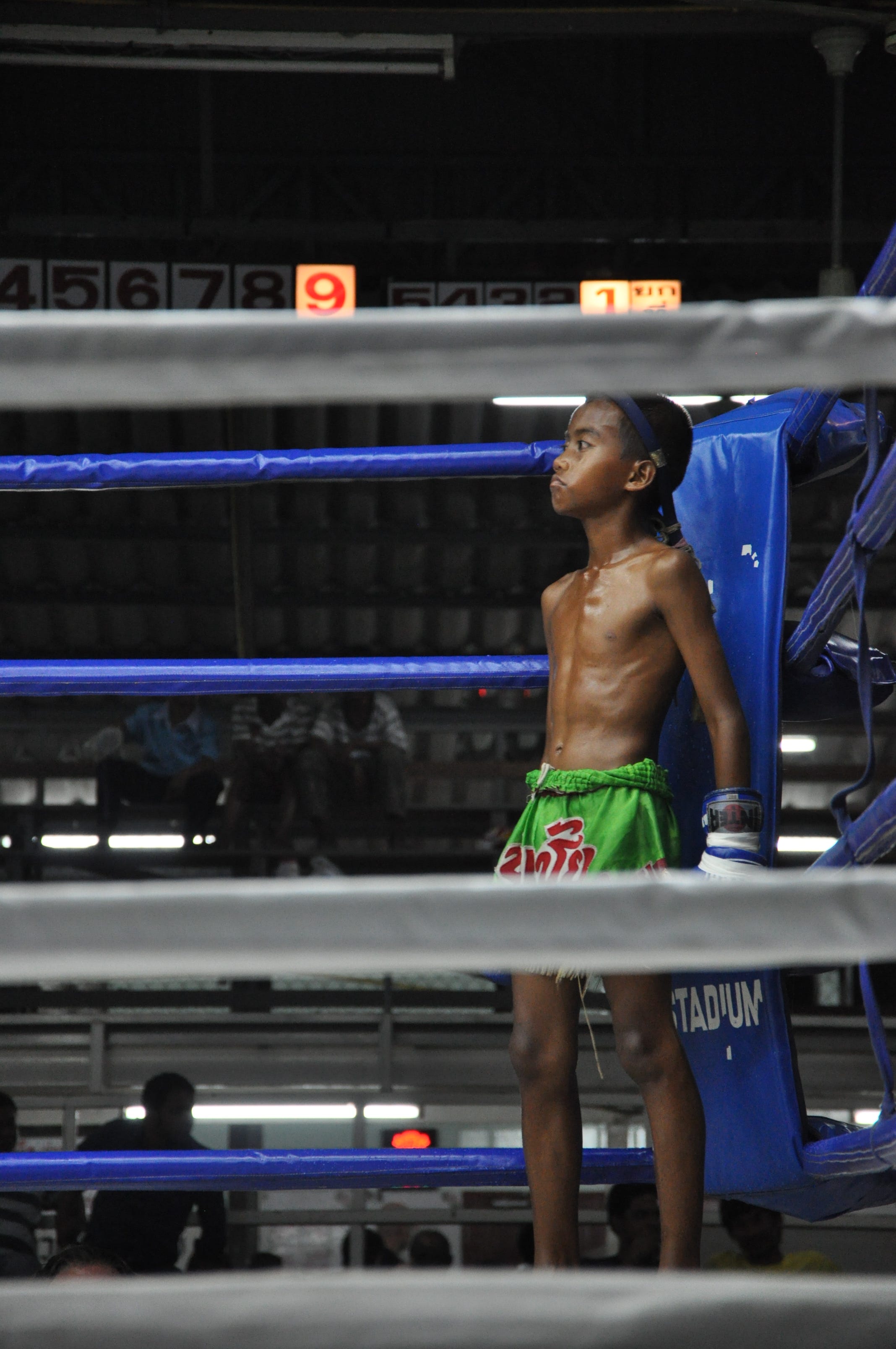
In Thailand, an estimated 200,000 to 300,000 minors under the age of 16 participate in Muay Thai training and competitions. Many Thais view Muay Thai with deep cultural pride, and as a way to build discipline and confidence—much like any organized sport in countries around the world.
But because of the brutality of the sport, it also poses significant health and safety risks. Several factors signficantly impact child welfare. For instance, children:
Start training as early as age 4 or 5.
Sometimes live and train at gyms instead of attending school.
Compete in stadium fights, often without headgear or mouthguards.
Child Protection & Welfare
Thai medical professionals have advocated for laws limiting children from fighting based on research that shows a long-term negative impact on their health. Some reports show that children can experience serious injuries, including memory issues and brain damage, similar to those of traffic accident victims.
One particularly disturbing study, conducted by Ramathibodi Hospital’s Advanced Diagnostic Imaging Centre (AIMC), studied 300 child boxers under the age of 15 with at least 2-5 years of experience vs. 200 children who do not box.
The findings revealed that child boxers not only sustain brain injuries, but they also have a lower IQ. The child boxers’ intelligence was ~10 points lower than average, and the lower levels correlated with the length of training.
Unfortunately, the Thai government rejected the report’s findings, stating that it didn’t show negative health effects on the child fighters.
There have been repeated attempts to ban child boxing or to require the children to be at least 12 years old. Laws have also been introduced limiting the sport’s all-body contact, such as “no shots to the head,” but all legislative measures have failed.
Currently, there is a vague law prohibiting minors from being allowed to risk their health by practising Muay Thai. There is also a stipulation that children under the age of 15 need parental consent to fight. Yet these safeguards are routinely ignored. In 2018, Anucha Tasakoko, a 13-year-old boy, died of a brain haemorrhage in the ring.
Haunting Memories: Photo Essay
I attended my first and only Muay Thai event about 15 years ago. At first, I wasn’t going to go, but then I relented, rationalizing that it was the choice of the fighter to get into the ring.
I was expecting there to be some violence, blood, and brutality. I wasn’t expecting to see children participating. Of the 9 bouts I saw, 4 featured kids. Supposedly all fighters were at least 7 years old. Although many of these children look younger to me.
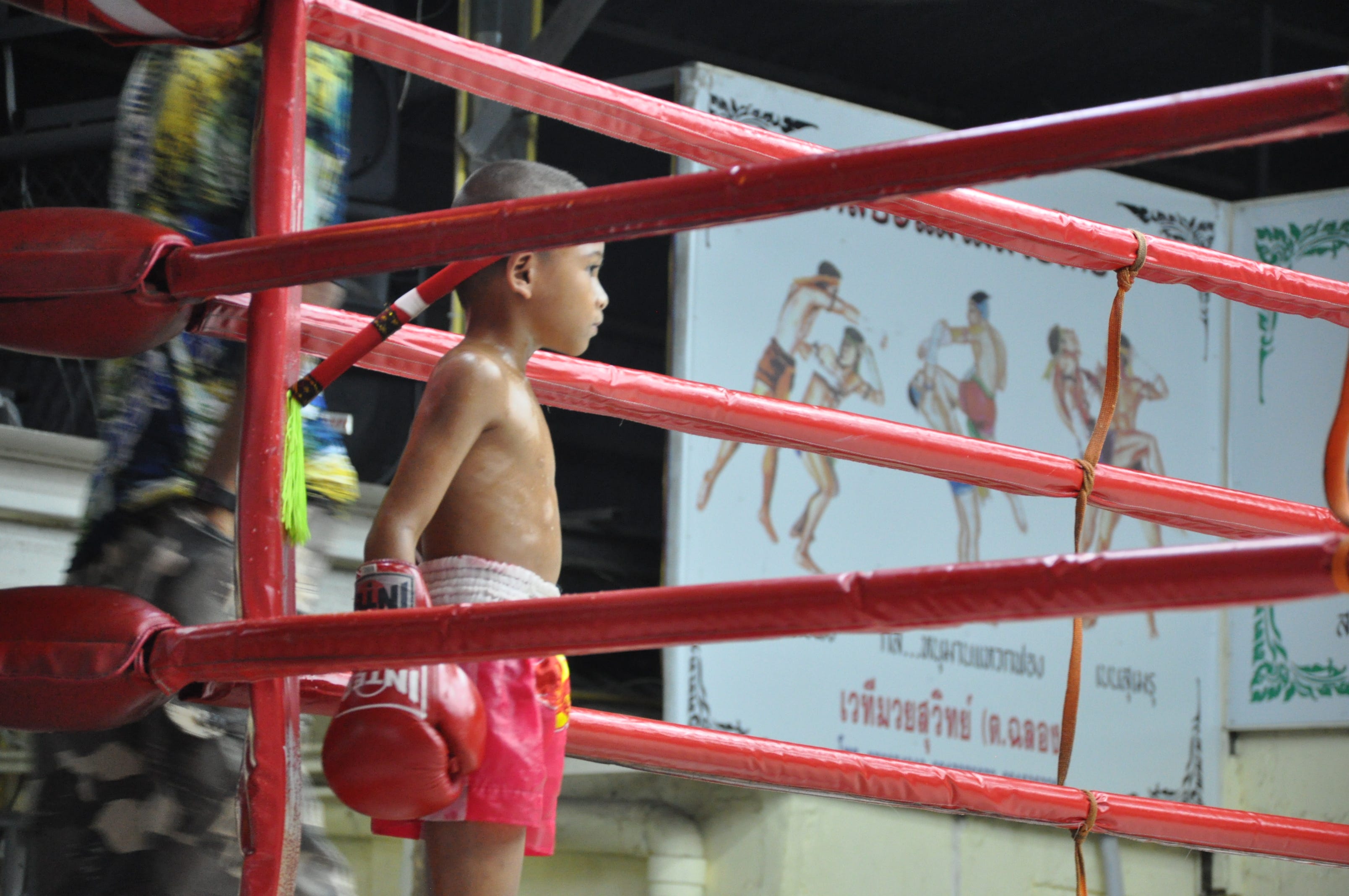
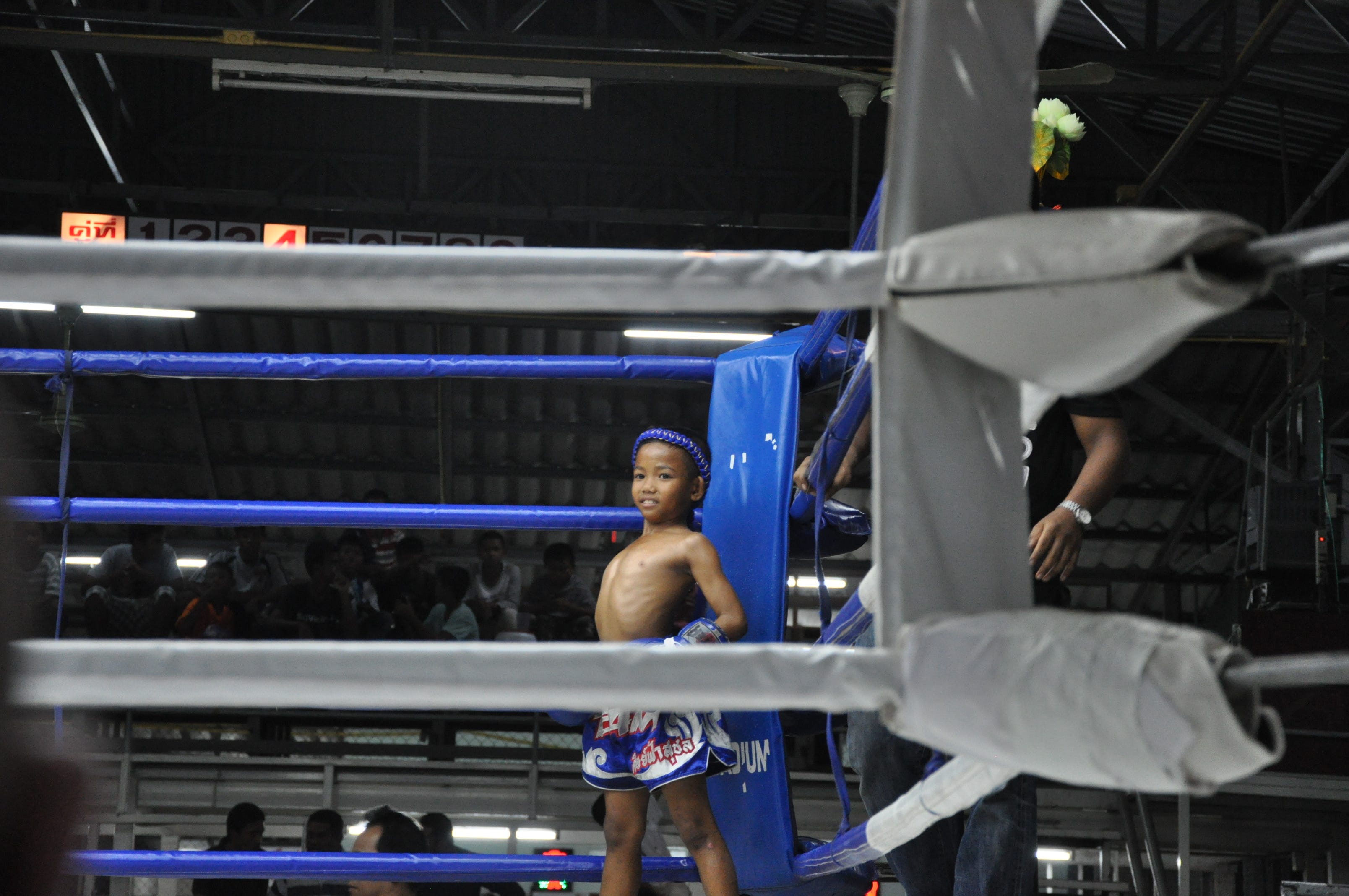
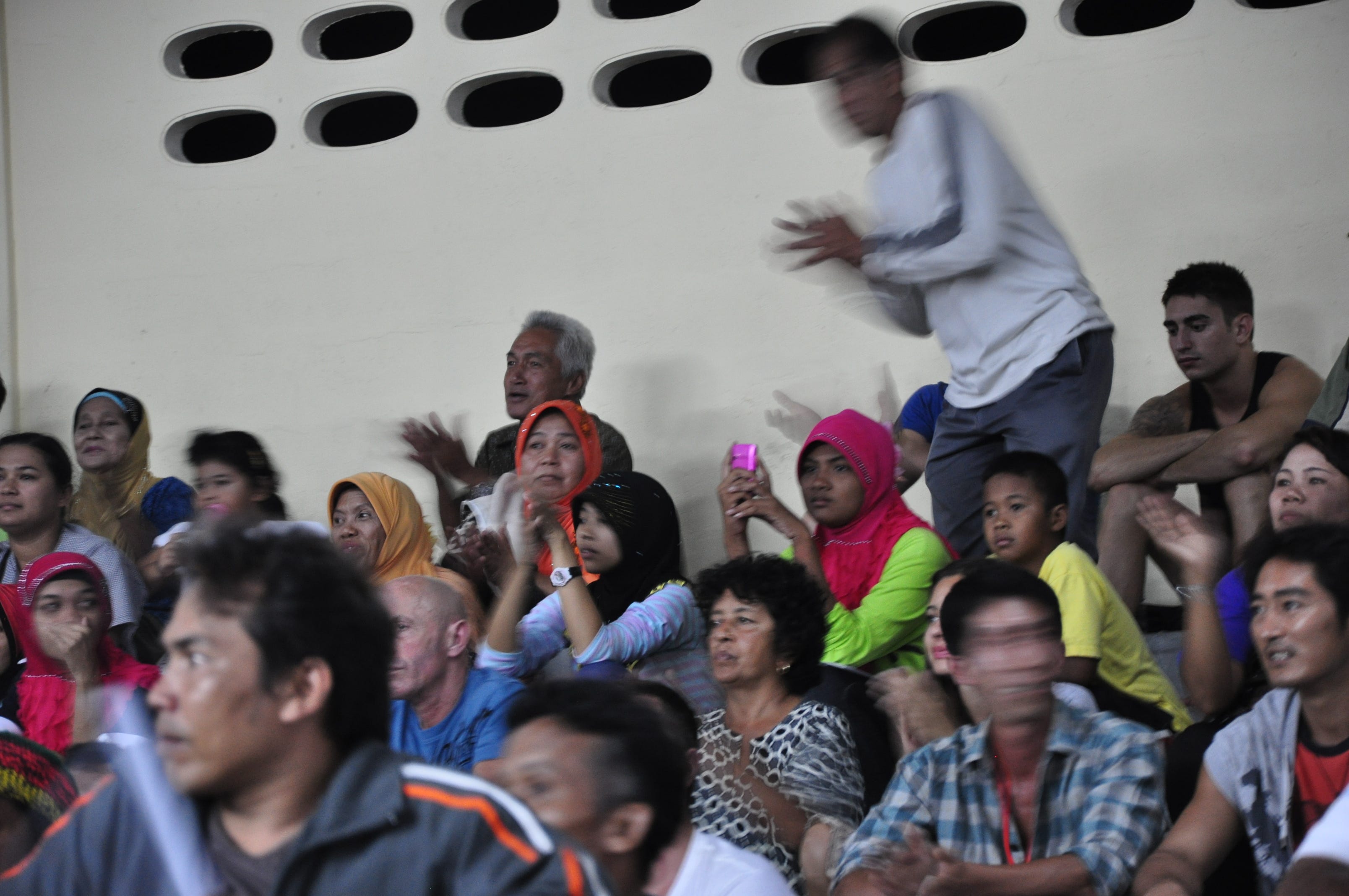
Apparently, I was the only one upset by the violent spectacle. All around me, the crowd was wild during the matches, with bets being placed on the child most likely to be victorious.
And it wasn’t just local Thais enjoying the sport. Another tourist sitting next to me had brought his 6-year-old daughter. She was obviously traumatized to see her fellow first-graders being beaten up. Even so, the father-daughter duo stayed for all the matches.
After my initial shock, I deliberated about leaving. I chose to stay and document what I saw. During the evening, this is what I witnessed:
The children wore no safety gear or head protection.
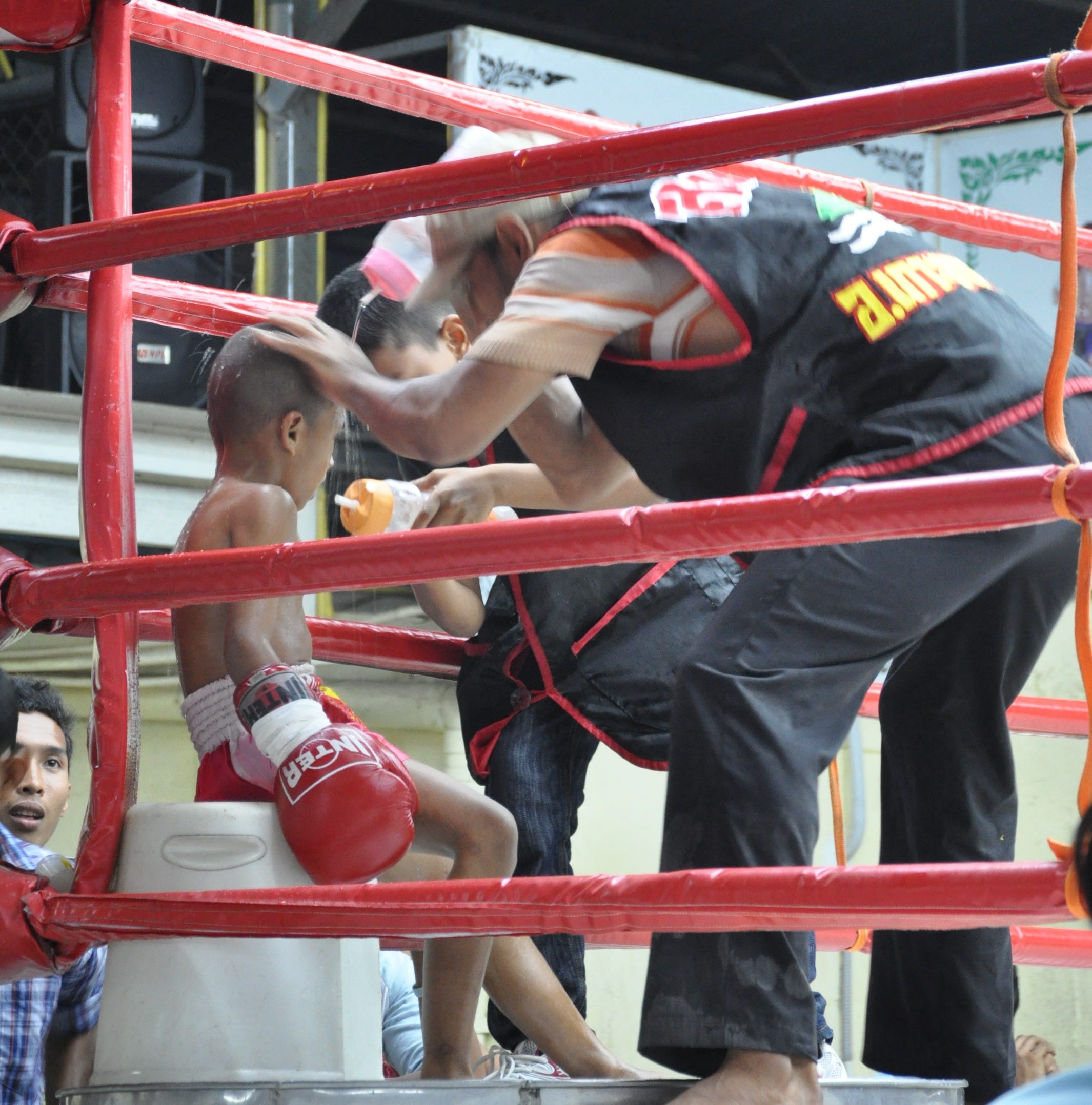
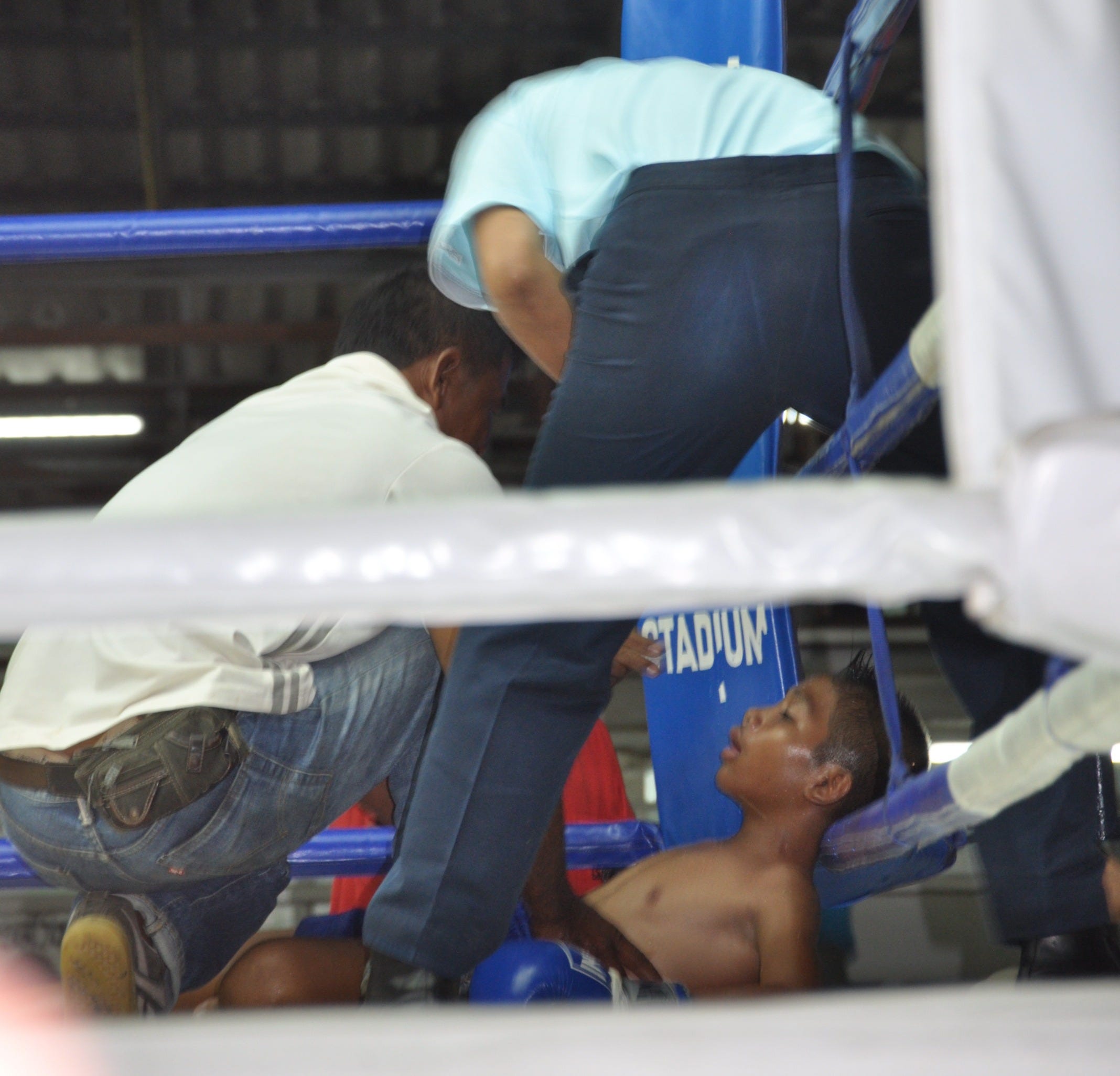
One of the youngest children was knocked unconscious, most likely suffering a concussion.
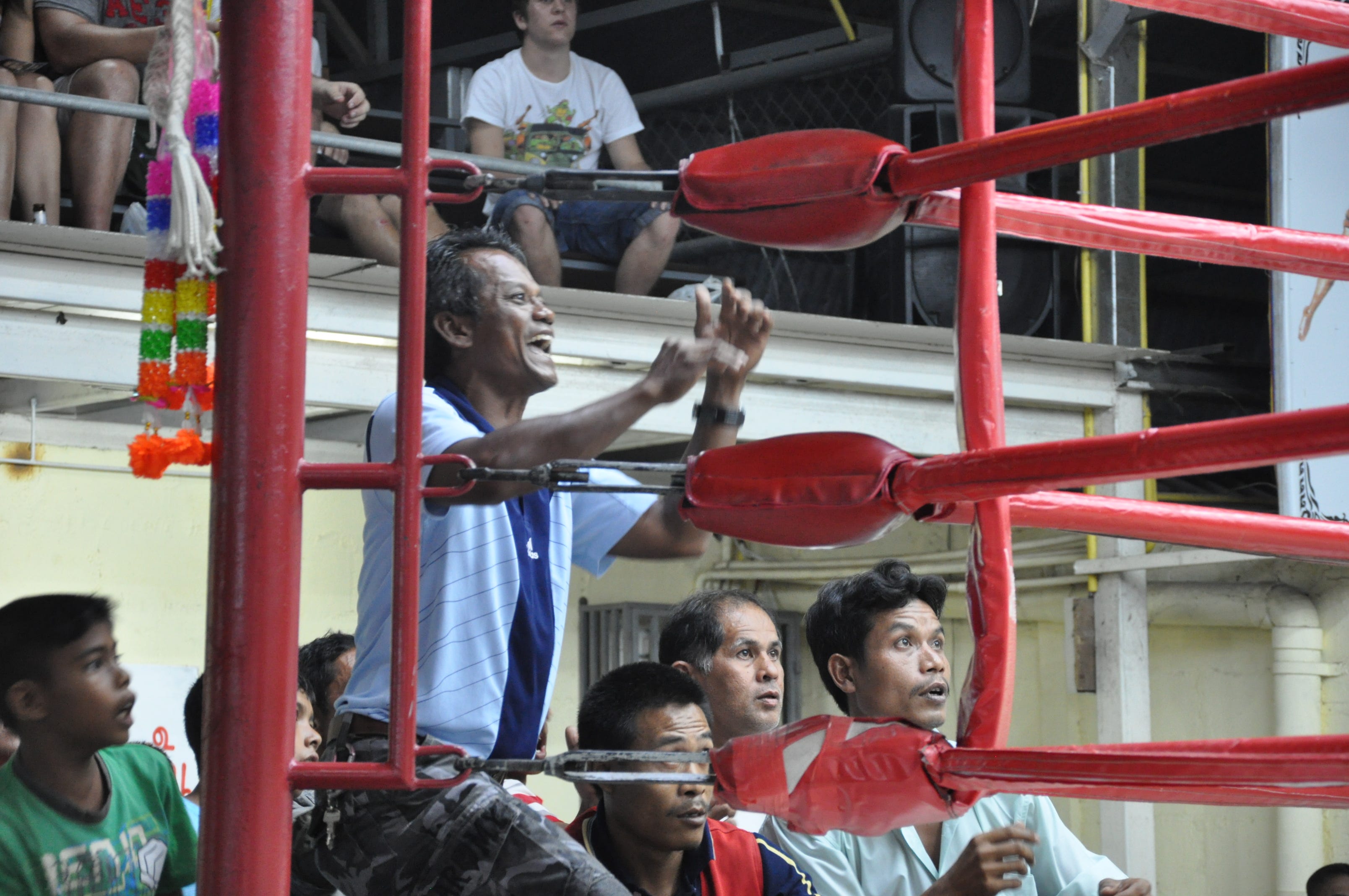
The children’s mothers were in their corners screaming for them to fight harder.
The children were each paid 200 baht, the equivalent of $6, for their performance in the ring.
The adult matches were no less brutal. One man broke a leg, another broke his nose. And one unfortunate Canadian combatant (the only foreigner on that night’s roster) was knocked down 3 times. Although it looked like he was hit in the groin several times (which is legal in Muay Thai).
What to do?
Coming from a more economically developed country and a privileged background, I can’t fully understand the motivation (or desperation) of the parents who encourage their children to box.
But there are global standards for protecting children. And mandating that children participating in Muay Thai — at least wear adequate head protection — should be one of them. While still dangerous, there is a way for Muay Thai to evolve into a safer sport for children.
In the UK, where children also participate in Muay Thai tournaments, there are rules to protect kids. For instance, head shots are illegal in children’s fights, and full padding is required. This is certainly a start.
Interested in learning more? Here are several documentaries on Muay Thai’s child boxers:
Thailand’s Child Boxers Fight for Their Futures, Nightline, 2014
Child thaiboxers: A fighting chance, DW Documentary, 2018
Kids Are Still Fighting Muay Thai, Even After the Death of a Young Boy, VICE News, 2019
Author’s Note: Before I get too precious here, I acknowledge that American football and soccer (as well as other sports) can also be harmful to children and teenagers, specifically regarding traumatic brain injuries.
If you like this post, please leave a comment or share it with others. This will help more readers find my work. ❤️
Christened “Wander Woman” by National Geographic, Erin Michelson has traveled to 135 countries & all 7 continents. She is a professional speaker and author of the Nomad Life™ series of curated trips and travel guides, including the #1-ranked Explore the World with Nomads.
Curious to learn more about nomad life? Get the guide “Explore the World with Nomads: 50 Practical Tips, Interviews & Insights.”

Given how generally peaceful Thai society is, Muay Thai is a strange anomaly. One cannot deny how wildly popular it is. I would note that many tournaments include boxers from Myanmar. This appears to be one way that they can 'make their fortune' in Thailand, since employment opportunities across the border are not nearly as good.
Hi Erin - great essay. I'd never heard of Muay Thai, and I'd have given the opportunity to go to a fight a wide berth as well. I'm not a fan of fighting sports of any kind, for children, adults, or animals. There is far too much violence in our world, it doesn't need to be a spectator sport.