

Camel Market—Oh My!
An Adventure A Week

A funny thing happened on the way to the camel market. Our car was stopped in the middle of the road, and we were surrounded by 10-12 men with large sticks and a sword.
They were from the Bilen tribe, one of the 9 ethnic groups recognized in Eritrea. The Bilen live in and around Keren, the country’s second-largest city, and comprise 2% of the population.
Evan, my driver and guide, and I had our windows rolled down (few cars in Eritrea have air conditioning). It was 30°C (86°F), the country’s cool season.
The men were asking for money for their friend’s wedding, holding out a collection basket (like those used in Catholic churches), and Evan put in a few bills.
The two men by my open window smiled at me and gestured to my purse, which was sitting near my feet on the floor of the car. I smiled back and shook my head no.
The men were not overtly threatening in any way, but it was nonetheless a tad disconcerting. I asked Evan, who makes this 3-hr trek from Asmara to Keren several times a week, if this had happened before, and he said no. He was bewildered too.
A Bilen wedding lasts 7 days, with the post-wedding celebrations stretching for 2-3 months. During the first 40 days of marriage, the groom carries a ceremonial sword to ward off evil spirits.
The men attending the wedding carry sticks (which look a lot like field hockey sticks, J-shaped and club-like), and raise them in the air when dancing during the wedding festivities.
Here’s a look at a Bilen wedding and the men dancing with their sticks. Fast-forward to minute 12:
Here’s another Bilen wedding ceremony if you’re really into it:
I can appreciate that a 3-month wedding ceremony is expensive, and so couples may need donations.
But a roadside stop, with multiple men requesting a cash “gift,” seems less like a wedding present and more like a shake down to me.
On to market
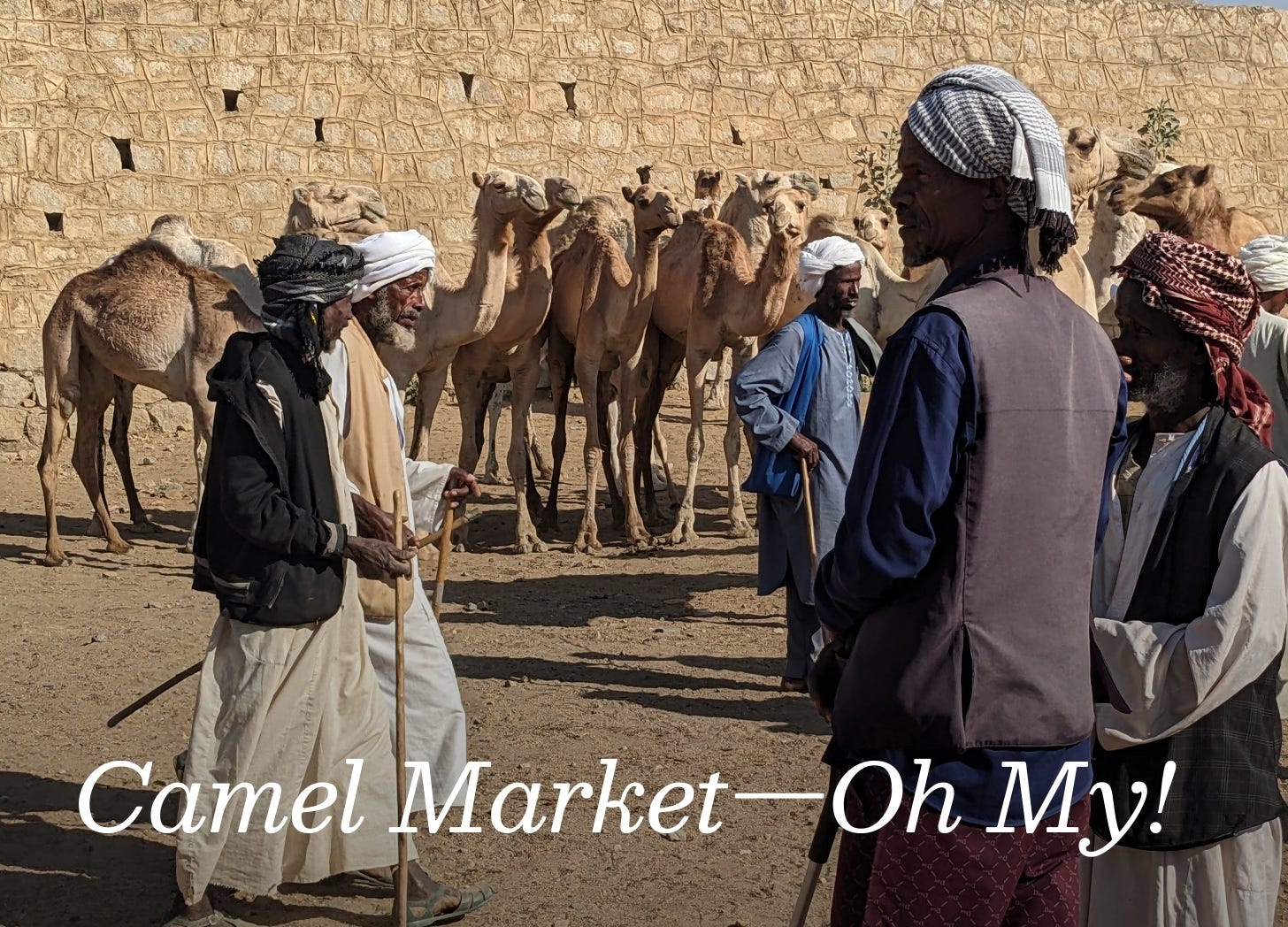
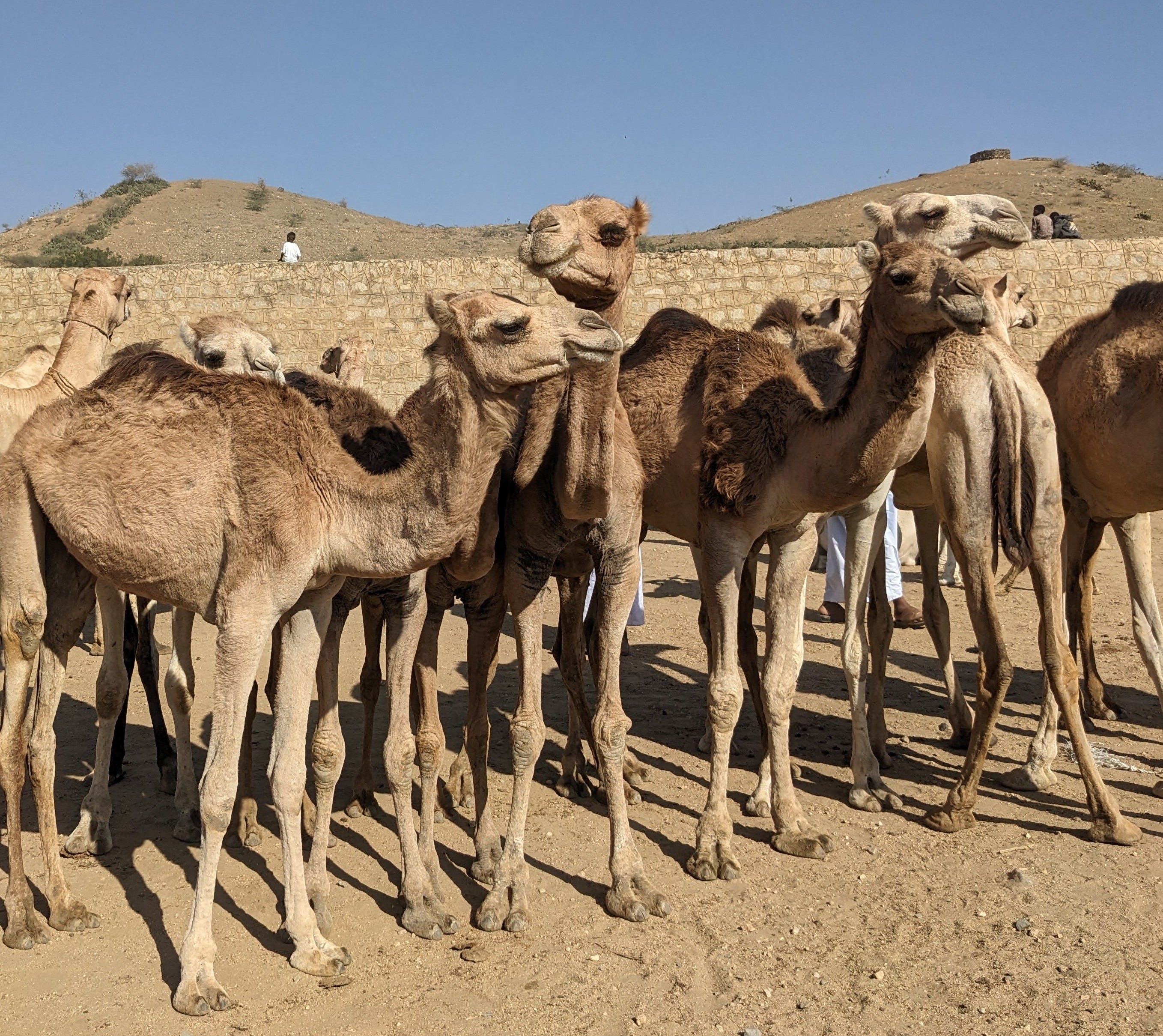
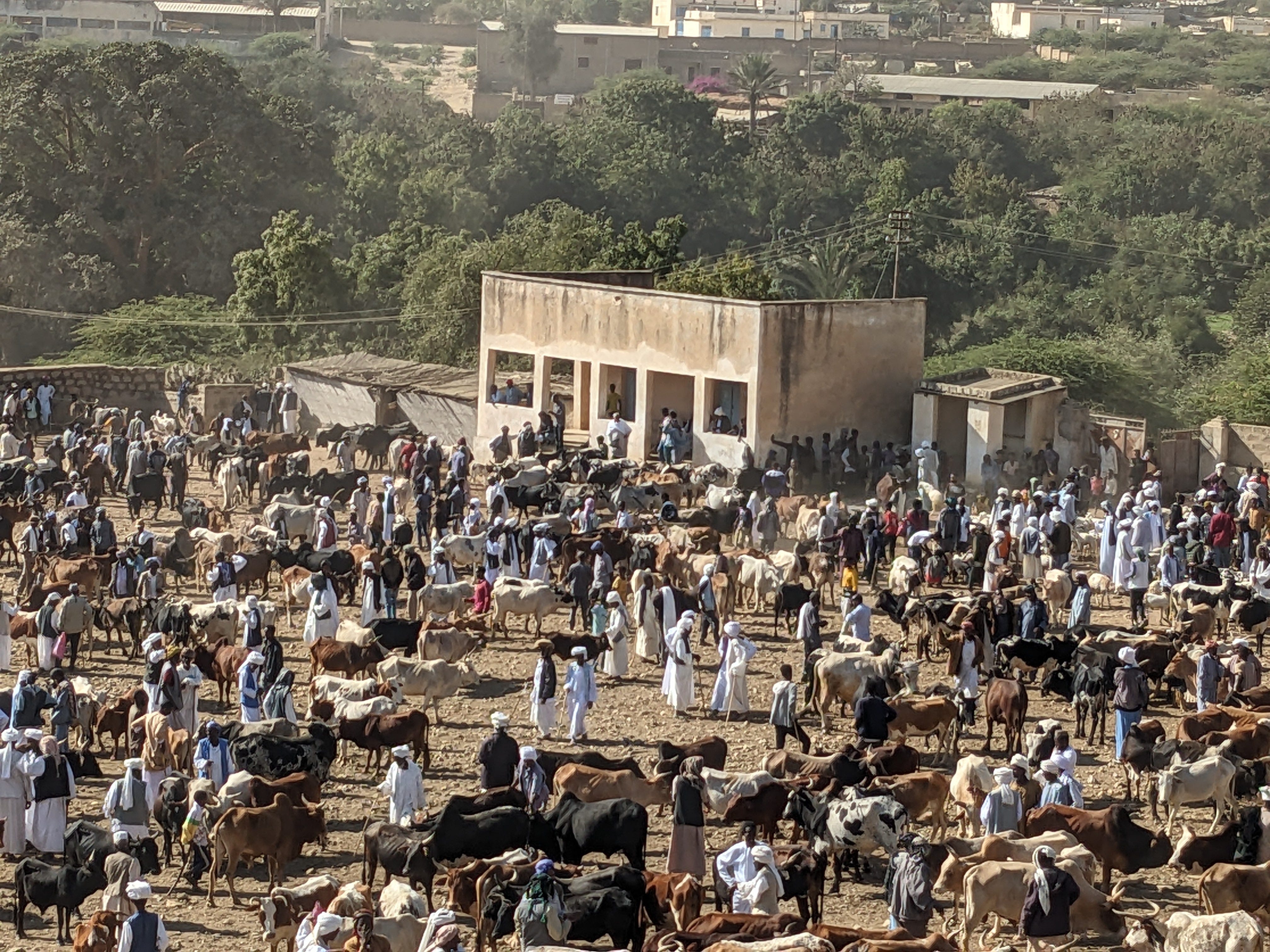
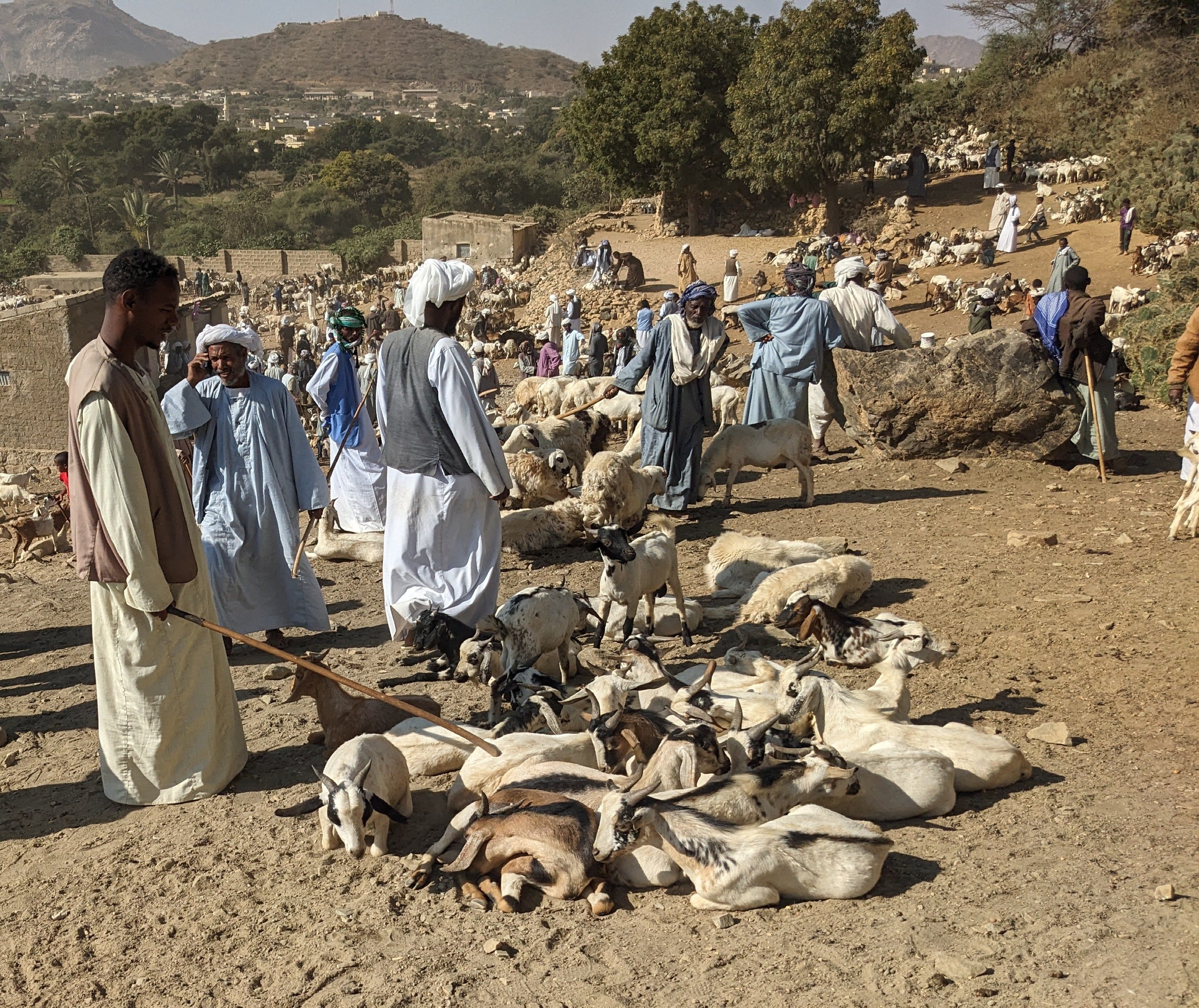
Monday is market day in Keren, and the weekly camel-cow-goat market is well attended. There are only two camel markets in Eritrea, and the Keren one draws herdsmen as far away as the Sudan border, 2 hours to the west.
The market, I have to say, was something to see. It was like stepping back in time to 4000 BCE—Biblical times. And I’m not being cute here.
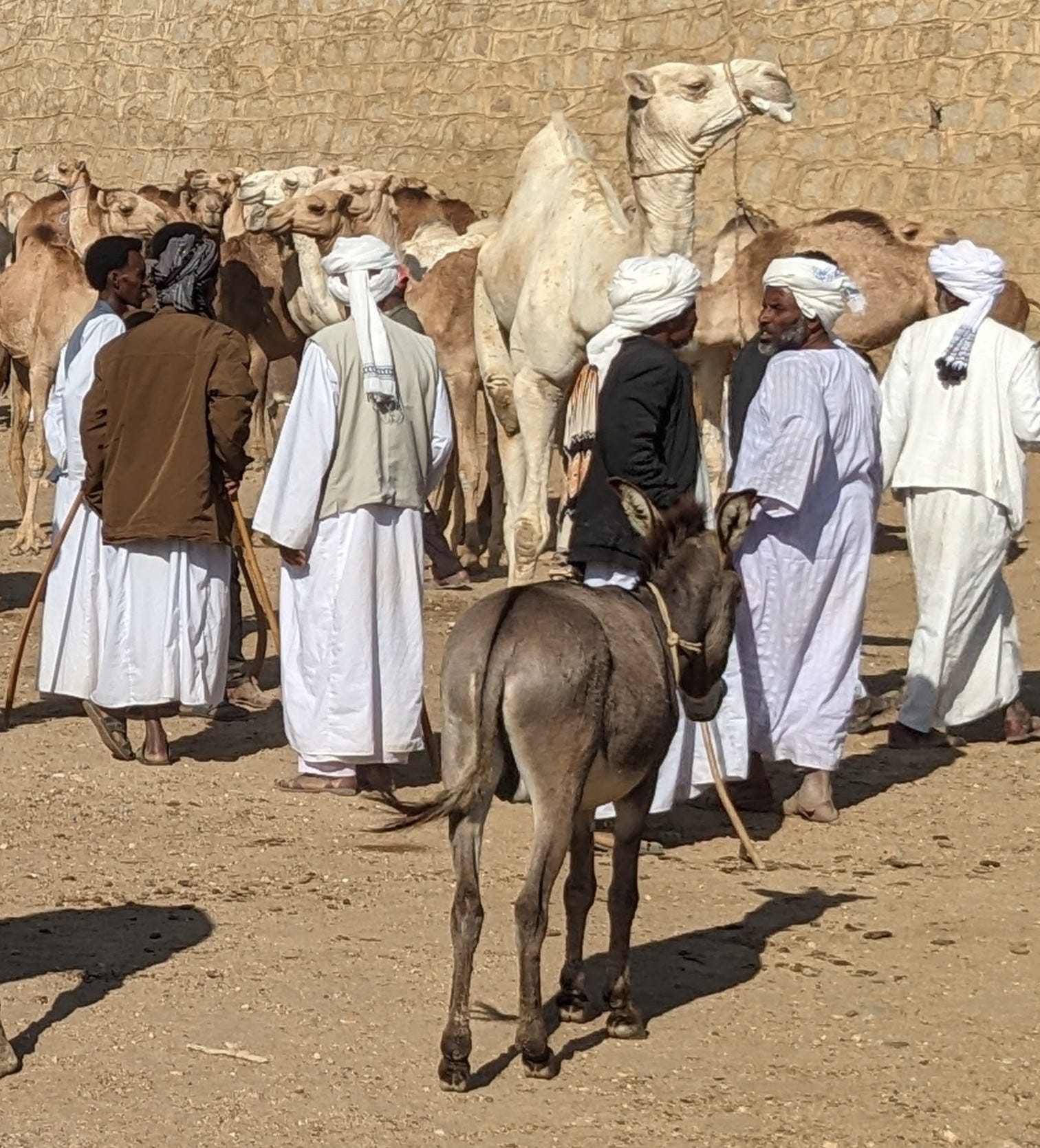
Many herdsmen still wear traditional garb, such as white robes and turbans. They tend to their herd of goats with sticks and hobble their camels with rope.
Here’s the going rate for livestock in Eritrea Nafka, with the US dollar equivalency:
Camel: ERN15,000 = US$1,000
Cow: ERN6,000 = US$400
Goat: ERN1,500 = US$100
And a few photos to give you an idea of the atmosphere:
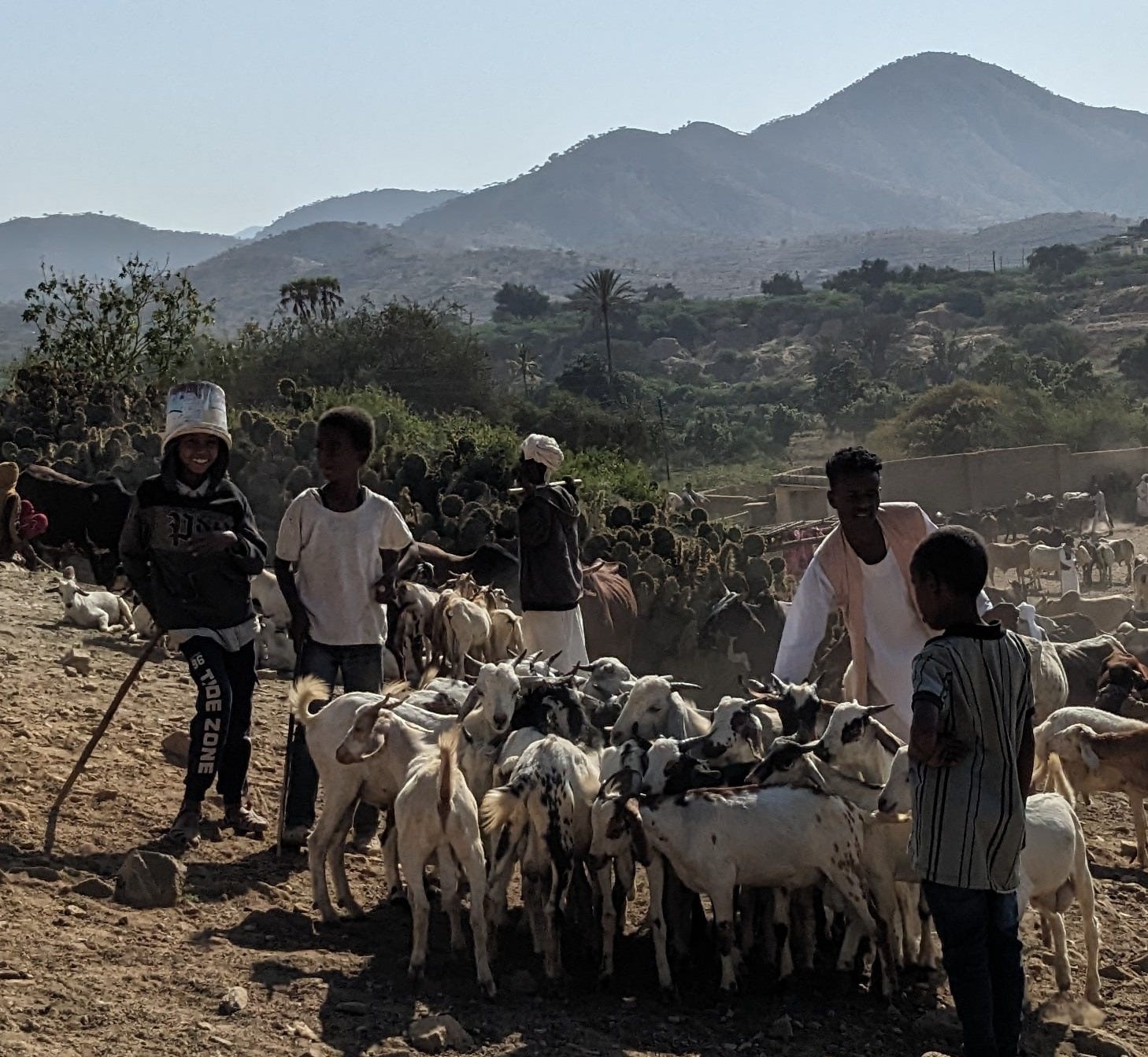
Above is my favorite little dude with the bucket on his head!
A lack of noise is another aspect that was surprising about the Monday market (apart from a few bleating goats). And almost no smell. It was both quiet and clean, which is not how I usually envision a livestock market.
Just one more surprise during this trip to a most-surprising (and delightful) country.
If you like this post, please leave a comment or share it with others. This will help more readers find my work. ❤️
Christened “Wander Woman” by National Geographic, Erin Michelson has traveled to 130+ countries & all 7 continents. She is a professional speaker and author of the Nomad Life™ series of curated trips and travel guides, including the #1-ranked Explore the World with Nomads.
Want to read more about my adventures? Get the book “Adventures of a Nomad: 30 Inspirational Stories.”
A fascinating experience. Thank you for sharing!
Give it a read folks.
What a cool experience 🐫